
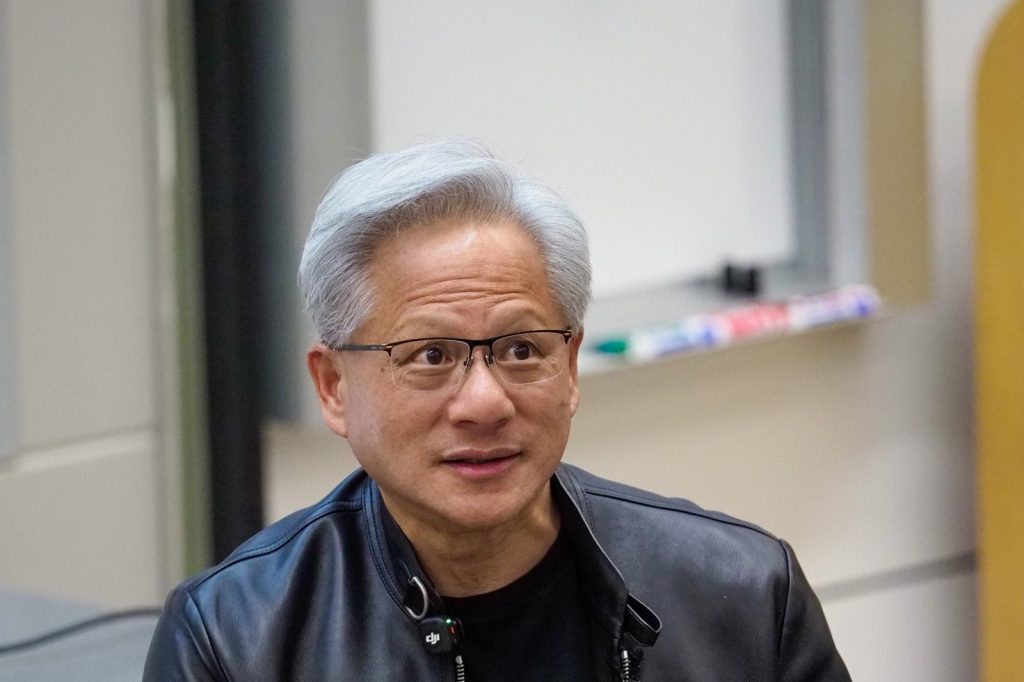
SANTA CLARA, Calif., July 28 — Nvidia has cemented itself as the engine room of the artificial intelligence revolution, with its Data Center segment — the division that makes the chips training and running large AI models — pulling in $47.4 billion in revenue for fiscal 2024. That figure represents a 217% surge from the previous year, and it accounted for the lion’s share of the company’s total $60.9 billion in revenue. Think of Nvidia as the company selling shovels during a gold rush.
While dozens of startups and tech giants battle to build the next ChatGPT or Stable Diffusion, Nvidia keeps selling the picks and pans — in this case, graphics processing units uniquely suited to the parallel processing demands of AI. The practical upshot: Nvidia’s gross margin hit 72.7% in 2023, a level most hardware manufacturers can only dream of.
The AI Spending Boom
That chip bonanza sits atop a broader explosion in AI investment. Global spending on AI systems reached roughly $154 billion in 2023, climbing from $120 billion the prior year, according to IDC. The total AI market — encompassing software, hardware and services — was valued at $136.55 billion in 2022 and is forecast to grow all the way to $1.8 trillion by 2030, per Statista.
Those are staggering numbers, but the money isn’t flowing evenly. Venture capital investment in AI startups tells a more cautious story.
After peaking at $46.5 billion in 2022, it dropped sharply to $18.8 billion in 2023, according to CB Insights. Here’s what that means in plain terms: while the big infrastructure players like Nvidia are riding high, the broader startup ecosystem is already undergoing a correction. Investors are getting pickier about which AI dreams get funded.
A Tale of Two Business Models
The contrast between Nvidia’s booming hardware business and the finances of one of AI’s most famous names — OpenAI — highlights the tension at the heart of this industry. OpenAI had annualized revenue of $1.6 billion as of December 2023, with a projection to reach $3.4 billion by the end of 2024. Those are impressive growth numbers for a young company.
But the costs are also enormous: reports indicate OpenAI spends roughly $700,000 per day just to run ChatGPT. That high cost-to-revenue ratio is a point of concern for critics who argue the AI bubble will burst when the cost structure proves unsustainable.
Nvidia, by contrast, has already demonstrated it can turn AI demand into enormous profit, with its quarterly data-center revenue alone hitting $18.4 billion in the fourth quarter of fiscal 2024. The difference in business models is stark: Nvidia sells the picks, while many AI startups are still digging for gold without knowing how much deeper the vein goes.
What to watch next: whether the venture-capital pullback spreads further into 2024 and 2025, forcing more startups to tighten their belts — and whether OpenAI and its rivals can shrink their compute costs fast enough to satisfy investors. For now, Nvidia looks like the safest bet in the AI boom, but the sustainability question looming over the rest of the industry isn’t going away.
Sources
{“@context”: “https://schema.org”, “@type”: “NewsArticle”, “headline”: “AI Investment and Market Growth: The Numbers Behind the Hype”, “description”: “SANTA CLARA, Calif., July 28 — Nvidia has cemented itself as the engine room of the artificial intelligence revolution, with its Data Center segment —…”, “datePublished”: “2026-07-28T09:30:00+00:00”, “author”: {“@type”: “Person”, “name”: “Erika Johnson”}, “publisher”: {“@type”: “Organization”, “name”: “InfoPulse Today”, “url”: “https://newsfeed.infopulsetoday.com/”}, “citation”: [{“@type”: “CreativeWork”, “url”: “https://en.wikipedia.org/wiki/Nvidia”}]}




