
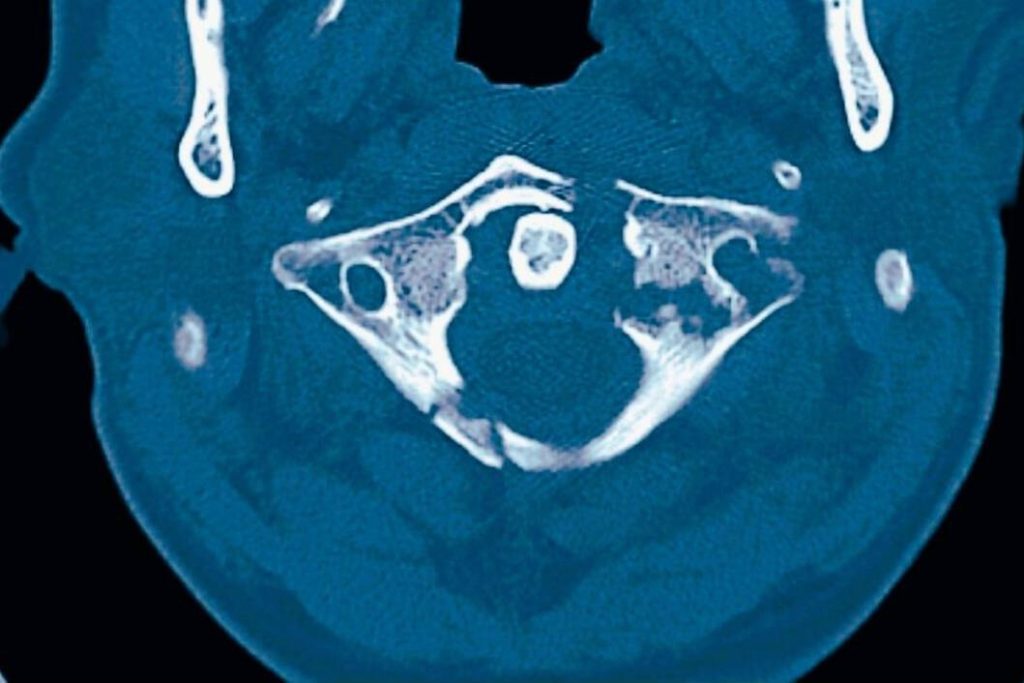
ISLAMABAD, July 13 — The field of artificial intelligence is pushing into new territory with multimodal learning, where large language models process not just text but images and audio together. For patients and healthcare providers watching these developments, the encouraging part is how this could change medical imaging, diagnostics, and patient communication — but early findings suggest we are still in the early days. Multimodal models represent a shift from the text-only AI systems that dominated headlines just a few years ago.
GPT-4V, released in 2023, was among the first major models to accept image inputs. Google Gemini, launched in December 2023, was designed as multimodal from its inception, meaning it was built to handle different data types together rather than having vision or audio tacked on later.
Efficiency gains and model size
One challenge with these larger models is the computing power they require. Researchers have been working on efficiency improvements. Sparse mixture-of-experts, or MoE, reduces the compute needed during operation.
Mixtral 8x7B, released by Mistral AI in 2023, uses this approach. It has 46.7 billion total parameters, but only 12.9 billion are active per token — meaning the model only uses a fraction of its full capacity for each step of processing.
Other techniques include quantization and pruning, which can reduce model size by 50 to 90 percent. For hospitals and clinics with limited computing infrastructure, these size reductions could make advanced AI tools more accessible. Patients should talk to their doctor about whether any AI-assisted diagnostic tools are being used at their treatment centre.
Open-source models are also entering the picture. LLaMA-2, released by Meta in July 2023, comes in sizes from 7 billion to 70 billion parameters.
Falcon, from the Technology Innovation Institute in 2023, has 40 billion parameters. Open-source availability means researchers worldwide can adapt these models for local languages and medical contexts, which is particularly relevant for healthcare systems in developing countries.
Regulatory landscape taking shape
Governments have begun to respond to the rapid pace of AI development. The European Union’s AI Act, passed in March 2024, classifies large language models as “general-purpose AI” and imposes transparency requirements. In the United States, an Executive Order on AI from October 2023 requires safety testing for models above a certain computational threshold — specifically, those trained using more than 10^26 floating-point operations.
For medical applications, these regulations matter. Any AI tool used in diagnosis or treatment planning would need to meet transparency standards, so clinicians understand what the model is doing and why.
The regulatory framework is still evolving, and the encouraging part is that both the EU and US have moved to create guardrails rather than waiting for problems to emerge.
Environmental and market considerations
Training these models comes with an environmental cost. Patterson and colleagues reported in 2021 that training a model with 175 billion parameters emits approximately 552 tonnes of carbon dioxide. For healthcare institutions weighing whether to adopt AI tools, this energy footprint is a factor to consider alongside clinical benefits.
The broader market for AI is projected to reach $1.8 trillion by 2030, according to Grand View Research in 2023. That figure includes healthcare applications, though exactly how much of that market will be captured by multimodal learning specifically remains to be seen.
What is clear is that multimodal AI — systems that can look at a chest X-ray, read the radiologist’s notes, and listen to a patient describe their symptoms — is no longer theoretical. The technology exists, the models are being refined, and the regulatory framework is beginning to take shape. Patients should talk to their doctor about how AI is being integrated into their care, and clinicians should stay informed as these tools become more common in everyday practice.
The path forward is not without challenges, but there is reason for cautious hope.
Sources
{“@context”: “https://schema.org”, “@type”: “NewsArticle”, “headline”: “AI Regulation, Efficiency, and Multimodal Models by 2025”, “description”: “ISLAMABAD, July 13 — The field of artificial intelligence is pushing into new territory with multimodal learning, where large language models process not just text…”, “datePublished”: “2026-07-13T09:30:00+00:00”, “author”: {“@type”: “Person”, “name”: “Muhammad Asim”}, “publisher”: {“@type”: “Organization”, “name”: “InfoPulse Today”, “url”: “https://newsfeed.infopulsetoday.com/”}, “citation”: [{“@type”: “CreativeWork”, “url”: “https://en.wikipedia.org/wiki/Multimodal_learning”}]}




