
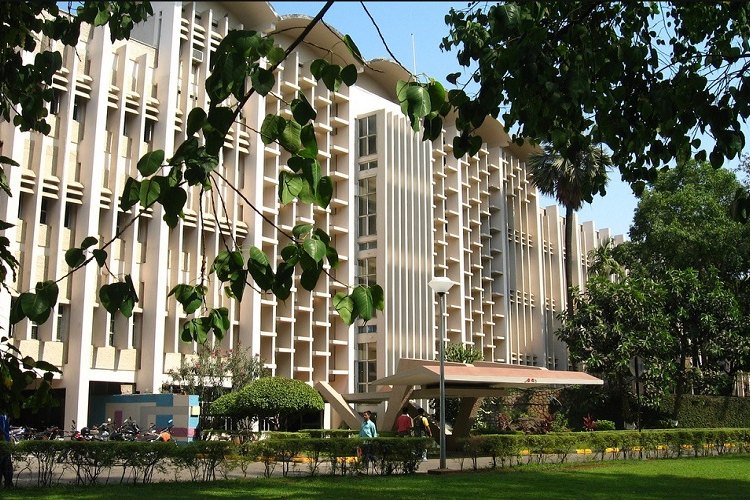
Nine months ago, BharatGen did not exist. Now it holds a government grant of ₹1,058.82 crore — roughly $125 million — and the weight of a country’s AI ambitions. The consortium, a non-profit network of labs across nine Indian institutes, is building one of India’s first sovereign large language models from scratch.
Not fine-tuning an existing foreign one. Starting from zero.
The money came on 18 September 2025, under the Centre’s $1.2-billion AI mission. BharatGen is the largest single beneficiary of that fund. It is also the only not-for-profit AI entity in the country.
That structure matters. Profit-driven AI labs answer to shareholders.
BharatGen answers to a national strategy. Ganesh Ramakrishnan, the founding director and a chair professor at IIT-Bombay, put the logic bluntly. “We can only truly understand AI models when we build them from scratch,” he said.
He compared it to cooking. Know the recipe, and you can adjust the dish for your health. Know what goes into an AI model — especially its data — and you can build tools that actually work for Indian users.
Without that knowledge, you are just heating up someone else’s meal. Ramakrishnan added: “For AI adoption to scale, users have to move from the last mile to the first mile.” The last mile is consumption — using a chatbot built in California or Beijing.
The first mile is creation — deciding what data goes in, how the model is trained, what biases are removed. India, right now, is stuck at the last mile. Most Indian enterprises and startups rely on foreign foundational models.
They are tenants in someone else’s digital infrastructure. That is the risk BharatGen exists to counter.
The consortium was established by IIT-Bombay in December 2024. Nine months later, it had the government’s money and a mandate. The first model is under development now.
It will be built on Indian data, for Indian contexts. That means languages, dialects, legal systems, cultural norms that no foreign model was designed to handle well. The strategic logic is not new.
Countries from China to France have poured public money into sovereign AI. India’s effort is smaller in scale than China’s state-backed push, but the principle is the same: control the stack, or be controlled by it.
A country that cannot build its own foundational models will always be a consumer of technology, never a producer. It will pay licensing fees. It will accept whatever safety standards — or lack of them — the foreign builder decides on.
It will hand over its data to train the next version of someone else’s model. BharatGen’s non-profit structure is an attempt to avoid those traps.
The consortium is spread across nine institutes, pooling academic talent rather than corporate R&D budgets. The goal is not a commercial product that must dominate a market. The goal is a public good that Indian industry, government and citizens can build on.
Whether that works depends on execution. Building a large language model from scratch is expensive, slow and technically punishing. The government has given BharatGen a significant grant, but $125 million is not a vast sum in the world of frontier AI.
OpenAI and Google spend multiples of that in a single quarter. BharatGen will have to be efficient, focused and lucky.
Ramakrishnan’s warning carries weight precisely because the alternative is so clear. An ecosystem built solely around using AI tools stays at the consumption layer. It does not generate the engineers, researchers and entrepreneurs who understand the technology from the inside.
It generates power users, not builders. India has spent decades trying to move up the value chain in manufacturing and software services.
AI is the next frontier. BharatGen is the country’s bet that it will not repeat the same pattern of dependency.
{“@context”: “https://schema.org”, “@type”: “NewsArticle”, “headline”: “BharatGen receives ₹1,058.82 crore grant to build India’s first sovereign AI model from scratch”, “description”: “Nine months ago, BharatGen did not exist. Now it holds a government grant of ₹1,058.82 crore — roughly $125 million — and the weight of…”, “datePublished”: “2026-06-25T11:33:00+00:00T09:30:00+00:00”, “author”: {“@type”: “Person”, “name”: “Henry Thomas”}, “publisher”: {“@type”: “Organization”, “name”: “InfoPulse Today”, “url”: “https://newsfeed.infopulsetoday.com/”}}




