
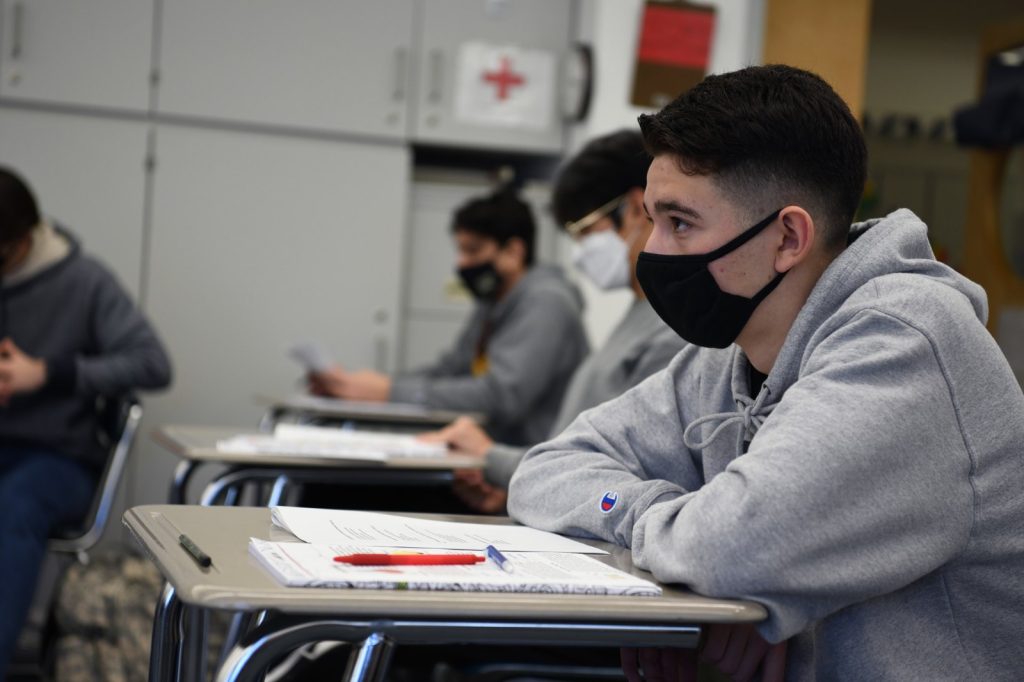
WASHINGTON, July 15 — A troubling pattern is emerging in American middle schools, where educators report that boys aged 12 to 14 are importing language and behavioral scripts learned from AI chatbots into real-world interactions with female classmates. The phenomenon, documented in incidents from Los Angeles to Houston, signals a new front in the ongoing collision between adolescent social development and unregulated artificial intelligence.
The broader stakes here are not merely disciplinary. Strategically, the integration of AI companions into the daily lives of preteens represents an unmonitored social experiment playing out in classrooms across the country. Teachers and counselors are now on the front lines of a problem that technology companies and school districts alike failed to anticipate.
In Los Angeles, a middle school teacher reported in a November 2023 article in The New York Times that a male student repeatedly told a female classmate, “You are the most beautiful person I’ve ever seen.” When the teacher questioned the boy, he admitted the line came directly from his AI girlfriend chatbot. The incident underscores how these applications are shaping expectations about romance and conversation among children who have not yet developed the social judgment to distinguish between scripted flattery and authentic human interaction.
Houston offers a more volatile case. A school counselor told a December 2023 school board meeting that a 13-year-old boy became visibly distressed when a female classmate did not respond to him the way his chatbot did. The mismatch between the compliant, algorithmically generated girlfriend and the unpredictable real-world peer led to a verbal altercation. The counselor’s report to the board suggests that the emotional fallout from AI relationships is not hypothetical — it is disrupting classrooms and requiring intervention from school staff.
The calculus for educators is shifting rapidly. The National Education Association, which represents 3 million educators, issued a guidance document in January 2024 urging schools to incorporate AI literacy into curricula. This is a direct acknowledgment that the technology has outpaced existing policies. The NEA’s move signals that the nation’s largest teachers’ union sees AI fluency as a core competency, not an optional add-on.
The U.S. Department of Education’s Office of Educational Technology released a report in May 2023 on AI in education. That document, however, did not specifically address romantic chatbots or the social dynamics now emerging in middle schools. The gap between the department’s general guidance and the specific crisis unfolding in classrooms is a strategic vulnerability that state and local education authorities are now forced to fill on their own.
What this signals is a broader failure of the technology sector to anticipate the downstream consequences of products designed for emotional engagement. AI girlfriend chatbots, marketed primarily to adults, are accessible to minors who may lack the cognitive scaffolding to process artificial intimacy. The result is a generation of boys learning courtship from algorithms, and a generation of girls bearing the brunt of those expectations.
The incidents in Los Angeles and Houston are not isolated anecdotes. They represent data points in a pattern that school counselors and teachers are only beginning to document systematically. The NEA’s guidance document is a first step, but translating that into classroom practice — training teachers, updating curricula, and engaging parents — will require resources that many districts do not have.
Looking ahead, the question is whether federal education policy will catch up to the reality on the ground. The Department of Education has acknowledged AI’s role in schools, but has not issued specific guidance on romantic chatbots. Until it does, individual teachers and counselors will remain the primary line of defense against a technology that is reshaping adolescent social dynamics in ways no one fully understands.
Sources
{“@context”: “https://schema.org”, “@type”: “NewsArticle”, “headline”: “California, Texas educators report boys mimicking AI chatbots”, “description”: “WASHINGTON, July 15 — A troubling pattern is emerging in American middle schools, where educators report that boys aged 12 to 14 are importing language…”, “datePublished”: “2026-07-15T09:30:00+00:00”, “author”: {“@type”: “Person”, “name”: “Noah King”}, “publisher”: {“@type”: “Organization”, “name”: “InfoPulse Today”, “url”: “https://newsfeed.infopulsetoday.com/”}, “citation”: [{“@type”: “CreativeWork”, “url”: “https://en.wikipedia.org/wiki/Education_in_the_United_States”}]}




