
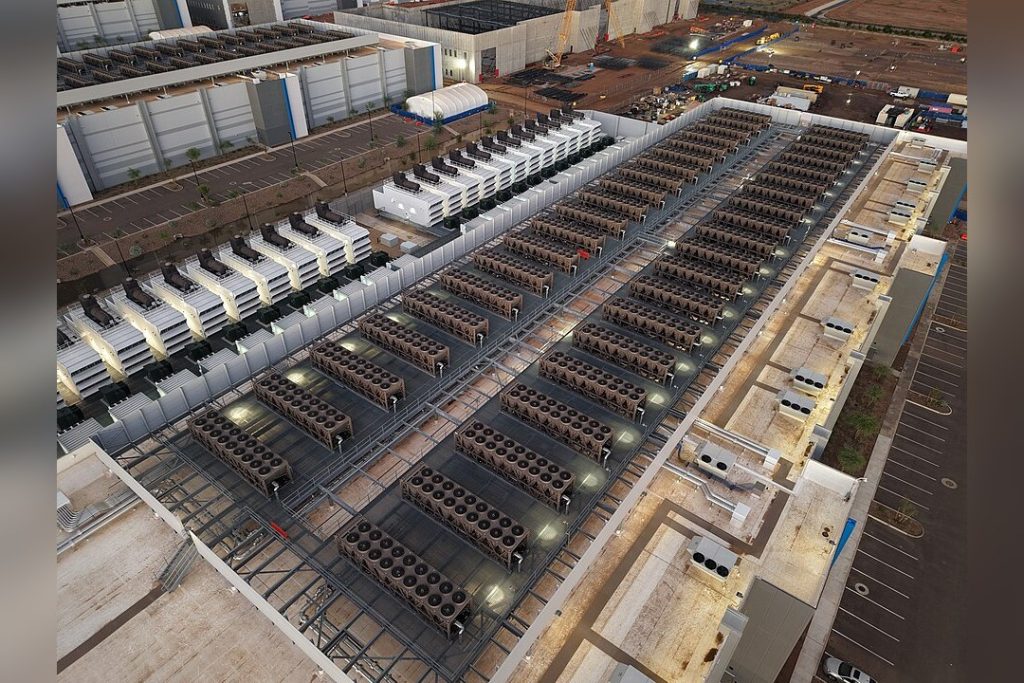
The AI boom is reshaping the world’s largest battery company. CATL, the Chinese giant, now sees its future not in cars but in power storage for data centres and grids. The shift has consequences far beyond one firm’s balance sheet.
Five years ago, stationary storage made up just 2 percent of CATL’s sales. Today that figure stands at 25 percent.
The company has publicly set a target of 50 percent by 2030. That ambition is being supercharged by the artificial intelligence boom. Hyperscale data centres are driving up energy demand projections across the world.
Battery storage systems are becoming a vital part of energy security strategies for both Big Tech and utilities. Global energy think tank Ember calls these systems the “ultimate clean flexibility tool for making clean electricity available when it is needed most, while keeping power grids stable and secure.” That quote matters.
It signals a shift in how the energy world views batteries — not just as car parts, but as grid infrastructure. The consequences for lithium markets are already visible. Lithium prices remain volatile.
CATL’s pivot away from EV-dominated demand and toward storage could further reshape pricing dynamics. Storage systems often use different battery chemistries than cars. Some favour sodium-ion cells, which are cheaper and more abundant than lithium-based alternatives.
CATL is betting big on sodium. That bet could drive down costs for stationary storage, making it more attractive for utilities and data centre operators.
For the electric vehicle industry, CATL’s move is a warning signal. The company is the world’s largest battery maker. If it sees storage demand accelerating faster than the car business, other manufacturers may follow.
That could slow investment in EV battery capacity, or redirect it. Policymakers pushing for EV adoption may need to rethink incentives.
Data centre operators face their own reckoning. AI models require massive computing power. That power needs electricity.
Lots of it. And that electricity must be reliable. Hyperscale data centres cannot afford downtime.
Battery storage offers a way to smooth out intermittent renewable supply from wind and solar farms. It also provides backup power during grid disturbances.
For Big Tech, batteries are becoming as essential as servers. Utilities are watching closely. They have been struggling to integrate renewable energy into ageing grids.
Solar and wind generate power only when the sun shines and the wind blows. Storage bridges that gap.
CATL’s push into storage means more batteries will be available, potentially at lower costs. That could accelerate the retirement of fossil fuel peaker plants — gas-fired units that run only during high demand. It could also reduce the need for new transmission lines, as batteries can be sited close to where power is needed.
The geopolitical angle is hard to ignore. CATL is a Chinese company. Western governments are already wary of Chinese dominance in battery supply chains.
If storage becomes the next frontier, expect more policy moves aimed at building domestic manufacturing capacity. The U.S. Inflation Reduction Act already offers incentives for battery storage.
The European Union is drafting similar measures. CATL’s pivot may speed up those efforts. None of this is certain.
Lithium prices could stabilise. EV demand could surge again.
But CATL has placed its bet. Storage, not cars, is where the growth lies. The company is positioning itself to supply the massive battery banks that will back up wind and solar farms and stabilise grids.
The rest of the industry will have to react.
{“@context”: “https://schema.org”, “@type”: “NewsArticle”, “headline”: “CATL Shifts Focus to Data Centre Power Storage as AI Boom Accelerates”, “description”: “The AI boom is reshaping the world’s largest battery company. CATL, the Chinese giant, now sees its future not in cars but in power storage…”, “datePublished”: “2026-06-26T13:44:00+00:00T09:30:00+00:00”, “author”: {“@type”: “Person”, “name”: “Arjun Mehta”}, “publisher”: {“@type”: “Organization”, “name”: “InfoPulse Today”, “url”: “https://newsfeed.infopulsetoday.com/”}}




