
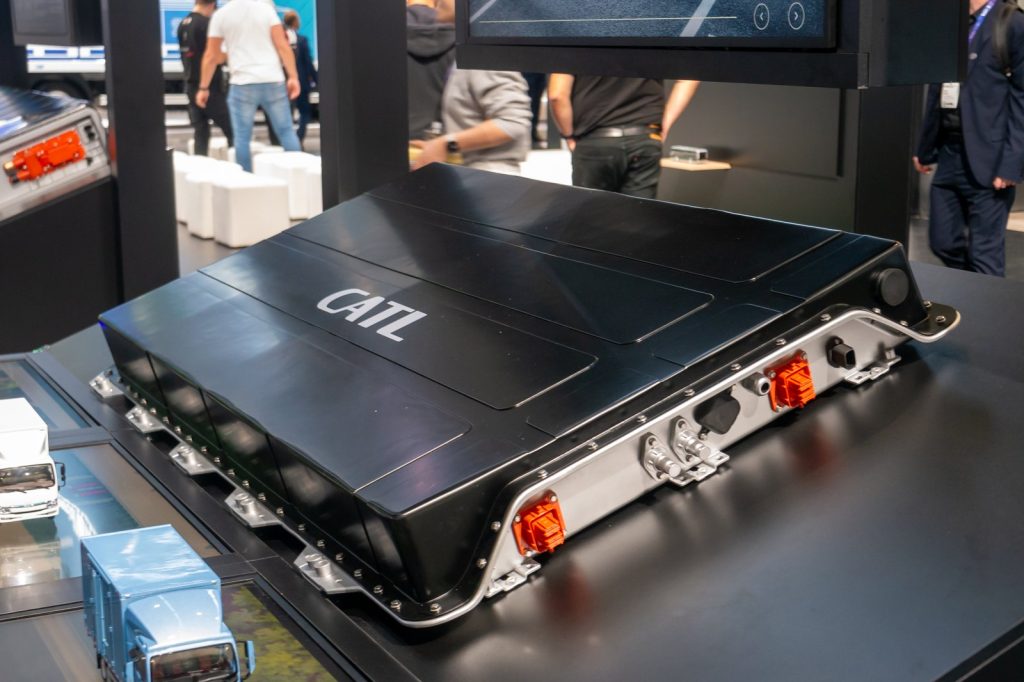
Data centres are hungry. The artificial intelligence boom has made them hungrier. And that hunger is now reshaping the world’s largest battery company.
China’s CATL is betting its future on stationary storage, not electric cars. The numbers tell the story.
Five years ago, storage made up just 2 percent of its sales. Today it is a quarter. By 2030, the company wants that figure to hit 50 percent.
The shift has been building for years. But the pace has quickened.
Hyperscale data centres are driving up energy demand projections globally, and battery storage systems are becoming a key part of how both Big Tech and utilities plan to keep the lights on. Global energy think tank Ember calls these systems the “ultimate clean flexibility tool.” The idea is simple: store power when the sun shines or the wind blows, then release it when demand spikes. That makes intermittent renewables like solar and wind far more useful.
It also keeps power grids stable. For CATL, the math is straightforward. EV demand is volatile.
Lithium prices swing wildly. Storage demand, by contrast, is accelerating faster than the car business.
The company is positioning itself to supply the massive battery banks needed to back up wind and solar farms and to stabilise grids. This is not a minor pivot. CATL is the world’s largest battery maker.
When it shifts focus, the entire industry feels it. The company’s move reflects a broader trend in the battery sector.
Policymakers in several countries are pushing for greater energy storage capacity to support renewable integration. Utilities and data-centre operators are already buying storage at a surging pace. The artificial intelligence boom is the catalyst.
AI data centres consume enormous amounts of electricity. They need reliable power around the clock. Battery storage helps provide that reliability without relying on fossil fuels.
As AI expands, so does the need for storage. CATL’s ambition is clear: storage, not cars, is where the growth lies.
The company has set a target of reaching 50 percent storage sales by 2030. That is a dramatic shift from five years ago, when storage was a rounding error in its sales figures. The transition away from EVs and toward energy systems has been building for years.
But the pace has quickened markedly. Manufacturing and purchase of battery storage have surged as utilities and data-centre operators seek to manage intermittent renewable supply and grid stability concerns.
For all the noise around EV market volatility, the salient point for CATL appears to be that storage demand is accelerating faster than the car business. The company is betting big on sodium-ion batteries, which are cheaper and more stable than lithium-ion. That bet makes sense in a world where lithium prices remain volatile.
The implications are significant. If the world’s largest battery maker is moving away from EVs and toward storage, other companies will likely follow. That could reshape the energy landscape.
It could also accelerate the transition to renewable energy by making it more reliable. CATL’s strategic bet is clear.
Storage, not cars, is where the growth lies. The company is positioning itself to supply the massive battery banks that will be needed to back up wind and solar farms, and to stabilise grids. The AI boom has made that bet even more urgent.
Data centres need power. Battery storage can provide it.
CATL is ready to deliver.
{“@context”: “https://schema.org”, “@type”: “NewsArticle”, “headline”: “CATL Shifts Focus to Stationary Storage as AI Boosts Data Center Energy Demand”, “description”: “Data centres are hungry. The artificial intelligence boom has made them hungrier. And that hunger is now reshaping the world’s largest battery company. China’s CATL…”, “datePublished”: “2026-06-26T13:44:00+00:00T09:30:00+00:00”, “author”: {“@type”: “Person”, “name”: “Henry Thomas”}, “publisher”: {“@type”: “Organization”, “name”: “InfoPulse Today”, “url”: “https://newsfeed.infopulsetoday.com/”}}




