
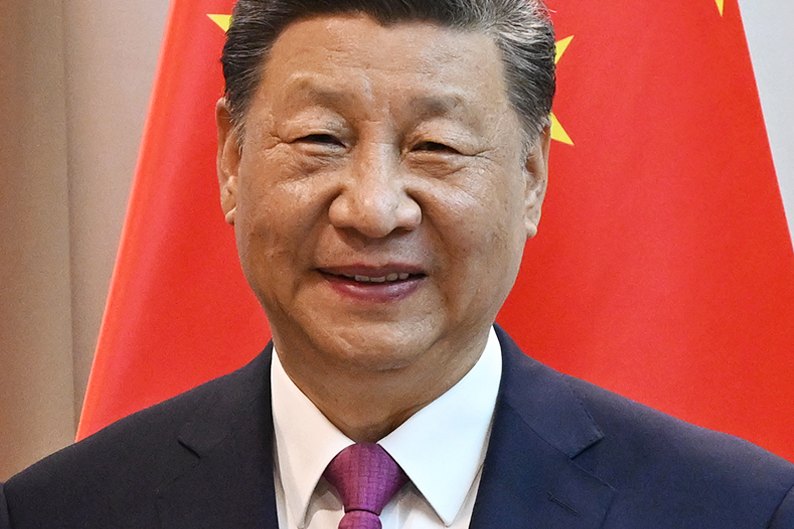
In July 2017, China issued the New Generation Artificial Intelligence Development Plan, a national blueprint that set explicit goals for global leadership in artificial intelligence by 2030. The plan was launched under the personal direction of Xi Jinping, who has held top party and state positions since the early 1990s and became China’s paramount leader in 2012.
This was not merely an industrial strategy; it marked a turning point in China’s technology policy, moving beyond industrial catch-up toward setting global standards in a field many nations consider critical to future economic and military power. The plan established a model where the state funds and directs AI development while also controlling its use, integrating research, industry, and military applications under party oversight.
A National Blueprint for AI Dominance
By 2022, the results of that state-directed push were clear: China’s AI patent filings had surged to over 38,000, the highest globally. For Xi, whose background includes a degree in chemical engineering from Tsinghua University and decades of party leadership, AI has become perhaps his most defining technological signature. The 2017 plan was the first comprehensive strategy to put artificial intelligence at the center of national policy, coming as other major governments were also outlining their own AI strategies.
But China’s version was notable for its explicit timeline and its integration of research, industry, and military applications under party oversight. The plan’s release in 2017 came as other major governments were also beginning to outline AI strategies, but China’s version was notable for its explicit timeline and its integration of research, industry, and military applications under party oversight.
Xi’s personal background offers clues to his comfort with technology policy. Born June 15, 1953, in Beijing, he holds a degree in chemical engineering from Tsinghua University. That technical education, combined with decades of party leadership roles since the 1990s, has given him a rare combination of engineering mindset and political authority. The plan was launched under his personal direction, and he has been an active architect of China’s AI strategy.
Xi has described his vision as “people-centered” AI development and “common governance,” phrases that reflect China’s state-centric model of technological progress, where the boundary between innovation and control is deliberately blurred.
Global Ambitions and Controversies
Xi took his AI agenda onto the world stage in October 2023. Speaking at the Belt and Road Forum in Beijing, he proposed the Global AI Governance Initiative. That speech was not just another diplomatic talking point; it represented a concerted effort to offer an alternative framework for how nations should manage this fast-moving technology.
Less than a year later, in July 2024, Xi sent a congratulatory letter to the World AI Conference. In that letter, he launched the World AI Cooperation and Governance Alliance–an institution that underscores his personal stake in shaping global technology norms.
Xi’s role in the alliance underscores just how much he has staked his legacy on leading the global conversation around AI norms. But for critics, there is a darker side to this story. Xi’s governance approach, they point out, has consistently prioritized state control and surveillance applications of AI.
The same AI systems that China patents in such volume are often deployed in surveillance applications. The state-centric model that Xi champions does not separate commercial innovation from political oversight; it integrates them.
That integration alarms Western governments and human rights advocates, who see the World AI Cooperation and Governance Alliance as potentially a vehicle for exporting China’s model of digital authoritarianism. Critics point to the deployment of AI for surveillance, social scoring, and censorship as direct consequences of a strategy that prizes order and control over open innovation. For readers, this means China’s AI ambitions are not just a domestic industrial policy but a bid to reshape the international rules for how artificial intelligence is developed and regulated worldwide.
{“@context”: “https://schema.org”, “@type”: “NewsArticle”, “headline”: “China charts AI dominance with 2030 global leadership blueprint”, “description”: “BEIJING, July 18 — In July 2017, China issued the New Generation Artificial Intelligence Development Plan, a national blueprint that set explicit goals for global…”, “datePublished”: “2026-07-18T09:30:00+00:00”, “author”: {“@type”: “Person”, “name”: “Ethan Smith”}, “publisher”: {“@type”: “Organization”, “name”: “InfoPulse Today”, “url”: “https://newsfeed.infopulsetoday.com/”}}




