
BEIJING, September 10 — China’s Ministry of Foreign Affairs on Wednesday rejected U.S. allegations that Chinese artificial intelligence developers are running what Washington calls “aggressive, malicious” industrial-scale efforts to extract capabilities from frontier American AI systems, dismissing the claims as “groundless” and accusing the United States of trying to engineer an AI industry monopoly.
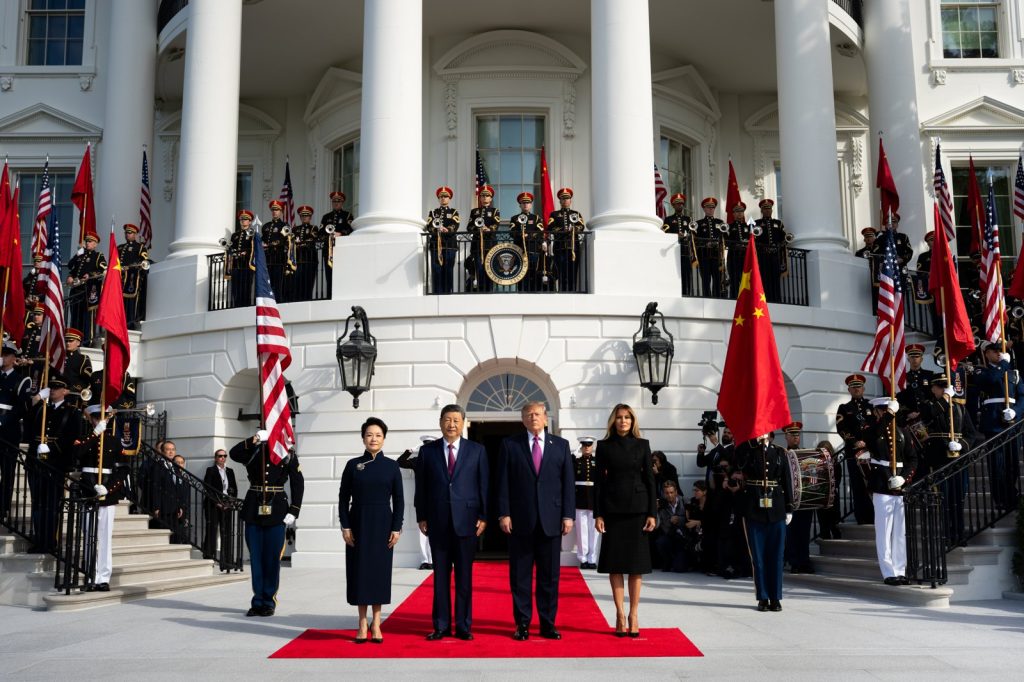
The dispute lands immediately ahead of a high-stakes meeting scheduled for later in September 2026 between U.S. President Donald Trump and Chinese leader Xi Jinping at the White House, where AI governance is set to be a key topic. The allegations were detailed in a joint cybersecurity advisory released by the FBI, the National Security Agency, and the Cybersecurity and Infrastructure Security Agency (CISA), which formally accused China-based developers of extracting proprietary functions from leading U.S. AI frontier models.
According to the advisory, Chinese companies bypass security protocols by routing “distillation requests” through multiple pathways to disguise their origin and violate terms of use. It further alleges that developers pooled resources through bulk procurement of premium U.S. AI subscriptions to run these industrial-scale distillation campaigns cheaply. The U.S. explicitly named six Chinese AI developers, including major entities such as DeepSeek, Alibaba, and Moonshot AI.
Beijing’s Response
Beijing pushed back hard. The ministry insisted China’s AI sector is entirely self-reliant, highlighting successful domestic models such as Moonshot’s Kimi K3, which it described as gaining international traction as efficient, affordable alternatives to U.S. systems despite severe U.S. chip restrictions. A ministry spokesperson urged the United States to “refrain from making unfounded accusations or smears” and suggested that both superpowers focus on international AI cooperation oriented toward the common good.
The tech friction forms the backdrop for the upcoming Trump-Xi summit. U.S. Treasury Secretary Scott Bessent remarked that China could “never get ahead” because it relies on distilling American models.
AI experts note that the dialogue marks a critical moment where the world’s two dominant AI superpowers must establish guardrails despite escalating technological isolation. Watch this space. The meeting is scheduled for later in September 2026 at the White House, with AI governance on the table — and both sides arriving with sharply different accounts of how China’s AI industry got here.




