
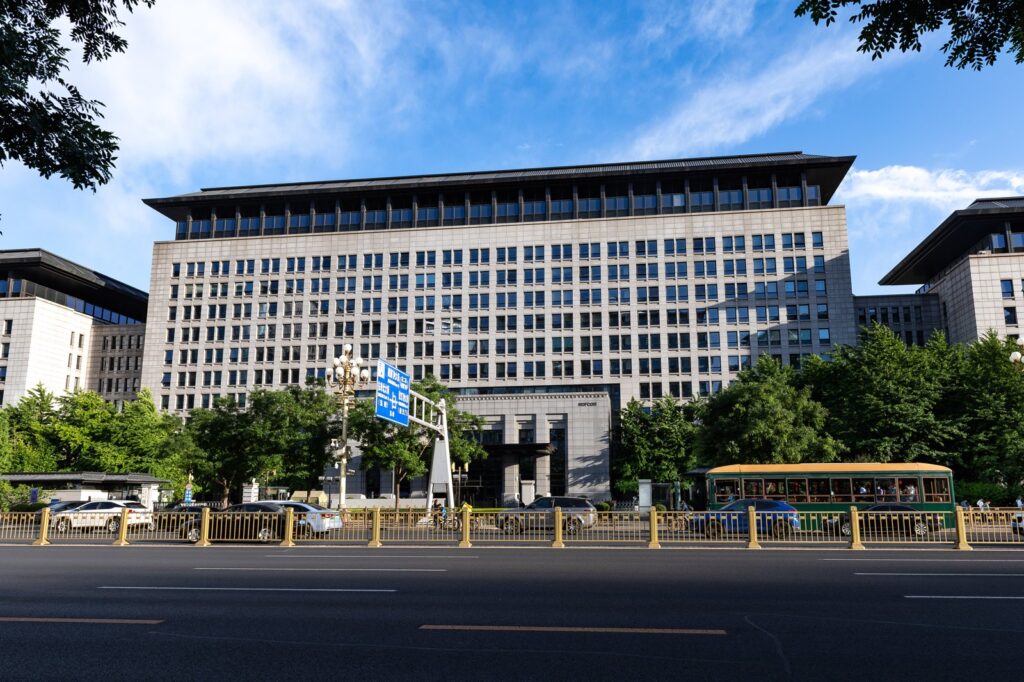
BEIJING, October 18, 2026 — China’s Ministry of Commerce proposed adding 23 key AI technologies to its export control catalogue, aiming to curb malicious misuse while creating registration pathways for global open-source collaboration. For developers browsing GitHub or training models on Hugging Face, these new rules strike a delicate balance between national security and the free flow of code. Behind the regulatory framework lies an effort to keep advanced systems under human oversight while maintaining access to international research networks.
Understanding the 23 Controlled Technologies
The proposed export controls target specific systems related to large AI models, AI agents, computing clusters, and information processing. According to a spokesperson for China’s Ministry of Commerce, the regulatory push responds to inherent risks in artificial intelligence that have drawn widespread attention. Among the controlled items are technologies enabling AI to autonomously generate and modify malicious code. Officials warn these capabilities could be used to attack sensitive systems supporting critical information infrastructure, national defense industries, and core government operations. If acquired by non-state actors or malicious entities, such tools could threaten national security and the shared security of humanity. The broader revision of China’s export-control list covers 40 total technologies, including chips and solar power. Public consultation on the proposed revisions is open until November 15, allowing the tech industry time to review the draft.
Exemptions for Public Domain and Open-Source Repositories
Despite the strict oversight on sensitive code generation, the draft includes explicit carve-outs for the wider developer community. Relevant technologies already in the public domain through open-source releases or academic publications fall outside the scope of export controls. This exemption protects everyday researchers and home AI developers who rely on publicly shared repositories and foundational papers. For anyone sharing model weights or training scripts publicly, the rules ensure that routine scientific exchange remains unhindered. The Ministry of Commerce noted that oversight is intended to prevent malicious use rather than stifle academic progress.
Compliance Mechanisms and Automatic Licensing Pathways
To keep international research moving, the government introduced temporary measures requiring registration for the export of relevant technologies during the proposal period. The proposal includes automatic licensing for open-source AI development and joint international research. Overseas computing centers operated by Chinese companies, chip tape-outs and fabrication overseas, and participation in international standard-setting are also eligible for facilitated exports. These provisions mean that legitimate collaborative projects can proceed smoothly upon completing the registration process. Exporters must register certain overseas technology transfers until the export-control catalogue is formally updated. Through these automatic licensing channels, Beijing aims to position AI as a driver of shared prosperity and common security without locking out global partners.
Public Consultation Timeline and Industry Feedback Process
The Ministry of Commerce has opened public consultation on the proposed revisions to China’s export-control catalogue, with the feedback period running until November 15, 2026. This window allows domestic and international stakeholders, including technology firms and research institutions, to review the draft regulations covering 40 total technologies, of which 23 are specifically related to artificial intelligence systems.
According to the spokesperson for China’s Ministry of Commerce, the consultation process is designed to gather input on the balance between security safeguards and the facilitation of legitimate international cooperation. The ministry emphasized that the timeline provides sufficient time for the tech industry to assess the implications of the proposed controls on large AI models, AI agents, computing clusters, and information processing technologies before any formal implementation.
Solar Technology Controls and Broader Export List Context
China’s broader export-control list revision includes 40 total technologies, spanning artificial intelligence, chips, and solar power, as reported by the Ministry of Commerce. The proposed revisions would add 12 photovoltaic technologies used in solar equipment manufacturing to the catalogue, citing national security concerns due to their increasing use in sensitive areas such as aerospace and national defense.
Among the solar technologies targeted for restrictions are those used to produce thin wafers, perovskite and tandem solar cells, and large-scale fluidized-bed polysilicon production. The controls also cover advanced cell manufacturing technologies like TOPCon, HJT and XBC, though these would be restricted but not prohibited. The measure focuses on production know-how and equipment, not finished solar modules.
Scope of Solar Technology Restrictions and Industry Impact
China’s broader export-control list revision includes 40 total technologies, spanning artificial intelligence, chips, and solar power, as reported by the Ministry of Commerce. The proposed revisions would add 12 photovoltaic technologies used in solar equipment manufacturing to the catalogue, citing national security concerns due to their increasing use in sensitive areas such as aerospace and national defense.
Among the solar technologies targeted for restrictions are those used to produce thin wafers, perovskite and tandem solar cells, and large-scale fluidized-bed polysilicon production. The controls also cover advanced cell manufacturing technologies like TOPCon, HJT and XBC, though these would be restricted but not prohibited. The measure focuses on production know-how and equipment, not finished solar modules.
Biotechnology Inclusion in Export Control Revision
The broader revision of China’s export-control list covers 40 total technologies, including artificial intelligence, chips, solar power, and biotechnology, as reported by the Ministry of Commerce. This expansion reflects growing concerns over the dual-use nature of biotechnological advancements and their potential implications for national security.
According to the Ministry of Commerce, the inclusion of biotechnology aims to guard against the risks of technologies running out of control or being improperly disseminated, while safeguarding normal international exchanges and cooperation in science and technology. The move aligns with the overarching goal of preventing misuse while fostering responsible innovation.
Exporters must now register certain overseas technology transfers involving biotechnological components until the export-control catalogue is formally updated. Public consultation on the proposal remains open until November 15, 2026, allowing stakeholders to review the draft regulations across all controlled sectors.
Sources
- China’s proposed AI tech export controls aim to ensure safet – Pakistan Today
- China’s proposed AI tech export controls aim to ensure safet – Pakistan Today
- China Export Curbs on Solar Tech: Impact Pakistan Industry | BolNews
Photo: N509FZ (CC BY-SA 4.0)




