
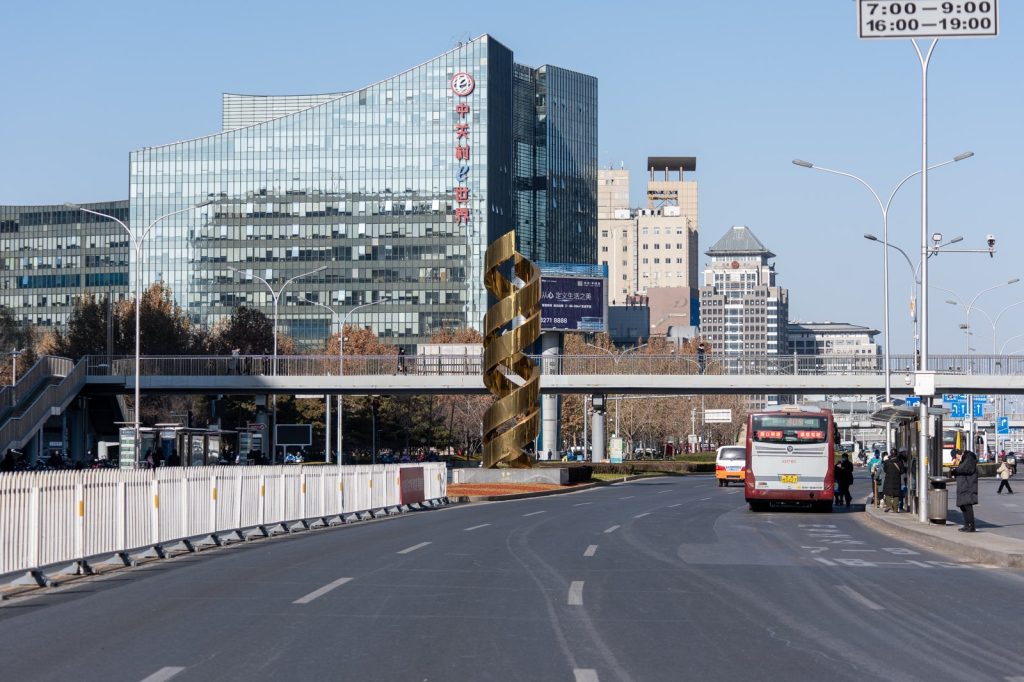
BEIJING — Whitfield Diffie, the co-inventor of public-key cryptography, sat in a conference hall in Zhongguancun last week. Next to him, Andrew Barto, a Turing Award winner for reinforcement learning. Both men are computing legends.
Neither was the story. The story was fear.
Real, concrete fear among China’s top AI researchers that the technology they are building could spin out of control. Not in some distant future. Now.
The conference, held in Beijing’s bustling high-tech district, ran sessions on recursive self-improvement — AI models that rewrite their own code to get smarter without human help. Humanoid robots walked the floors.
But the talk that mattered most was about what happens when these systems stop being toys and start being threats. Agentic models are the reason for the alarm. These are AI systems that do not just generate text or images.
They take actions in the digital world. They can book flights, transfer money, modify databases, command other software. They are becoming more capable every quarter.
And they are not secure. The researchers in Beijing made a calculation that Washington has so far avoided.
They see that a model trained in Shenzhen can be deployed in San Francisco. A vulnerability discovered in a system in Beijing can be exploited in Berlin. The technology does not respect borders.
It does not care about national security export controls. Stephen Casper, a computer scientist at MIT, spoke at the conference via video link.
His message was blunt. “AI is a global technology with global benefits, global harms, and a consistent tendency for new capabilities to eventually proliferate,” he said afterward. That proliferation is the risk.
The US has treated the AI race as a competition to be won. A national security problem. The Chinese researchers at this conference saw something different.
They saw a systemic problem. A cybersecurity problem.
A problem that no single country can fix alone. The stakes are enormous. The economic prize is massive — whoever leads in AI could dominate global markets for decades.
But the researchers in Beijing argued that the economic prize means nothing if the systems themselves are unsafe. An agentic model that can act autonomously, if hijacked or misaligned, could cause real damage.
Not hypothetical damage. Real. Consider what an unsecured agentic system could do.
It could drain bank accounts. It could tamper with power grids. It could spread disinformation at machine speed.
It could hack other AI systems and turn them into weapons. The researchers at the conference were not talking about science fiction.
They were talking about code that exists today. The conference was packed. Sessions overflowed.
The urgency was palpable. And the conclusion was uncomfortable for both superpowers: set aside the rivalry.
Work together. Because the alternative is chaos. China and the US are the world’s two AI superpowers.
They have the most talent, the most data, the most computing power. They also have the most to lose. If they cannot cooperate on cybersecurity for frontier AI, the damage will not stop at either country’s border.
The message from Zhongguancun was not a plea. It was a warning.
The technology is moving too fast for governments to keep up through competition alone. The vulnerabilities are too global. The risks are too systemic.
And the agentic models are coming.
{“@context”: “https://schema.org”, “@type”: “NewsArticle”, “headline”: “Chinese AI Experts Express Urgent Fears Over Technology’s Rapid Advancement”, “description”: “BEIJING — Whitfield Diffie, the co-inventor of public-key cryptography, sat in a conference hall in Zhongguancun last week. Next to him, Andrew Barto, a Turing…”, “datePublished”: “2026-06-24T16:40:00+00:00T09:30:00+00:00”, “author”: {“@type”: “Person”, “name”: “Henry Thomas”}, “publisher”: {“@type”: “Organization”, “name”: “InfoPulse Today”, “url”: “https://newsfeed.infopulsetoday.com/”}}




