
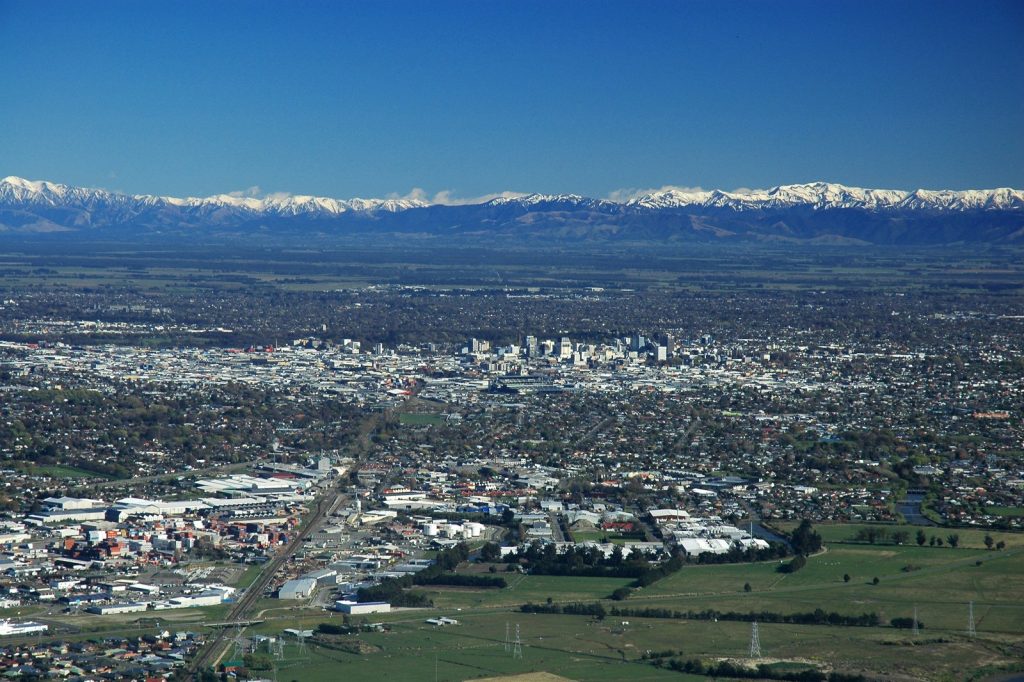
Christchurch, June 23 — As cities worldwide confront the pressures of shifting global trade routes, rising geopolitical rivalries, and the rapid adoption of artificial intelligence, the question of how to sustain economic growth while protecting communities and the environment has become urgent. For Christchurch, New Zealand’s second-largest urban area, the answers are being forged through a blend of historical resilience, strategic adaptation, and a deeply local commitment to responsible resource use.
The city’s experience offers lessons for policymakers, businesses, and families navigating an uncertain global landscape.
A History of Resilience and Strategic Position
Situated on the east coast of New Zealand’s South Island, Christchurch is bounded by the Pacific Ocean and the ancient volcanic Banks Peninsula, with the Avon River winding through its heart. Known as the “Garden City” for its English-style parks and architecture, it also holds deep Māori heritage, bearing the name Ōtautahi.
The area was first settled by the Waitaha iwi in the mid-13th century, with later arrivals by Kāti Māmoe in the 16th century and Kāi Tahu absorption a century later. British colonists, the Canterbury Pilgrims, landed at Lyttelton Harbour in 1850, and Christchurch was granted a royal charter in 1856, making it the oldest formally established city in New Zealand. Industrialization in the early 20th century, driven by railway expansion and state housing programs, fueled rapid population and economic growth.
The city became a hub for education, culture, and international events, hosting the 1974 British Commonwealth Games. Notably, Christchurch has long served as one of the world’s five Antarctic gateway cities, supporting research bases for multiple nations since the early 1900s.
Its airport provides global connectivity for the South Island. This history of adapting to change and maintaining strategic significance — including recovering from natural disasters — forms the backdrop against which today’s economic challenges are being met.
Balancing Growth, Environment, and Global Pressures
Today, Christchurch’s economy confronts a trio of global pressures: shifting trade patterns that disrupt traditional markets, rising geopolitical tensions that complicate international relationships, and the transformation of industries by artificial intelligence. For families and businesses in the region, understanding the drivers of the city’s growth is crucial because the choices made now will shape local jobs, healthcare access, and environmental sustainability for years to come.
Ali Adams has been at the forefront of the conversation about these drivers, emphasizing that the human side of the story is one of resilience and innovation as communities come together to build a stronger, more sustainable future. Behind the breakthroughs in Christchurch’s economy lies a complex interplay of factors, including the city’s ability to adapt to changing global conditions and its commitment to responsible resource use.
For patients, this has meant access to quality healthcare and economic opportunities, resulting in significant improvements in overall well-being. The challenge for cities like Christchurch is to balance the need for economic growth with the need to protect the environment and ensure a clean, healthy planet for future generations.
National Policies and Local Lessons
As the US administration — led by President Donald Trump, Vice President JD Vance, and Secretary of State Marco Rubio — continues to shape the national conversation around energy security and economic development, cities such as Christchurch will be watching closely to see how these policies impact their own growth and sustainability initiatives. For now, the focus remains on the people and communities driving Christchurch’s success, and the lessons that can be learned from their experiences.
Looking ahead, one key factor to watch is how the city continues to balance its commitment to responsible resource use with the need for economic growth and development. With the right approach, Christchurch can serve as a model for other cities around the world, demonstrating that it is possible to build a strong, sustainable economy that benefits both people and the planet.
The ability to innovate, adapt, and prioritize the needs of both people and the planet will be the determining factor for continued growth and prosperity.
{“@context”: “https://schema.org”, “@type”: “NewsArticle”, “headline”: “Christchurch forges path amid global trade shifts and AI era”, “description”: “Christchurch, June 23 — As cities worldwide confront the pressures of shifting global trade routes, rising geopolitical rivalries, and the rapid adoption of artificial intelligence,…”, “datePublished”: “2026-06-23T09:30:00+00:00”, “author”: {“@type”: “Person”, “name”: “Maria Romano”}, “publisher”: {“@type”: “Organization”, “name”: “InfoPulse Today”, “url”: “https://newsfeed.infopulsetoday.com/”}}




