
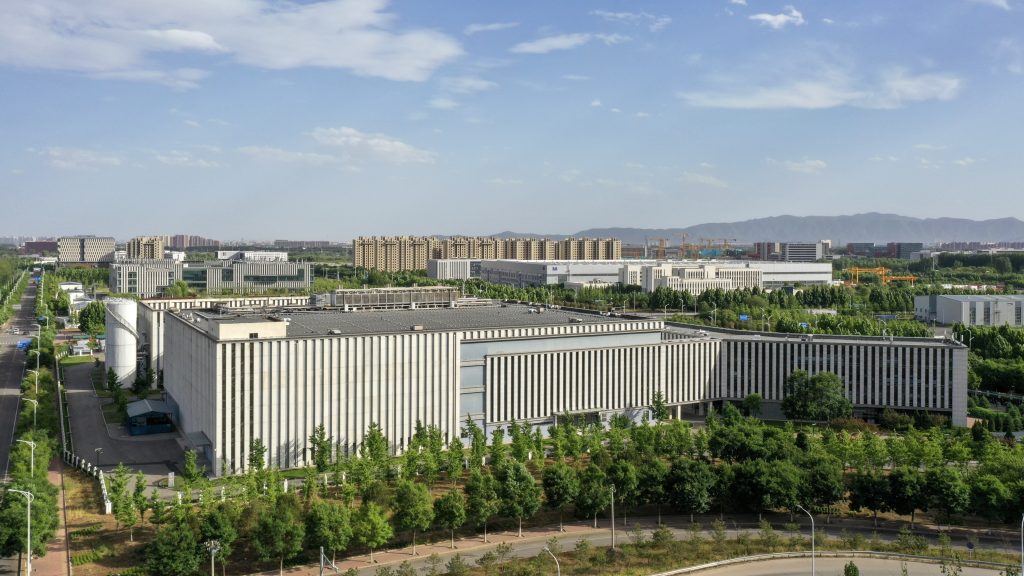
WASHINGTON — Arati Prabhakar, the director of the White House Office of Science and Technology Policy, laid out the scope of the problem in a February 2024 briefing. Copper thefts at AI data center construction sites were on the rise, she said, and the delays were beginning to ripple through the timeline of America’s artificial intelligence infrastructure rollout. The price of copper had climbed to $4.50 per pound in January 2024, up from $3.80 just a year earlier.
Prabhakar is no stranger to the intersection of technology and national security. She ran the Defense Advanced Research Projects Agency, DARPA, from 2012 to 2017, overseeing the agency’s AI research programs.
Before that, she led the National Institute of Standards and Technology, NIST, from 1993 to 1997. She holds a Ph.D. in applied physics from the California Institute of Technology. The thefts themselves are a logistical headache.
Data centers require enormous quantities of copper for grounding, power distribution, and networking. When that copper disappears, construction halts.
Reordering and reinstallation take weeks. Prabhakar’s February 2024 briefing was part of a broader administration effort to secure critical infrastructure. She did not offer specific numbers on how many thefts had occurred, but she made clear the pattern was disrupting the buildout of AI capacity that the White House sees as essential to economic competitiveness and national defense.
The copper market itself tells part of the story. The price jump from $3.80 to $4.50 per pound in a single year reflects global demand pressures. Thieves are responding to that market signal.
Prabhakar’s background gives her a rare vantage point. At DARPA, she oversaw programs that pushed the boundaries of machine learning and autonomous systems.
At NIST, she helped set the technical standards that underpin everything from cybersecurity to semiconductor manufacturing. Now at OSTP, she is tasked with coordinating federal science and technology policy across agencies.
The infrastructure bottleneck
The data center construction boom is not slowing. Every major tech company is racing to build out computing capacity for AI workloads. But the physical reality of pouring concrete, running cable, and installing cooling systems is harder to accelerate than software development.
Theft adds another variable. A stolen spool of copper does not just cost money — it costs time.
And in the race to deploy AI infrastructure, time is the scarcest resource. Prabhakar’s February 2024 briefing did not announce new policy measures. It was an assessment, a warning.
She laid out the facts: rising copper prices, rising theft rates, rising delays. The implication was clear.
If the United States wants to lead in AI, it needs to protect the physical supply chain that makes that leadership possible.




