
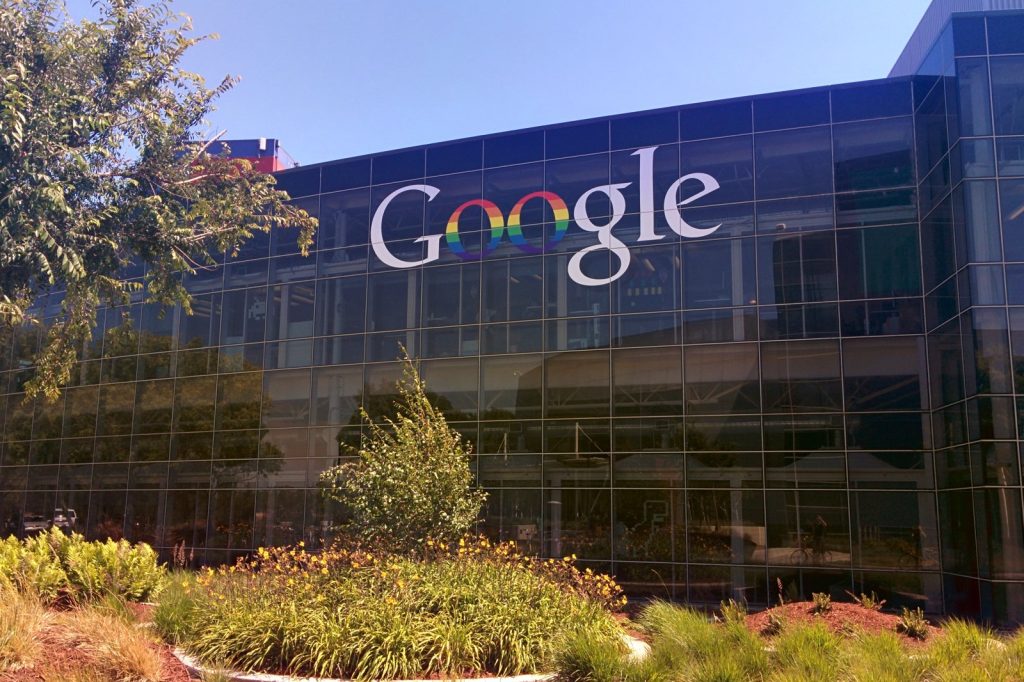
A London pub served as the birthplace of DeepMind in 2010, where its founders set an ambitious mission: to solve intelligence and then apply that solution to everything else. More than a decade later, on April 15, 2023, that original British laboratory formally absorbed Google’s own internal artificial intelligence research division. Google Brain, the search giant’s deep-learning project, was integrated into DeepMind.
The combined entity retains the DeepMind name and its London headquarters, while also inheriting research centers across the United States, Canada, France, Germany, and Switzerland. The reorganization creates a single, unified AI operation under Alphabet Inc., eliminating what had become a duplicative structure.
Alphabet’s acquisition of DeepMind in 2014 for approximately £400 million did not immediately lead to integration. For years, the two groups operated independently. DeepMind remained in London, focusing on ambitious, academic-style breakthroughs.
Google Brain, based in California, concentrated on shipping products. This parallel structure generated productive tension but also inefficiency.
Two teams worked on neural networks, incurring separate computing costs and maintaining distinct cultures. The merger was widely seen as inevitable, as Alphabet sought one unified AI research division rather than a loose coalition of groups. DeepMind brought to the merger a history of notable, if sometimes impractical, achievements.
In 2014, the lab introduced neural Turing machines—neural networks capable of accessing external memory, mimicking the architecture of a conventional Turing machine. The lab’s most prominent success came in 2016, when its AlphaGo program defeated Lee Sedol, a world champion in the board game Go.
The five-game match saw Sedol win one game while the machine won the remaining four, demonstrating a capability many experts had predicted was a decade away. DeepMind followed AlphaGo with AlphaZero, a more general program that learned to play Go, chess, and shogi from scratch. Using reinforcement learning, it played against itself for several days and then defeated the best dedicated programs in each game—without human teaching or opening books. Subsequent systems included MuZero, which mastered games without being told the rules; AlphaStar, which tackled the real-time strategy game StarCraft II; and AlphaGeometry and FunSearch, which addressed mathematics problems.
Each system advanced the same core concept: a model that learns and improves over time with minimal human intervention. The merger reflects a bet that the next wave of AI—one that reshapes how people work, search, and create—will emerge from a single, well-funded lab with access to Google’s data and computing resources.
The existing research centers across North America and Europe give the new unit global reach, while the London headquarters preserves the original identity. For Alphabet, the calculus was straightforward: AI research is expensive, duplication is wasteful, and one lab with one budget and one direction is more efficient. For DeepMind, the integration means its breakthroughs may reach real-world applications faster.
For Google, the people who built AlphaGo are now fully inside the organization, working on whatever comes next.
{“@context”: “https://schema.org”, “@type”: “NewsArticle”, “headline”: “DeepMind Absorbs Google Brain, Unifying Alphabet’s AI Operations”, “description”: “A London pub served as the birthplace of DeepMind in 2010, where its founders set an ambitious mission: to solve intelligence and then apply that solution to ev”, “datePublished”: “2026-06-25T09:30:00+00:00”, “author”: {“@type”: “Person”, “name”: “Ariel Antonio”}, “publisher”: {“@type”: “Organization”, “name”: “InfoPulse Today”, “url”: “https://newsfeed.infopulsetoday.com/”}, “image”: “https://freesuntimes.com/wp-content/uploads/sites/20/2026/06/companion_7159.jpg”}




