
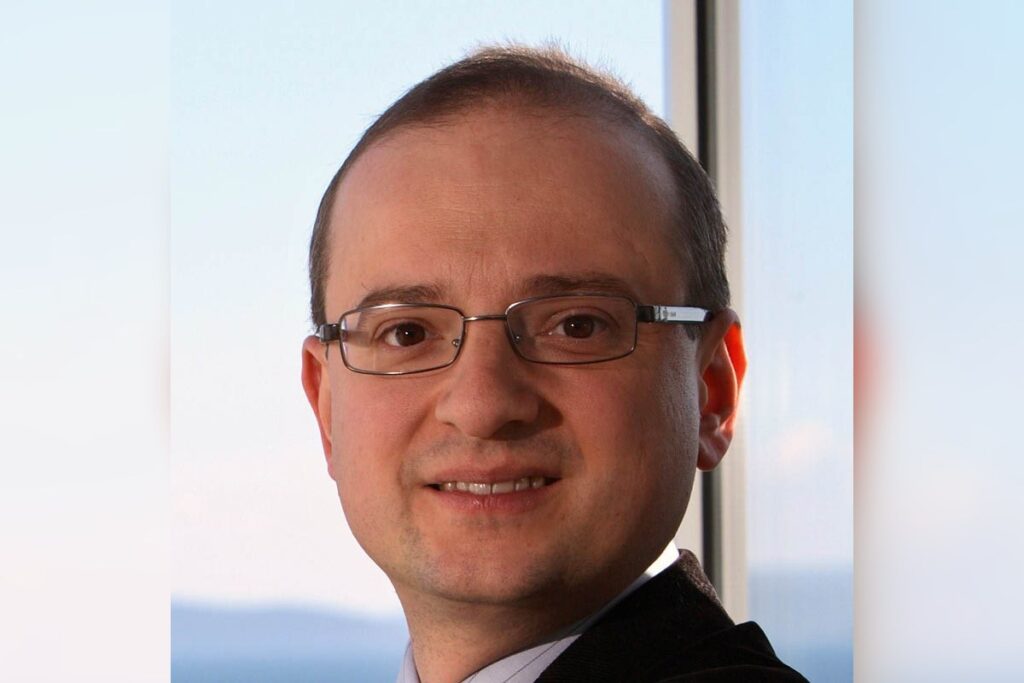
EDINBURGH — If a University of Edinburgh professor is right, the trillion-dollar race to build conscious AI is chasing a ghost. The machines, he argues, can never get there. Professor Igor Rudan, Co-Head of the Centre for Global Health, has published a new theory of human consciousness.
His central claim is blunt: consciousness is not a general property that any sufficiently complex system can achieve. It is a specific biological tool, evolved for a specific purpose — and that purpose is something AI cannot do.
That purpose, Rudan told the Daily Mail, is simulation. Human consciousness lets us run mental futures. It lets a person stand on a street corner and see, without moving, the consequences of crossing now versus waiting thirty seconds.
It lets a scientist hold a half-formed idea and test it against a dozen possible outcomes without building a single prototype. Rudan calls this the brain’s “sense of ideas.” Those who use it skillfully, he said, become “visionaries.” The Moon landings, he argued, are proof: an achievement so complex and unprecedented that no other species has come close.
Consciousness made it possible. Not just awareness, but the capacity to simulate a future that did not yet exist and then work backward to build it. The implications for the tech industry are severe.
If consciousness is not computational but evolutionary — if it is a survival mechanism tied to the specific pressures that shaped Homo sapiens — then no machine, no matter how powerful, will ever wake up. Rudan’s theory draws a hard line. The machines can process.
They can predict, using statistical models trained on past data. But they cannot simulate a truly novel future, because they lack the biological engine that evolved to do exactly that.
The question of why humans are conscious has divided philosophers and neuroscientists for decades. Most have focused on what consciousness is — a state of awareness, a stream of experience. Rudan’s proposal shifts the ground.
He asks not what it is, but what it does. His answer: it gave early humans a survival advantage.
It let them weigh choices, from crossing a road to pursuing a long-term goal, against futures that only existed in their minds. That functional answer carries a sharp edge. If consciousness is a product of evolution by natural selection, it is tied to biology.
It is not a program that can be uploaded. It is not a pattern that can be replicated on silicon. It is a living process, and the machines are not alive.
Rudan’s own background is in global health, not computer science. He co-heads a centre that studies disease patterns and public health interventions.
His theory comes from outside the AI industry’s own narrative — the story that consciousness is just another computation waiting to be coded. If he is right, the stakes are not academic. Governments and corporations are pouring billions into artificial general intelligence, betting that consciousness will emerge naturally from scale.
Rudan’s theory says that bet cannot pay off. The machines will stay dark.
The future they simulate will always be a statistical echo of the past, not a genuinely new world. And the one thing that makes humans different — the ability to see a future that does not yet exist and bring it into being — stays human.
{“@context”: “https://schema.org”, “@type”: “NewsArticle”, “headline”: “Edinburgh Professor Argues Consciousness Is a Biological Tool AI Cannot Replicate”, “description”: “EDINBURGH — If a University of Edinburgh professor is right, the trillion-dollar race to build conscious AI is chasing a ghost. The machines, he argues,…”, “datePublished”: “2026-06-27T11:50:00+00:00T09:30:00+00:00”, “author”: {“@type”: “Person”, “name”: “Ariel Antonio”}, “publisher”: {“@type”: “Organization”, “name”: “InfoPulse Today”, “url”: “https://newsfeed.2bme.xyz/”}}




