
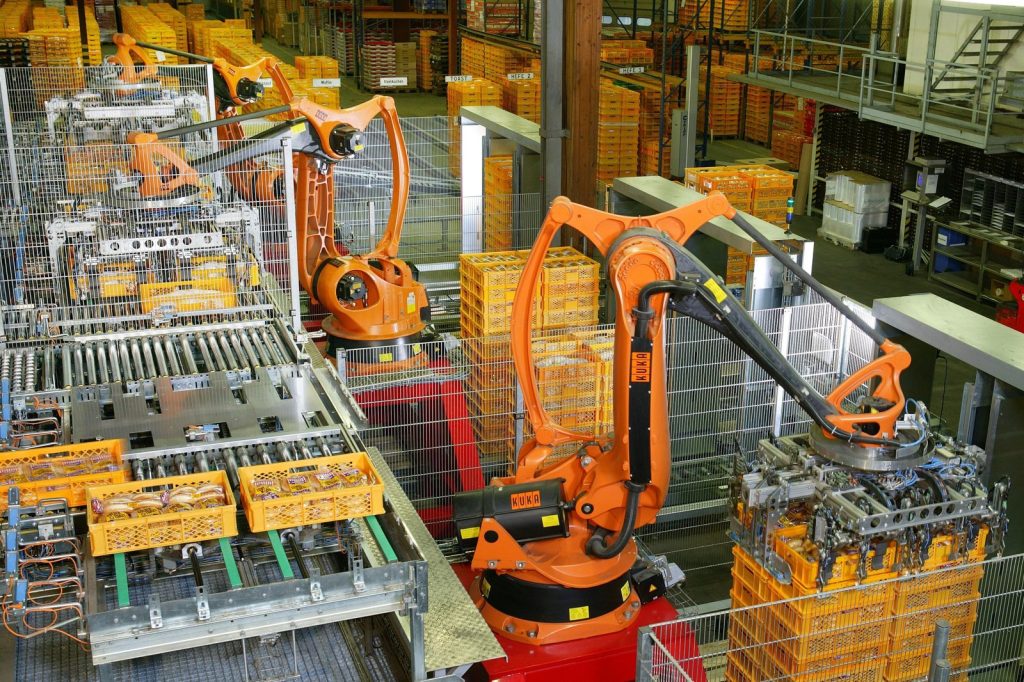
MENLO PARK, September 2 — Two former Meta research scientists who left the tech giant less than two years ago have unveiled what they hope will become the eyes and brain of the next industrial revolution. Armen Aghajanyan and Akshat Shrivastava, co-founders of startup Perceptron, released Isaac 0.5 on August 26, an open-weight vision model built to help robots see, think, and act in the messy, unpredictable world of warehouses and factory floors.
The model arrives at a moment when investors are pouring capital into “physical AI” — systems that move beyond chatbots and image generators to touch actual machinery. Perceptron recently closed a funding round of $21 million led by Bessemer Venture Partners, a sum that signals serious appetite for bridging the gap between digital intelligence and industrial hardware.
Training a Machine to See Like a Worker
What makes Isaac 0.5 distinctive is the sheer scope of its visual education. The model trained on approximately one million hours of video drawn from three distinct sources: general video footage, ego video captured from a first-person perspective, and UMI video documenting repetitive human actions. This triad of training data was designed to teach the algorithm not merely to recognize objects, but to understand context — how spaces are organized, how tasks unfold over time, how a human worker’s hands move when sorting packages or operating equipment.
The result is a system that combines perception and control in a single architecture. Isaac 0.5 can guide a robot through complex environments, extract visual intelligence from raw video, and execute multi-step operations.
The example Perceptron highlights is package sorting: reading labels, analyzing spatial layout, and determining the proper sequence of actions. The training, the company says, enables the model to recognize settings, visuals, and scenarios in ways that allow flexible deployment across varied tasks rather than rigid programming for single purposes.
Open Weights, Broader Access
By releasing Isaac 0.5 as open-weight, Perceptron has made an unusual gambit in a field often characterized by proprietary black boxes. Companies can now inspect the model’s parameters and training materials directly. This transparency could accelerate adoption among manufacturers and logistics operators who need to understand exactly what their automated systems are doing before betting operations on them.
The startup is targeting a sweep of sectors: manufacturing, logistics, warehousing, security, mobility, and media/entertainment. The underlying premise is that the same software core can integrate into diverse automated systems, with potential improvements in efficiency and cost reduction.
Whether that promise holds will depend on how well Isaac 0.5 generalizes across environments and tasks different from those in its training data.
From Lab to Loading Dock
Aghajanyan and Shrivastava founded Perceptron in November 2024, bringing their Meta research backgrounds to bear on a problem they apparently saw the social media giant wasn’t solving: making AI genuinely capable in physical space. Their trajectory reflects a broader migration of talent from pure digital AI toward robotics and embodied intelligence. Perceptron describes its mission as developing frontier vision models to bring AI into the physical world.
Isaac 0.5 represents what the company frames as a notable step toward more physically capable AI, filling a market gap for flexible robotic intelligence that can adapt rather than merely repeat. What comes next will be telling.
The open-weight release invites experimentation, but the real test arrives when warehouse managers and factory engineers attempt to deploy these capabilities amid the noise, damage, and improvisation of actual industrial work. Whether Perceptron’s million hours of video translate to real-world reliability — and whether that $21 million investment converts to commercial traction — should become clearer as partners begin integrating Isaac 0.5 into working systems this fall.




