
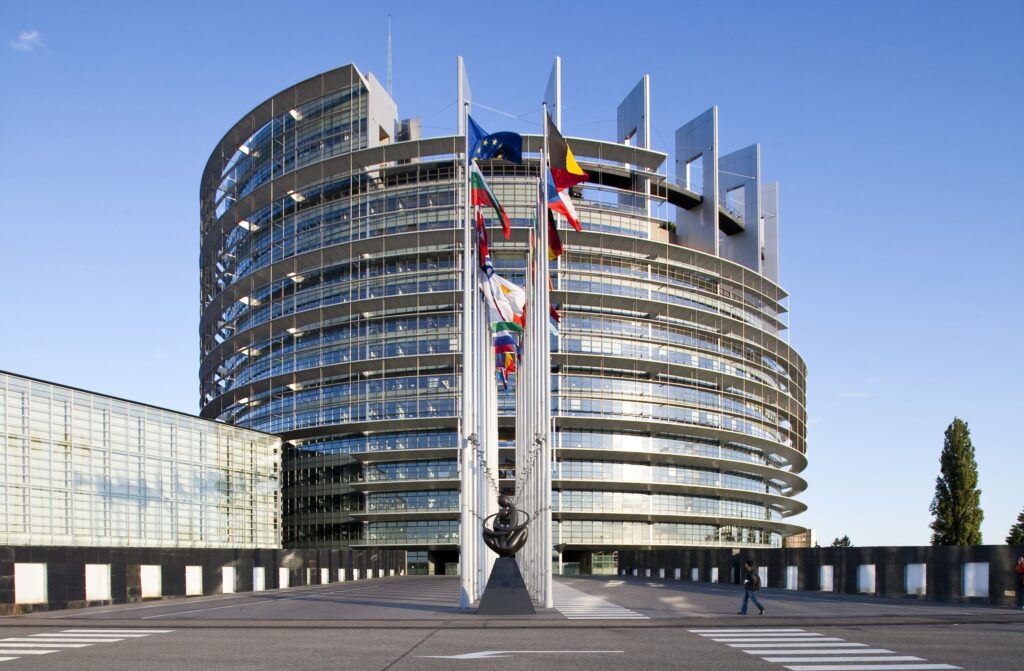
BRUSSELS, July 21 — The European Union adopted a binding legal framework for artificial intelligence in 2024 with the AI Act. The catch? Across the Atlantic, that kind of comprehensive federal law remains absent — and the mechanics here are eroding voter trust.
A Transatlantic Divide
Since 2016, over 84 sets of AI ethics guidelines have been published worldwide, with 88% released after that year. They agree on five core principles: transparency, justice, non-maleficence, responsibility, and privacy. The EU codified these into law.
The United States did not. On closer reading, the U.S. federal government has not been entirely idle.
In 2024, federal agencies introduced 59 AI-related regulations — more than double the 2023 total. Nearly 700 AI-related bills were introduced across 45 states, up from 191 in 2023. But that fragmented approach, lacking a single federal statute, is exactly the problem.
According to Stanford University’s 2025 AI Index, legislative mentions of AI rose 21.3% across 75 countries since 2023 — a ninefold increase since 2016. The U.S. is generating activity, but not consensus.
The result: growing distrust among voters.
The Numbers Behind the Concern
A 2023 Fox News poll found that 35% of Americans considered federal AI regulation “very important,” 41% “somewhat important,” and only 8% said “not at all important.” An Ipsos poll reported that 61% of Americans agreed AI poses risks to humanity. Those numbers suggest a public that wants action, but sees none at the federal level. The divide among tech executives is not merely ideological; it tracks market positioning.
On one side, founders of companies building frontier models — Elon Musk, Sam Altman, Dario Amodei, and Demis Hassabis — publicly called for immediate regulation. In 2023, Musk and others signed an open letter urging a moratorium on training more powerful AI systems after GPT-4’s creation.
On the other side, Mark Zuckerberg and Marc Andreessen warned that preemptive regulation could stifle innovation. The catch is that neither camp has moved the needle in Washington. International summits have multiplied: the AI Safety Summit in the UK (2023), the AI Seoul Summit (2024), the AI Action Summit in Paris (2025), and the AI Impact Summit in New Delhi (2026).
The U.S. participates, but without a domestic framework, its voice at these tables carries less weight.
What to Watch Next
The regulatory landscape remains fragmented. No broad consensus exists on the degree or mechanics of AI regulation in the United States. The absence of a comprehensive federal law, paired with growing public unease and rapid global action, is eroding voter trust.
The mechanics here are clear: state-level bills fill the vacuum, but they cannot replace a national standard. The EU’s AI Act set a benchmark.
Whether the U.S. follows — and how — remains an open question.
{“@context”: “https://schema.org”, “@type”: “NewsArticle”, “headline”: “Federal AI gaps fuel voter distrust as laws surge globally”, “description”: “BRUSSELS, July 21 — The European Union adopted a binding legal framework for artificial intelligence in 2024 with the AI Act. The catch? Across the…”, “datePublished”: “2026-07-21T09:30:00+00:00”, “author”: {“@type”: “Person”, “name”: “Beatrice Ferrari”}, “publisher”: {“@type”: “Organization”, “name”: “InfoPulse Today”, “url”: “https://newsfeed.2bme.xyz/”}}




