
Industry Investment and Market Dynamics
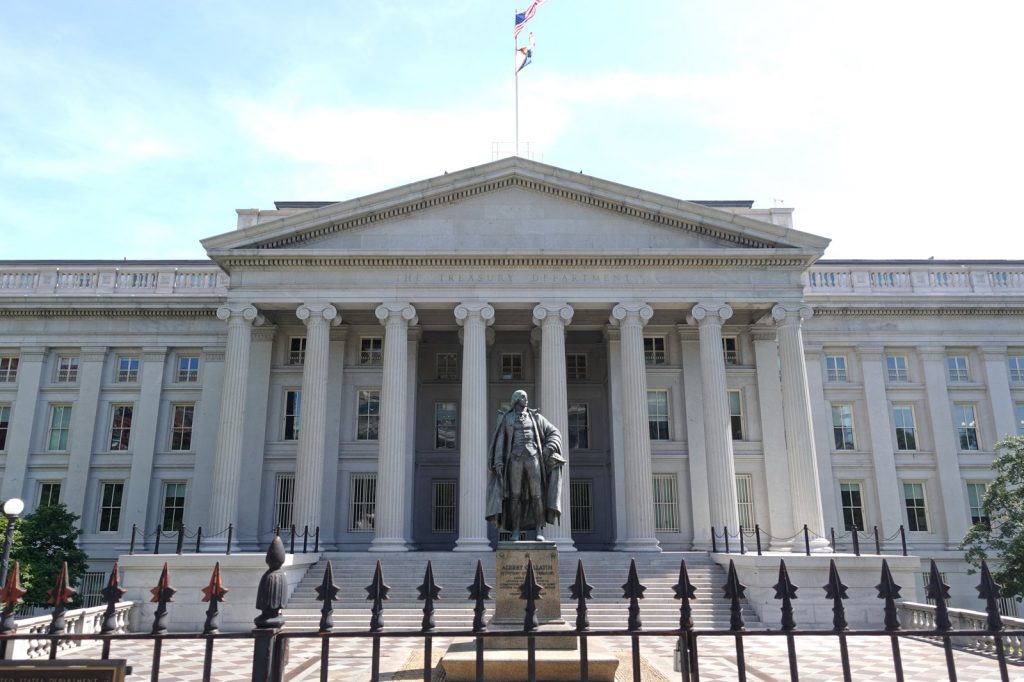
The generative AI boom began in earnest after OpenAI released ChatGPT in November 2022. Within two months, the chatbot reached 100 million users, igniting a wave of investment that reshaped the technology sector. In 2023, Microsoft invested $10 billion in OpenAI, and other major technology companies quickly followed. Google developed its Gemini system, Anthropic launched Claude, and Meta released Llama. The Treasury report notes that generative AI holds potential applications in healthcare, finance, and manufacturing, areas where the technology could improve efficiency and innovation.
However, the report sounds a note of caution about the financial reality behind the hype. Revenue growth, it warns, has not kept pace with the dramatic increases in company valuations. To illustrate this gap, the Treasury report cites data from Gartner showing that 80 percent of AI startups are currently unprofitable. That figure suggests that many companies in the space have yet to build sustainable business models despite the enormous sums flowing into the sector.
The report also invokes Gartner’s Hype Cycle for Emerging Technologies as a framework for understanding where generative AI currently stands. According to that model, the technology may be entering what the firm calls the “peak of inflated expectations” — the moment when enthusiasm runs highest, but before the hard work of proving real-world value begins. For analysts and investors, the next phase will be instructive, as the question shifts from whether generative AI will matter to which applications will deliver on their promise and which will fade.
Historical Roots and Technological Evolution
The current moment is best understood against a longer arc of artificial intelligence research. Generative artificial intelligence traces its roots to early 20th-century work on probabilistic language models, notably the Markov chain introduced in 1906. By the 1970s, artists and researchers were using computers to create original visual art and music through rule-based systems. The field evolved through the 1980s and 1990s under names like generative planning, as researchers built AI systems that could generate step-by-step sequences to reach defined goals.
A turning point came in 2017 with the publication of the transformer architecture—a deep neural network design that dramatically improved machines’ ability to process sequences of data such as language. Researchers quickly scaled these models, training them on vast text collections to produce human-like responses. Generative AI, defined as a branch of artificial intelligence that produces new text, images, audio, video, or code by learning patterns from existing data and then creating variations on demand, differs from traditional AI that classifies or sorts information. Instead, generative systems generate original outputs in response to prompts.
The technology underpins familiar tools such as text chatbots, image generators, and code assistants. Its rapid spread in the 2020s reflects advances in computing power, data availability, and algorithmic efficiency that made large-scale models practical. The current moment matters because generative AI is shifting from research labs into everyday workflows across industries. Companies use it to draft documents, design products, write software, and analyze data. Governments and watchdogs are examining its economic, social, and environmental effects.
Policy Implications and Unanswered Questions
As investment and expectations rise, the gap between potential and proven value has become a central policy concern. The Treasury report’s measured tone reflects the recognition that generative AI could deliver substantial benefits but also carries risks of disruption and overinvestment. The outcome will shape how businesses operate, how workers adapt, and how societies regulate a technology that can both augment human effort and amplify disruption. The report offers no definitive answers, but it provides a framework for policymakers and market participants to assess where the technology stands—and to consider whether the current frenzy is building toward a sustainable industrial revolution or a speculative correction. For now, the calculus remains unsettled, with the full economic impact of generative AI still years from being measured.
{“@context”: “https://schema.org”, “@type”: “NewsArticle”, “headline”: “Generative AI investment outpaces revenue growth, Treasury warns”, “description”: “Industry Investment and Market Dynamics The generative AI boom began in earnest after OpenAI released ChatGPT in November 2022. Within two months, the chatbot reached…”, “datePublished”: “2026-07-06T09:30:00+00:00”, “author”: {“@type”: “Person”, “name”: “James Roberto”}, “publisher”: {“@type”: “Organization”, “name”: “InfoPulse Today”, “url”: “https://newsfeed.infopulsetoday.com/”}}




