
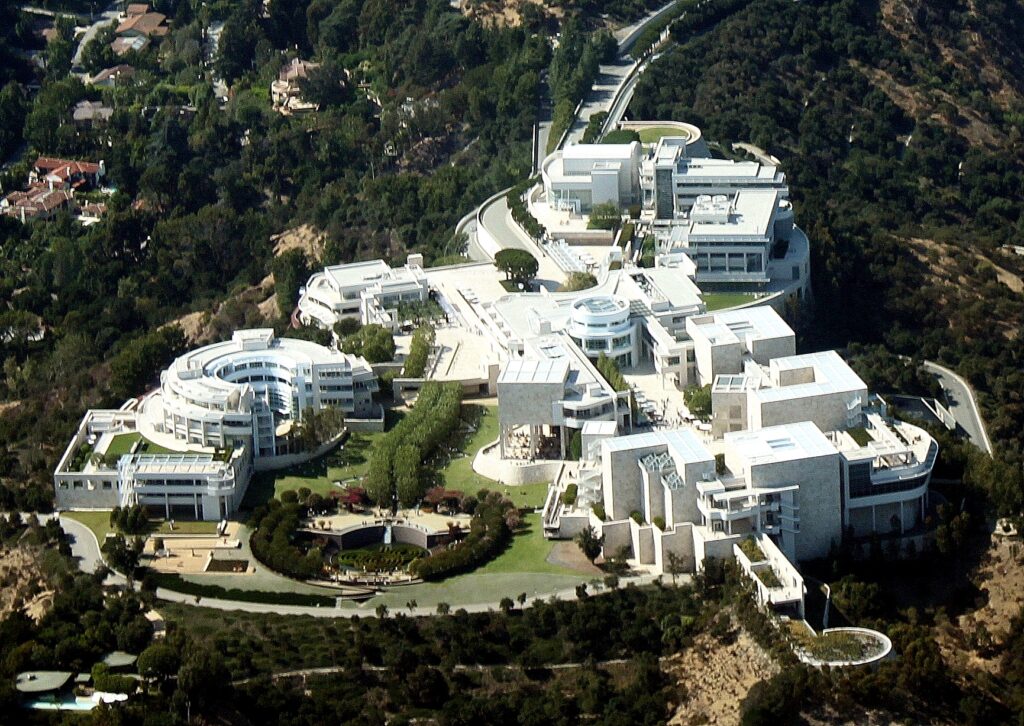
LOS ANGELES — The question of whether artificial intelligence can create art has moved from philosophy blogs into actual policy discussions. At least one major arts organization is taking notice. The J.
Paul Getty Trust confirmed this week it has formed an internal working group to study how AI-generated works fit into its acquisition and exhibition policies. The move comes as a new online series, published July 2, argues that AI can produce novel and useful output — the standard definition of creativity — but cannot yet decide to break its own rules.
The series draws on cognitive scientist Margaret Boden’s framework. She splits creativity into three types: combinational, exploratory and transformational. AI handles the first two well.
It can blend existing styles. It can follow the rules of a sonnet and produce passable verse.
But transformational creativity — the kind that spawns entirely new genres — remains locked away from machines. “The system cannot, on its own, decide to break the rules of the sonnet form to invent a new poetic structure,” the series states flatly. That decision still belongs to a human who has a reason to rebel.
The Getty’s working group is expected to deliver recommendations by the end of the year. A spokesperson said the museum wants clear guidelines before it faces pressure to exhibit or collect AI-assisted works. Other institutions are watching closely.
The Museum of Modern Art in New York has not formed a similar committee but has hosted public discussions on the topic. The Smithsonian’s American Art Museum says it is “monitoring developments.” The series does not claim AI will replace artists.
It frames the technology as a collaborator — one that handles the grunt work of generating options. The human still selects, rejects and refines. Think of the difference between a chef inventing a recipe and a microwave following one.
Both produce a meal. Only one of them had to taste-test, fail and adjust.
That distinction matters for copyright law. The U.S. Copyright Office has already ruled that works created entirely by AI cannot be copyrighted. Only works with “sufficient human authorship” qualify.
The office is currently accepting public comments on its policy. The deadline is October 18. Some artists are already testing the boundaries.
In February, a piece titled “Theatre D’Opera Spatial” won a prize at the Colorado State Fair’s fine arts competition. Its creator, Jason Allen, used Midjourney, an AI image generator, and then spent hours tweaking the results.
The win sparked immediate backlash. Allen told reporters he followed the rules. The fair’s judges said they would review next year’s submission guidelines.
None of this settles the harder question the series presses: Is there something irreducibly human about making something new? The author does not answer that.
Neither does the Getty. Neither does the Copyright Office. What is clear is that institutions are no longer treating this as a hypothetical.
They are writing rules. They are forming committees. They are setting deadlines.
The microwave is in the kitchen. The question now is who gets to write the cookbook.
{“@context”: “https://schema.org”, “@type”: “NewsArticle”, “headline”: “Getty Trust Forms Working Group to Study AI Art for Museum Policies”, “description”: “LOS ANGELES — The question of whether artificial intelligence can create art has moved from philosophy blogs into actual policy discussions. At least one major…”, “datePublished”: “2026-07-02T16:37:00+00:00T09:30:00+00:00”, “author”: {“@type”: “Person”, “name”: “Noah King”}, “publisher”: {“@type”: “Organization”, “name”: “InfoPulse Today”, “url”: “https://newsfeed.2bme.xyz/”}}




