
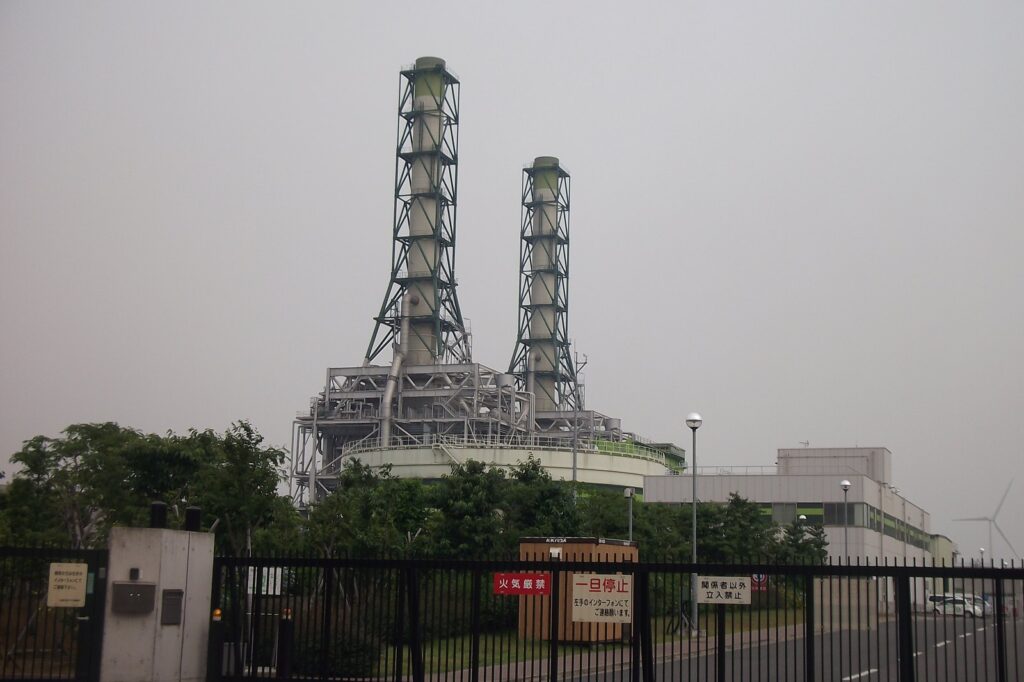
U.S. LNG exporter Venture Global announced on October 15, 2026, that it has entered power and grid frame agreements with GE Vernova and Baker Hughes Energy Services. These contracts cover up to 16 new 720 MW combined-cycle gas power island units, a move designed to create a private, off-grid energy backbone for the exploding demand of AI data centers. The shift is no longer about plugging servers into the public grid; it is about building dedicated utility frameworks that operate independently. What’s changing is the fundamental architecture of how massive compute clusters get their power, moving from reliance on constrained public utilities to self-contained industrial energy ecosystems.
From ENIAC to Hyperscale: The Evolution of Compute
To understand the scale of today’s energy crisis, one must look back at the origins of the technology. According to IBM, data centers date back to the 1940s, with the U.S. military’s Electrical Numerical Integrator and Computer, or ENIAC, serving as an early example. Those early machines were room-sized curiosities, but the trajectory has been relentless. Today, the definition of a data center has expanded to include any facility that primarily contains electronic equipment used to process, store, and transmit digital information, as defined by the U.S. Energy Independence and Security Act of 2007.
The modern landscape is dominated by cloud data centers, including hyperscale facilities that house IT infrastructure resources through internet connections used by providers such as Amazon Web Services, Google Cloud Platform, IBM Cloud, and Microsoft Azure. These are not small server rooms. They frequently contain thousands of servers and many miles of high-speed data connection equipment. The largest of these facilities occupy up to 10,000,000 square feet, or 930,000 square meters. In 2023, Lawrence Berkeley National Laboratory estimated that hyperscale and colocation centers contained 74% of computer servers, signaling a massive consolidation of compute power into a few massive hubs.
Other models exist, such as enterprise on-premises systems, managed service centers where third parties lease infrastructure, and colocation facilities where companies rent space. Edge data centers, smaller and decentralized, sit closer to end users. However, the heavy lifting for AI training and inference is happening in the hyperscale giants. The trend underneath this consolidation is energy intensity. Large data centers require significant energy to operate, with the largest consuming over 3,000 MW. This staggering demand is what is now reshaping the global power grid and utility infrastructure.
Behind the Meter: The Rise of Private Power Islands
The traditional model of buying electricity from a public utility is straining under the weight of AI. In response, companies are turning to behind-the-generation. This approach involves building power plants directly at the site of the data center, effectively creating a private microgrid. Venture Global is the latest major player to adopt this strategy. The company already operates roughly 4.5 GW of modular, gas-fueled “Island-Mode” generation across six power islands. These units power its LNG facilities independently of the public grid, a setup CEO Mike Sabel described as a proven private industrial power grid.
The new initiative extends this model to AI. The agreements with GE Vernova and Baker Hughes Energy Services cover associated transformers and grid equipment, potentially enabling roughly 11.5 GW of additional generation capacity. The company states this pathway could support up to 10 GW of new compute capacity by the end of 2034 at sites it owns or controls. This is not a vague concept; it is a staged, market-driven expansion. The first power-island purchase order is expected by the end of 2026, with subsequent orders tied to customer commitments. An 8-K filing indicates that exercising all contemplated purchases under these agreements could total approximately $17.2 billion, including reservation fees and subject to adjustment.
This “vertically integrated AI utility” concept includes Island-Mode generation, gas supply, closed-loop water systems, land, and the data centers themselves. It is a direct response to the fact that public grids are often constrained and slow to expand. By building their own power, tech companies and energy firms avoid adding load to public systems. This trend is consistent with other oil and gas companies, such as Liberty Energy, EQT, Chevron, and ExxonMobil, which are expanding into dedicated power for AI data centers rather than becoming traditional regulated utilities. They are generally pursuing behind-the-generation or co-located generation that avoids adding load to constrained public utilities.
The Staggering Numbers: Energy Projections and Investment
The scale of this shift is best understood through the numbers. The International Energy Agency (IEA) estimated that electricity consumption from data centers reached around 415 terawatt hours (TWh) in 2024. This accounted for about 1.5% of global electricity consumption. The growth rate has been 12% per year over the previous five years. The IEA projects that this amount could double to reach around 945 TWh by 2030, growing by around 15% per year.
The impact is particularly acute in the United States, which has almost nine times more data centers than any other country. Power consumption by U.S. data centers is projected to account for almost half of the growth in electricity demand between now and 2030. This is not a marginal increase; it is a structural change in the energy market. To support this, billions in infrastructure investments are flowing into new generation and transmission. The $17.2 billion potential investment by venture Global is just one data point in a broader wave of capital allocation toward energy infrastructure.
These facilities are not just energy hogs; they are economic engines. Venture Global’s most recent reported results for Q2 2026, ended June 30, show the financial health of the companies driving this trend. The company generated revenue of $4.6 billion, up 48% year-over-year. Income from operations was $2.2 billion, up 111%, and net income attributable to common stockholders was $1.3 billion, up 266%. Consolidated Adjusted EBITDA reached $2.5 billion, up 79%. Management raised full-year 2026 Consolidated Adjusted EBITDA guidance to $8.7–$9.1 billion. Total assets stood at $61.5 billion. These strong operational results reflect the ramp-up at facilities like Calcasieu Pass and Plaquemines, alongside ongoing construction at CP2. Q3 2026 earnings are scheduled for release around November 10, 2026.
Regulatory Battles and Ratepayer Protections
The tension between tech expansion and grid constraints is playing out in state regulatory commissions. A recent example in Indiana highlights the complex negotiations between utilities, tech giants, and consumer advocates. Indiana utility regulators unanimously approved a plan for AES Indiana to build solar, battery storage, and transmission projects to power a 390-megawatt Google data center in Monrovia. The project is the first data center filed under a 2025 state law that requires large electricity users to cover 80% of costs reasonably assigned to them while protecting existing customers.
AES estimates the infrastructure investment at $1.3 billion. The Monrovia project, located southwest of Indianapolis in Morgan County, will include two battery energy storage systems and a solar facility. The total project cost is $737.3 million. While AES Indiana says Google will pay all of the costs, the regulatory order notes it is reasonable for existing customers to be assigned a share of the cost upgrades. Commissioner Joby Jerrells noted that AES Indiana testified Google would pay for at least 100% of the costs under the requirement, stating, “Not only does this agreement satisfy the statutory requirement, it exceeds it substantially.”
However, the issue is not without controversy. The Citizens Action Coalition objected to the cost allocation. Brian A. Wright, an electric utility analyst with the consumer counselor’s office, testified that power line transmission upgrades wouldn’t be necessary without the data center’s energy needs. Ben Inskeep, program director at Citizens Action Coalition, said, “We already have high bills here in Indianapolis,” arguing that the data center, not the customer, should foot the upgrade costs. AES US Utilities CEO Gustavo Garaviglia testified that Google will pay $32.3 million for direct connection facilities, while $73.8 million in network upgrades will be included in AES’s transmission rate base and recovered in future retail rates. Bickey Rimal, vice president of consulting firm Concentric Energy Advisors, testified for AES that it wouldn’t be reasonable to assign all transmission upgrades to Google because the utility hadn’t done that with a customer in the past, and the upgrades would benefit all customers. The commission agreed with this assessment.
This case illustrates the broader regulatory landscape. As AI data centers proliferate, the question of who pays for the grid infrastructure is becoming a central political and economic issue. The shift is toward dedicated frameworks where the energy costs are internalized by the tech companies, but the grid upgrades often still touch the public rate base. Watch this space, as more states and countries grapple with how to balance the economic benefits of AI infrastructure with the protection of ratepayers. The trend underneath is clear: the power grid is no longer a shared public good in the traditional sense; it is becoming a series of private, high-value networks built to serve the compute needs of the AI era.
Sources
- Venture Global Targets 10 GW of Gas-Fired Power for AI Data Centers – Energy News Beat
- Data center
- Indiana approves AES plan to power Google data center in Monrovia
Photo: Own work / wikimedia (CC BY 3.0)




