
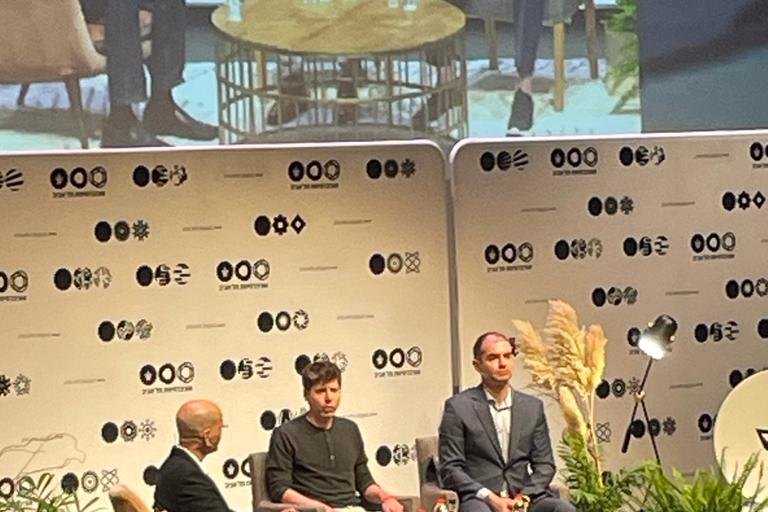
SAN FRANCISCO, July 13 — Ilya Sutskever, the co-founder and chief scientist of OpenAI, has spent the last year quietly reshaping the strategic calculus of artificial intelligence development. Since leaving OpenAI in May 2024 to launch Safe Superintelligence Inc. (SSI) with Daniela Amodei, Sutskever has positioned himself at the center of a high-stakes debate over how — and by whom — the most advanced AI systems should be built. The broader stakes could not be higher.
Sutskever is not merely another researcher spinning out a startup. He is a co-author of the 2017 paper “Attention Is All You Need,” which introduced the transformer architecture that underpins virtually every major language model in operation today.
That single paper has reshaped the geopolitical chessboard of AI, giving rise to systems that governments and corporations now treat as strategic assets. Sutskever earned his PhD from the University of Toronto in 2013 under Geoffrey Hinton, the figure often called the godfather of deep learning. Together with Hinton and Alex Krizhevsky, he co-invented AlexNet in 2012, a deep convolutional neural network that won the ImageNet competition with a top-5 error rate of 15.3%.
That victory is widely regarded as the moment deep learning broke into the mainstream. At OpenAI, where he has served as co-founder and chief scientist since 2015, Sutskever led the development of the GPT family of models.
GPT-1 launched in 2018 with 117 million parameters. GPT-2 followed in 2019 with 1.5 billion parameters. Then came GPT-3 in 2020, a leap to 175 billion parameters that demonstrated a startling capacity for text generation and reasoning.
These models did not just advance the field — they fundamentally changed what the world expects from AI.
The Board Crisis and Its Aftermath
Sutskever was a central figure in the November 2023 board crisis that briefly consumed OpenAI. He initially voted to fire Sam Altman, the company’s CEO, before reversing that decision. The episode exposed deep fractures inside the organization over the pace and safety of AI development.
When Sutskever left OpenAI in May 2024 to start SSI, it signaled that those fractures had not healed. What this signals to the industry is a strategic realignment.
Sutskever and Amodei are building SSI with a clear mandate: pursue superintelligence — an AI system smarter than humans — while prioritizing safety from the outset. That is a fundamentally different calculus from the commercial race that now dominates Silicon Valley, where companies compete to deploy ever-larger models as quickly as possible. Sutskever has published over 50 papers with more than 200,000 citations.
That body of work gives him an unusual degree of credibility when he argues that the current trajectory of AI development carries serious risks. He is not an outsider warning from the margins; he is one of the architects of the technology itself.
What Comes Next
The founding of SSI places Sutskever in direct competition with his former employer, as well as with Google DeepMind, Anthropic, and a growing list of startups all racing toward the same goal. The difference, Sutskever and Amodei argue, is one of approach: SSI will not rush products to market. It will focus on research that ensures the first superintelligent system is also a safe one.
Strategically, that positions SSI as both a research lab and a kind of insurance policy for the field. If the commercial race produces a system that is powerful but poorly understood, Sutskever’s team may be the one that has already worked out how to control it.
That is a bet on the long game, not the quarterly cycle. The coming months will reveal whether SSI can attract the talent and funding needed to compete with the giants. Sutskever’s track record — from AlexNet through the transformer paper to GPT-3 — suggests he knows how to pick the right problems.
The question now is whether he can solve the hardest one of all.
Sources
{“@context”: “https://schema.org”, “@type”: “NewsArticle”, “headline”: “Ilya Sutskever: Co-Inventor of Transformer and GPT-3 Leader”, “description”: “SAN FRANCISCO, July 13 — Ilya Sutskever, the co-founder and chief scientist of OpenAI, has spent the last year quietly reshaping the strategic calculus of…”, “datePublished”: “2026-07-13T09:30:00+00:00”, “author”: {“@type”: “Person”, “name”: “Noah King”}, “publisher”: {“@type”: “Organization”, “name”: “InfoPulse Today”, “url”: “https://newsfeed.infopulsetoday.com/”}, “citation”: [{“@type”: “CreativeWork”, “url”: “https://en.wikipedia.org/wiki/Ilya_Sutskever”}]}




