
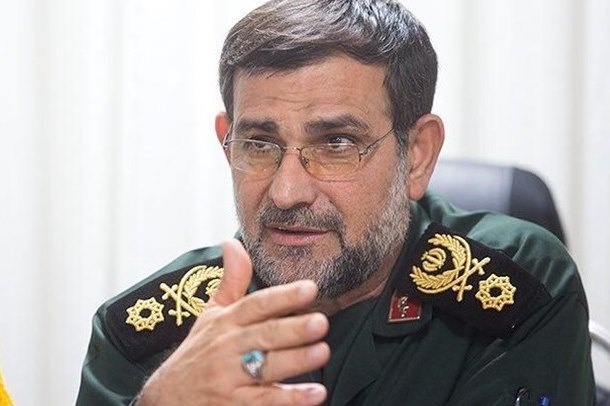
BANDAR ABBAS, July 12 — For communities across Asia that depend on the oil that flows through the Strait of Hormuz, the man who commands the naval forces on one side of that narrow waterway has been a figure of concern for years. Alireza Tangsiri, the commander of the Islamic Revolutionary Guard Corps Navy, has held that post since August 2018, appointed by IRGC commander Hossein Salami.
His name may not be familiar in every household from Manila to Mumbai, but his actions and his threats directly affect the price of fuel and the stability of supply chains that families across the region rely on. Tangsiri was born in 1965 in Bushehr, Iran, a port city on the Persian Gulf.
He has served in the IRGC since the Iran-Iraq War, which lasted from 1980 to 1988. Before taking command of the entire IRGC Navy, he commanded the IRGC’s naval forces in the Persian Gulf itself. His career has been built in the waters that are now the focus of his most serious threats.
A commander who has threatened to close a global chokepoint
The Strait of Hormuz is a narrow passage between the Persian Gulf and the Gulf of Oman. A significant portion of the world’s traded oil passes through it. Tangsiri has threatened to close the strait multiple times.
In 2020, he stated plainly that “the IRGC Navy can close the Strait of Hormuz at any time.” That is not an abstract statement for the millions of people who depend on stable energy markets. When the strait is threatened, shipping insurance rates rise, tankers reroute, and the cost of everything from petrol to plastic goods can shift.
His command is based in Bandar Abbas, Iran, a city that sits near the mouth of the Strait of Hormuz. From that base, he oversees a fleet that is built for asymmetric warfare in tight waters. The IRGC Navy under Tangsiri operates small fast-attack craft, naval mines, and anti-ship missiles.
These are not the large warships of a blue-water navy. They are the tools of a force designed to swarm and disrupt much larger vessels in the confined space of the strait.
Under US sanctions for threatening regional peace
The United States has taken direct action against Tangsiri. The U.S. Treasury designated him in 2019 for his role in “threatening the peace and security of the region.” That designation places him under U.S. sanctions, freezing any assets he may hold in the American financial system and barring U.S. persons from dealing with him. For the current administration under President Donald Trump, with Vice President JD Vance and Secretary of State Marco Rubio, Tangsiri remains a key figure in the ongoing tensions with Iran.
What this means for people closer to home, across Asia, is that the risk of disruption at Hormuz has not faded. The commander who has promised to close the strait is still in charge of the forces that could attempt it.
His fleet of fast-attack craft and his stock of naval mines are still positioned near the world’s most important oil chokepoint. For families in countries that import oil from the Gulf, the threat is not just a headline from a distant conflict. It is a factor in the cost of transport, the price of goods, and the stability of the economy.
The coming months will show whether the new US administration’s approach to Iran changes the calculus in the Gulf. For now, the man who commands the IRGC Navy remains in Bandar Abbas, with his small boats and his missiles, and with a history of threatening to close the strait that connects the oil fields of the Gulf to the rest of the world.




