
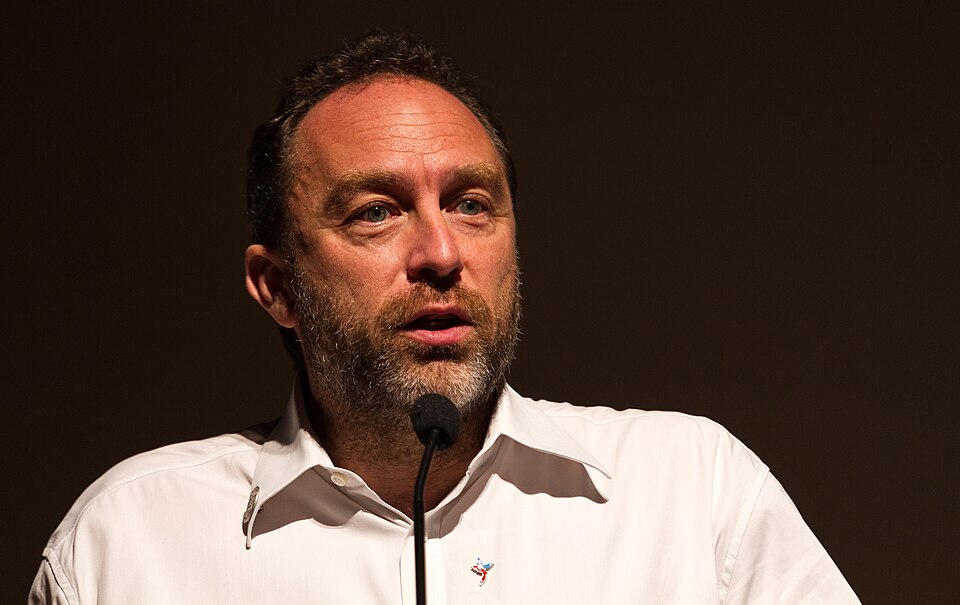
LONDON — The server bills are real. That is the bottom line for Wikipedia as artificial intelligence companies scrape the site’s content by the millions of requests a day, co-founder Jimmy Wales said this week. Human readers are declining.
Bot traffic is surging. And the free encyclopedia is paying to host machines that don’t donate.
Speaking on the sidelines of a climate action week event here, Wales put a number on the problem without giving a precise figure. The site is “hammered” with millions of requests from AI bots, he said, and that volume “costs real money” in server expenses. Wikipedia’s business model does not depend on page views — the site runs on user donations — but the cost of serving AI companies is not trivial.
Wales said the encyclopedia has already signed agreements with several tech giants. For the rest, he said, “we’re starting to block the ones who aren’t behaving themselves.” The tension is structural.
AI platforms rely heavily on Wikipedia’s curated knowledge to answer user questions. That reliance has driven a meaningful drop in human traffic to the site, Wales acknowledged, though he called it “not a disaster.” The encyclopedia still ranks among the most visited websites globally. But the shift in visitor mix — fewer people, more bots — creates a real financial mismatch.
Humans donate. Bots do not. Wales encouraged AI companies to “pay their fair share” to offset the server costs.
He did not say which firms have signed deals or how much they pay. He also did not name the companies being blocked.
On the question of letting AI edit articles directly, Wales was blunt. The technology is not ready. He said the problem of AI “hallucinations” — where a model fabricates information and presents it confidently — has improved with newer systems but remains “very, very bad.” Wikipedia’s editorial model depends on human judgment, verifiable sources, and consensus.
A machine that invents facts cannot be trusted to change what millions of readers see. That stance has a corollary.
While AI cannot edit, it might serve as a lookout. Wales noted that AI could be useful in alerting Wikipedia’s community of editors to certain niche news that would otherwise be missed. The distinction is fine but crucial: the machine flags; the human decides.
The stakes here are not abstract. Wikipedia is one of the last large-scale public knowledge projects run by volunteers, not algorithms. If server costs force it to restrict access, or if AI companies drain its resources without contributing, the entire ecosystem of free information takes a hit.
AI companies that build their products on Wikipedia’s content are effectively using a public good as free infrastructure. Wales is asking them to help pay for the road.
Whether they will, and whether blocking the holdouts works, remains open. Wales said he is watching how the strategy plays out. The encyclopedia has leverage: it can cut off access to companies that refuse to pay.
But cutting off AI bots also means cutting off the humans who use those tools to find information. That is a trade-off Wales did not discuss in detail.
For now, the line is clear. No AI edits. Pay for what you use.
And if you don’t, the door closes. Wikipedia’s human editors remain the sole gatekeepers of its content. The machines can look, but they cannot touch.
{“@context”: “https://schema.org”, “@type”: “NewsArticle”, “headline”: “Jimmy Wales says Wikipedia server costs surge due to AI scraping traffic”, “description”: “LONDON — The server bills are real. That is the bottom line for Wikipedia as artificial intelligence companies scrape the site’s content by the millions…”, “datePublished”: “2026-06-22T16:24:00+00:00T09:30:00+00:00”, “author”: {“@type”: “Person”, “name”: “Maria Romano”}, “publisher”: {“@type”: “Organization”, “name”: “InfoPulse Today”, “url”: “https://newsfeed.infopulsetoday.com/”}}




