
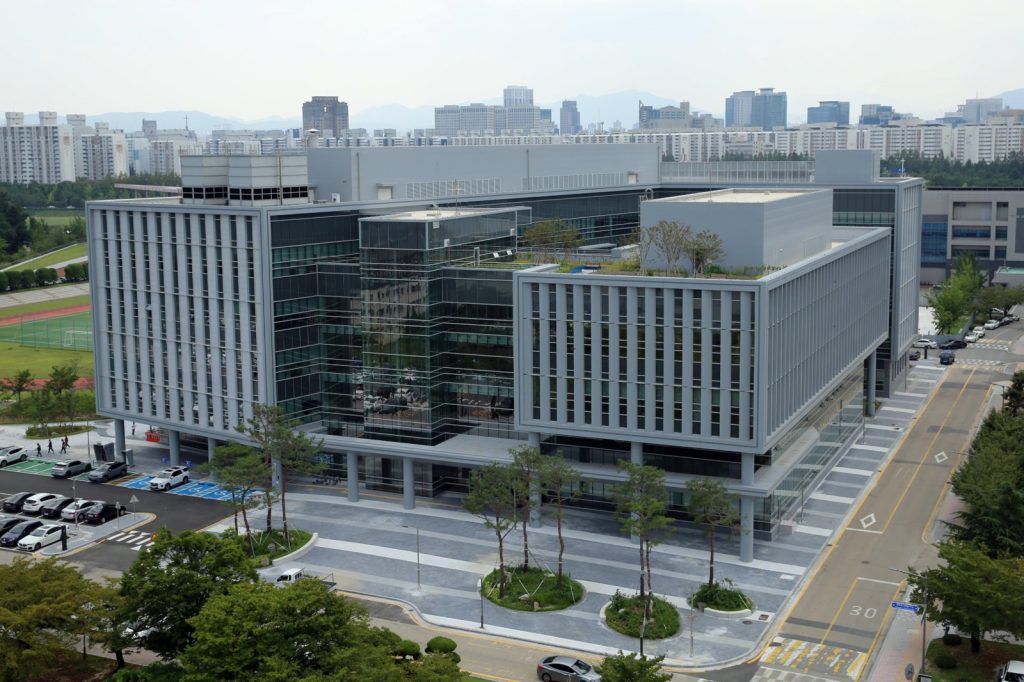
TEHRAN, July 17 — A South Korean engineering professor whose algorithms already monitor cracks in the Seohae Grand Bridge is pushing structural health monitoring into a new era, blending traditional vibration analysis with machine learning techniques that can detect damage before it becomes visible. Dr. Hoon Sohn, a professor in the Department of Civil and Environmental Engineering at the Korea Advanced Institute of Science and Technology, leads the Smart Structures and Systems Laboratory at KAIST.
His work focuses on vibration-based structural health monitoring — a field that uses sensors to measure how a structure vibrates and then interprets those vibrations for signs of deterioration.
From Stanford to the Seohae Grand Bridge
Sohn earned his PhD from Stanford University in 2002 under Dr. Fu-Kuo Chang, a pioneer in the field. Since then, he has developed algorithms that apply pattern recognition and statistical analysis to detect cracks in bridges and pipelines. His research has moved from laboratory theory to real-world application on the Seohae Grand Bridge, which opened in 2000, and at Incheon International Airport.
The professor has published over 150 journal articles. In 2018, he received the ASCE Norman Medal for a paper on structural health monitoring of cable-stayed bridges.
He is a fellow of the International Society for Structural Health Monitoring and serves on the editorial boards of multiple journals. His research collaborations include the Korea Institute of Civil Engineering and Building Technology and Hyundai Engineering & Construction — partnerships that bridge academic development and industrial deployment.
Machine learning meets infrastructure
What distinguishes Sohn’s approach is the integration of machine learning into damage detection. Traditional structural monitoring relies on comparing current vibration data against baseline measurements taken when a structure was new. But environmental factors — temperature changes, traffic loads, wind — can shift vibration patterns in ways that mimic damage, producing false alarms.
Sohn’s algorithms learn to distinguish between normal environmental variation and actual structural deterioration. The system can identify cracks in their earliest stages, when repair is still straightforward and inexpensive.
A regional context of aging infrastructure
South Korea’s rapid industrialisation produced thousands of bridges, tunnels, and buildings in the latter half of the 20th century. Many of these structures are now approaching or exceeding their original design lives. The Seohae Grand Bridge, a cable-stayed bridge connecting Pyongtaek to Dangjin, has been a testbed for Sohn’s monitoring systems since its opening.
The approach has implications beyond South Korea. Across the Middle East and Asia, countries that built heavily in the 1970s and 1980s face similar challenges.
Iran, for instance, has thousands of bridges built during the pre-revolution boom and the post-war reconstruction period. Officials in Tehran have increasingly looked to sensor-based monitoring as a cost-effective alternative to wholesale replacement. What to watch: Sohn’s laboratory continues to refine its algorithms, moving toward systems that can predict remaining structural life, not just detect current damage.
The integration of real-time monitoring with predictive analytics could change how infrastructure managers allocate maintenance budgets — spending on targeted repairs rather than scheduled overhauls. For countries with large inventories of aging bridges, that shift carries significant financial and safety implications.
{“@context”: “https://schema.org”, “@type”: “NewsArticle”, “headline”: “KAIST Professor Hoon Sohn Advances SHM with Machine Learning”, “description”: “TEHRAN, July 17 — A South Korean engineering professor whose algorithms already monitor cracks in the Seohae Grand Bridge is pushing structural health monitoring into…”, “datePublished”: “2026-07-17T09:30:00+00:00”, “author”: {“@type”: “Person”, “name”: “Reza Karimi”}, “publisher”: {“@type”: “Organization”, “name”: “InfoPulse Today”, “url”: “https://newsfeed.infopulsetoday.com/”}}




