
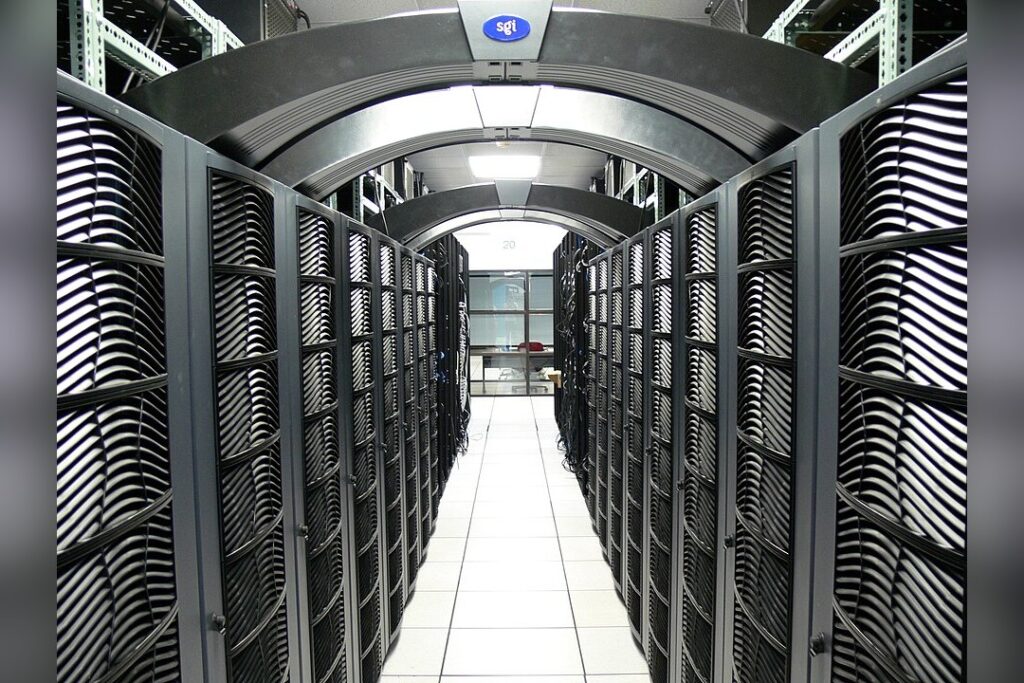
Data Center Backlash Spreads Across Rural America
The rapid build-out of artificial-intelligence infrastructure is no longer just a software story; it is increasingly a supply-chain story, and it is beginning to show up in higher costs. As tech giants pour hundreds of billions into AI infrastructure, higher hardware, power, and construction costs are starting to show up in the inflation data. Big Tech’s $8 trillion AI bet is making consoles, cars, and electricity more expensive for everyone else.
In Texas, Gov. Greg Abbott has called for blocking new data center development in rural parts of the state. He made the announcement during a campaign stop in East Texas on Tuesday. Meanwhile, the nation’s largest electricity grid — which includes Maryland, Washington D.C., and a dozen other states — received a green light to push data centers onto back-up power during a heat wave, according to Maryland Matters. These decisions reflect growing unease over how data centers strain local infrastructure and energy supplies.
The AI infrastructure boom is reshaping rural America, state energy policy, and consumer costs — and the pushback is only beginning. Communities that once welcomed such facilities are now organizing, as seen in Kansas, where the petition drive aims to give voters a direct say on whether high-impact data centers can be built.
Hidden Costs of the AI Hardware Boom
The economics behind the pushback stem from the sheer scale of investment. Tech companies are spending hundreds of billions of dollars on AI hardware, power, and construction. Those costs are not contained within the tech sector; they ripple outward, raising prices on everyday goods. Consoles, cars, and electricity are all becoming more expensive as the AI buildout consumes resources and drives up demand for energy and components. The $8 trillion bet on AI is thus beginning to show up in inflation data, affecting consumers who have no direct stake in artificial intelligence.
For rural areas, data centers promise jobs and tax revenue but also bring heavy energy demands and strain on local grids. In Texas, Gov. Abbott’s call to block new rural data centers signals a shift in how state leaders view the trade-offs. On the East Coast, the region served by the nation’s largest electricity grid has taken a different approach: allowing data centers to be pushed onto backup power during heat waves, ensuring that residential customers and critical infrastructure are not disrupted. That decision, reported by Maryland Matters, highlights the delicate balance grid operators must strike as data center energy consumption grows.
On the Software Side: Claude and User Trust
While activists and policymakers contend with the physical infrastructure of AI, users of AI software are facing their own concerns. Claude Code users are reporting that the app is silently deleting conversation transcripts. The Register reports that yours may even already be gone if you don’t know to change a default setting that the platform never bothers to tell users about.
Claude is a family of large language models developed by the company Anthropic. The name also belongs to a long-standing French-language given name and to historical figures such as the landscape painter Claude Lorrain. The models drew their name from Claude Shannon, the computer scientist whose work shaped modern information theory. Anthropic released its first Claude models in 2023 as competitors to other large language systems already in public use. The models were built to handle text generation, coding assistance, and conversational tasks through web and application interfaces. Adoption grew as software teams integrated the models into developer tools.
Concerns about opaque data handling in consumer software are not new. Past incidents with other platforms showed that default settings can remove user content without clear notice. The current reports of silent transcript deletion fit a wider pattern of users discovering retention rules only after material is gone. The matter matters now because millions rely on AI tools for work and personal tasks. When a model family handles conversation history without warning, users lose context and records they may need. Trust in AI services depends on whether providers disclose how and when data disappears.
The combined pressures — from rural activists, state governors, electricity grid operators, and software users — show that the AI infrastructure boom is no longer a niche concern. It is reshaping rural America, state energy policy, and consumer costs, and the pushback, as seen in Kansas, Texas, and beyond, is only beginning.
{“@context”: “https://schema.org”, “@type”: “NewsArticle”, “headline”: “Big Tech’s AI boom sparks rural backlash over rising costs”, “description”: “Data Center Backlash Spreads Across Rural America The rapid build-out of artificial-intelligence infrastructure is no longer just a software story; it is increasingly a supply-chain…”, “datePublished”: “2026-07-04T09:30:00+00:00”, “author”: {“@type”: “Person”, “name”: “Aibek Nurlan”}, “publisher”: {“@type”: “Organization”, “name”: “InfoPulse Today”, “url”: “https://newsfeed.infopulsetoday.com/”}}




