
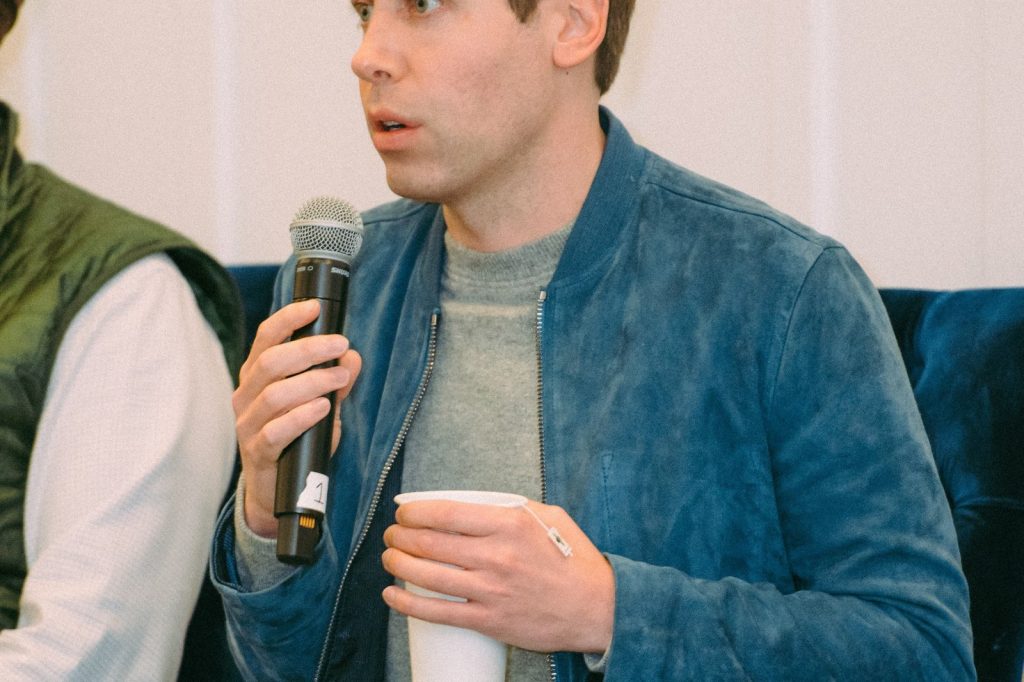
SAN FRANCISCO, July 14 — Sam Altman, the 40-year-old chief executive of OpenAI, has emerged as one of the most consequential figures in the technology industry since his company launched ChatGPT in November 2022. Altman co-founded OpenAI in 2015. The company’s chatbot reached 100 million users within two months of its launch, a milestone that stunned observers and set off a global race in artificial intelligence.
In May 2023, Altman testified before the U.S. Senate on the need for AI regulation. The debate over AI safety has drawn in other prominent leaders.
Demis Hassabis co-founded Google DeepMind in 2010. His team developed AlphaGo, which defeated world champion Lee Sedol in March 2016 — a moment many researchers cite as a turning point in public awareness of AI’s potential. Dario Amodei, a former OpenAI researcher, founded Anthropic in 2021.
Anthropic released its Claude AI model in March 2023. Altman, Hassabis and Amodei have publicly debated the risks and rewards of advanced AI systems.
In March 2023, Altman signed an open letter calling for regulation of the technology. The letter reflected growing concern among researchers that the pace of development may outstrip society’s ability to manage the consequences.
What the research shows
Early findings suggest that large language models like those built by OpenAI, Google DeepMind and Anthropic can perform tasks that once seemed reserved for human experts. But the same capabilities raise questions about misinformation, job displacement and the concentration of power in a small number of companies. Altman’s call for regulation has been met with both support and skepticism.
Some researchers argue that the industry cannot be trusted to police itself. Others worry that heavy-handed rules could stifle innovation and hand an advantage to competitors in other countries.
The encouraging part, for those who follow this field closely, is that the conversation is happening in public. The Senate hearing, the open letters, the debates among company founders — all of it represents a level of scrutiny that was absent during the early days of social media.
What comes next
OpenAI, Google DeepMind and Anthropic continue to develop more powerful systems. Each company has its own approach to safety. Altman has said he wants to ensure that the benefits of AI are broadly shared.
Hassabis has emphasised the importance of building systems that align with human values. Amodei has focused on what he calls “constitutional AI” — models trained to follow a set of guiding principles.
Patients and families who hear about these developments may wonder what they mean for medicine. Researchers are already exploring how AI can help diagnose disease, design drugs and personalise treatment. But these applications remain experimental.
Patients should talk to their doctor before making any decisions based on AI-generated information. This is a fast-moving story.
The technology is changing month by month. The leaders who shape it are still debating the rules. For now, the most important thing is to stay informed and to consult your doctor when it comes to your health.
Sources
{“@context”: “https://schema.org”, “@type”: “NewsArticle”, “headline”: “Key Players Driving the AI Industry’s Growth and Controversy”, “description”: “SAN FRANCISCO, July 14 — Sam Altman, the 40-year-old chief executive of OpenAI, has emerged as one of the most consequential figures in the technology…”, “datePublished”: “2026-07-14T09:30:00+00:00”, “author”: {“@type”: “Person”, “name”: “Muhammad Asim”}, “publisher”: {“@type”: “Organization”, “name”: “InfoPulse Today”, “url”: “https://newsfeed.infopulsetoday.com/”}, “citation”: [{“@type”: “CreativeWork”, “url”: “https://en.wikipedia.org/wiki/Sam_Altman”}]}




