
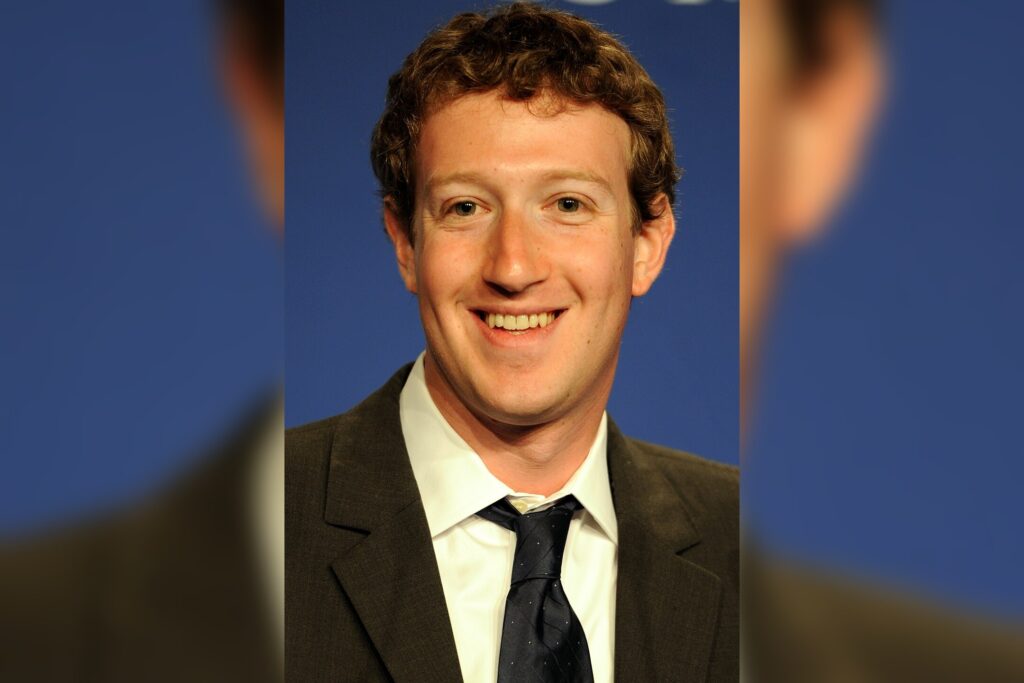
MENLO PARK, July 12 — The scene inside Meta’s headquarters these days feels less like a social media company and more like a research lab on the edge of a breakthrough. Mark Zuckerberg, the co-founder who built Facebook from a Harvard dorm room in 2004, is now steering his empire into two of tech’s most capital-intensive frontiers: artificial intelligence and the metaverse.
Zuckerberg’s journey from college coder to one of the world’s wealthiest people — his net worth hit an estimated $180 billion as of February 2025, according to the Bloomberg Billionaires Index — has been defined by a series of audacious bets. In 2012, he spent $1 billion to acquire Instagram.
Two years later, he paid $19 billion for WhatsApp. Those deals turned Facebook into a social media juggernaut. But in October 2021, Zuckerberg rebranded the entire company as Meta, signaling a pivot toward the metaverse that would consume tens of billions of dollars.
The Metaverse Bet and the AI Pivot
From 2021 through 2024, Meta poured more than $50 billion into Reality Labs, the division building virtual and augmented reality hardware. That investment has yet to produce the kind of mainstream breakthrough Zuckerberg envisioned. By 2024, however, a different technology had begun to drive the company’s growth: artificial intelligence.
In a January 2025 earnings call, Zuckerberg laid out the new priority plainly. “AI is the foundation of our future products,” he said.
The statement marked a shift in emphasis from the metaverse to machine intelligence — though Zuckerberg insists the two are connected, with AI powering the immersive experiences he still hopes to build.
FAIR and the Open-Source Push
Zuckerberg personally oversees Meta’s AI research division, known as FAIR — Fundamental AI Research — which the company established in 2013. Under his direction, FAIR has become one of the most prominent corporate AI labs in the world, publishing papers, releasing models, and pushing for open-source development. Zuckerberg has been a vocal advocate for making AI technology widely available, arguing that open-source approaches will accelerate innovation and prevent any single company from controlling the field.
That stance puts Meta in a distinct position relative to competitors like Google and OpenAI, which have been more cautious about releasing their most advanced models publicly. By nightfall in Menlo Park, FAIR researchers are still at their desks, running experiments that could shape how the next generation of AI systems are built and shared.
What to Watch Next
Zuckerberg, born May 14, 1984, in White Plains, New York, has spent more than two decades in the public eye — first as the wunderkind who connected a billion people, then as the embattled CEO facing scrutiny over privacy and misinformation. Now, he is betting his company’s future on a combination of technologies that remain unproven at scale. The metaverse has yet to find its killer app.
AI is moving so fast that regulators are struggling to keep up. And Meta’s more than $50 billion investment in Reality Labs has not yet produced a clear return.
On the ground here, the mood is one of cautious ambition. Residents of the tech world describe a company that has reinvented itself before and is trying to do it again — this time with a founder who still controls the board, still runs the research division, and still believes that the next big thing is just around the corner.
Sources
{“@context”: “https://schema.org”, “@type”: “NewsArticle”, “headline”: “Mark Zuckerberg Steers Meta Toward Artificial Intelligence And The Metaverse”, “description”: “MENLO PARK, July 12 — The scene inside Meta’s headquarters these days feels less like a social media company and more like a research lab…”, “datePublished”: “2026-07-12T09:30:00+00:00”, “author”: {“@type”: “Person”, “name”: “Isabella Moore”}, “publisher”: {“@type”: “Organization”, “name”: “InfoPulse Today”, “url”: “https://newsfeed.2bme.xyz/”}, “citation”: [{“@type”: “CreativeWork”, “url”: “https://en.wikipedia.org/wiki/Mark_Zuckerberg”}]}




