
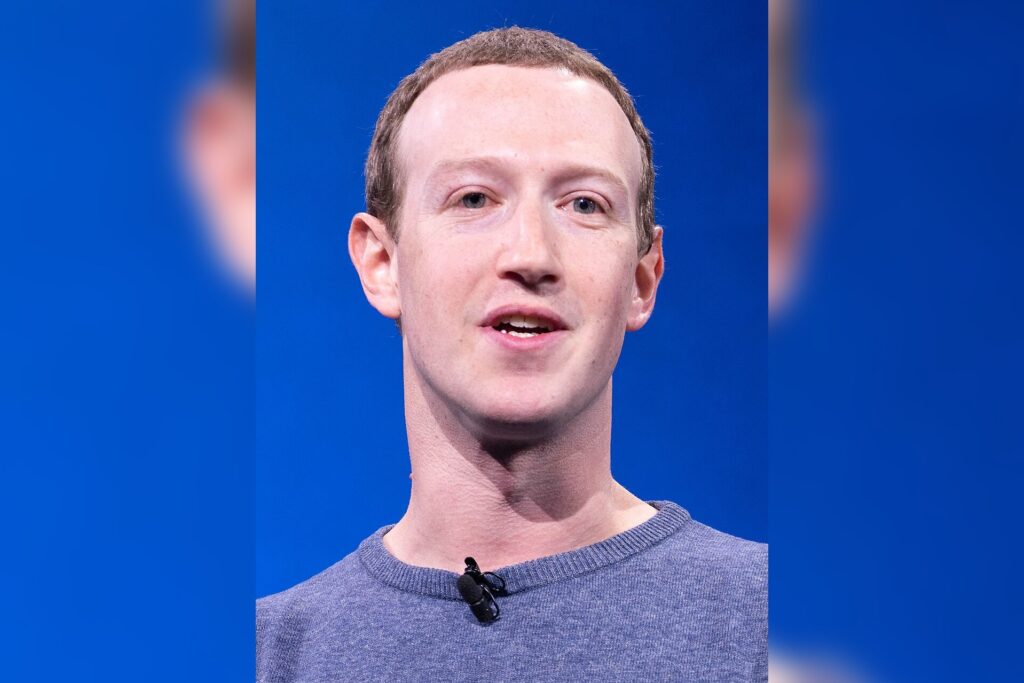
MENLO PARK, July 12 — Mark Zuckerberg remains one of the most consequential figures in technology, a fact underscored by the sheer scale of the financial commitments and strategic bets now accumulating under his watch. The co-founder and chief executive of Meta, who launched Facebook from a Harvard dormitory in February 2004, now presides over a company whose annual revenue has climbed from $7.9 billion in 2011 to $134.9 billion in 2024. That trajectory, however, masks a more complicated technical reality under the hood.
Zuckerberg, born May 14, 1984, in White Plains, New York, owns approximately 13% of Meta’s shares. Bloomberg estimates his net worth at $180 billion, placing him among the wealthiest individuals on the planet.
The detail that matters here is that his personal fortune is now tied as much to speculative future technologies as to the advertising business that built the company. For 2025, Zuckerberg has committed $35-40 billion in AI infrastructure spending — a figure that dwarfs the capital expenditure plans of most sovereign nations.
The AI pivot and the open-source gambit
Zuckerberg has become the public face of Meta’s artificial intelligence strategy, announcing the Llama model series and positioning the company as a champion of open-source AI. His argument, delivered to US Congress during testimony in March 2024 regarding AI regulation and child safety, is that open-source development will lead to faster innovation. This is a wry position for a man who built a closed, advertising-driven social network, but the technical reality is that Meta’s Llama models have become a benchmark for open-weight AI research.
The infrastructure spending is not abstract. It funds data centres, GPU clusters, and the energy systems required to train increasingly large models.
The bet is that Meta can commoditise the foundational layer of AI while capturing value at the application and advertising layers — a strategy that mirrors the company’s historical approach to social networking.
The metaverse reality check
Meanwhile, Zuckerberg also oversees Reality Labs, Meta’s metaverse division. The unit lost $16.1 billion in 2024. That is not a rounding error; it is a deliberate, long-term investment in hardware and spatial computing that has yet to produce a blockbuster consumer product.
The contrast between the AI division’s open-source momentum and the metaverse division’s staggering losses is the tension that defines Zuckerberg’s current tenure. Zuckerberg testified before the US Congress in March 2024 regarding AI regulation and child safety.
The session covered both the promise of open-source AI and the risks of algorithmic harm to younger users. As ever, the regulatory landscape remains uncertain, with lawmakers grappling to understand technologies that evolve faster than legislation can be drafted. What to watch next is whether Meta can sustain simultaneous bets on AI infrastructure and metaverse hardware without a corresponding revenue breakthrough.
The $35-40 billion AI spend for 2025 is a signal of intent, but the $16.1 billion loss at Reality Labs is a reminder that not all of Zuckerberg’s visions have yet found their market.
Sources
{“@context”: “https://schema.org”, “@type”: “NewsArticle”, “headline”: “Meta CEO Zuckerberg Drives $35 Billion AI Investment Push”, “description”: “MENLO PARK, July 12 — Mark Zuckerberg remains one of the most consequential figures in technology, a fact underscored by the sheer scale of the…”, “datePublished”: “2026-07-12T09:30:00+00:00”, “author”: {“@type”: “Person”, “name”: “Sebastian Smith”}, “publisher”: {“@type”: “Organization”, “name”: “InfoPulse Today”, “url”: “https://newsfeed.2bme.xyz/”}, “citation”: [{“@type”: “CreativeWork”, “url”: “https://en.wikipedia.org/wiki/Mark_Zuckerberg”}]}




