
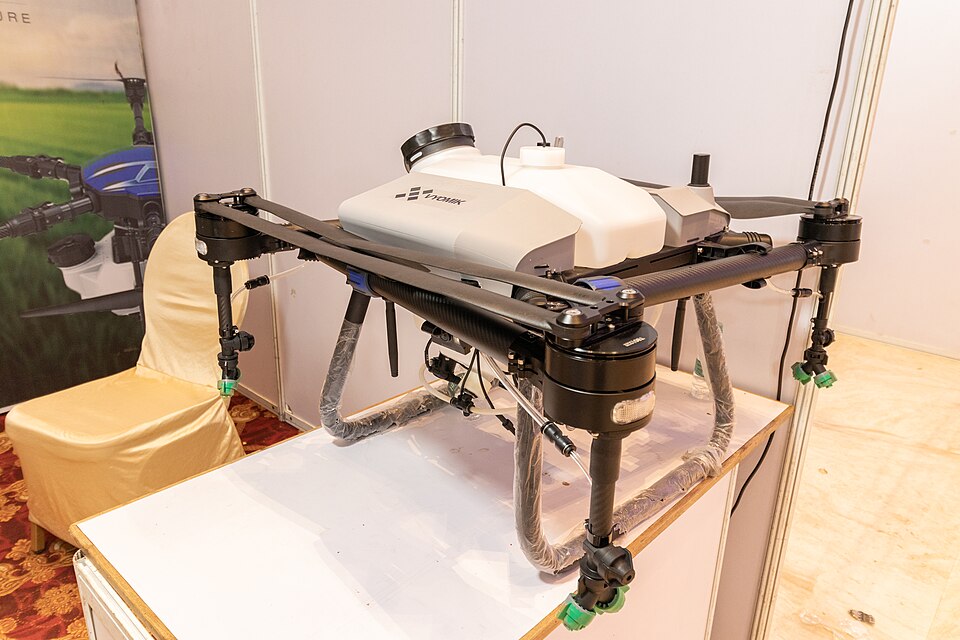
MOUNTAIN VIEW, Calif. — A drone flies over a hurricane-smashed coastline and needs to spot a collapsed bridge it has never seen before. Right now, that drone likely fails. But a new approach to teaching machines to see the world as it really is—messy, cluttered, poorly lit—could change that calculus for disaster teams, environmental monitors, and anyone who sends robots into places no human should go.
Researchers have shown that combining a visual model called EVA-CLIP with a technique called ensemble prompt engineering lets artificial intelligence recognize objects in chaotic, unstructured environments without first training on those specific scenes. The work, announced June 26, directly targets a weakness that has plagued robotics and autonomous systems for years: real-world scenes are nothing like the tidy, well-lit images in training datasets.
The practical consequences land hardest on disaster response. A drone surveying a forest after a storm might need to identify downed power lines, damaged structures, or debris fields it was never explicitly trained to recognize. Under the old approach, that drone would have to study pictures of that specific wreckage first.
Under the new method, it can generalize from what it already knows about the shapes and concepts of “power line” or “debris” and spot them amid odd angles, shadows, and clutter. Environmental monitoring faces a similar bottleneck.
A camera in a remote wetland might need to identify a specific invasive plant species under overcast sky, in murky water, half-obscured by native growth. Traditional systems struggle when the visual input diverges from their training data. The ensemble prompt engineering technique attacks this by using multiple, slightly varied text descriptions for the same object category rather than a single rigid label.
Instead of just “tree,” the system considers “fallen tree,” “upright tree,” “tree with leaves,” and “bare tree.” That range of prompts helps the model find correct matches even when the visual input is unusual. The underlying visual model aligns images with text descriptions in a shared space. Think of it as giving a machine a dictionary of words and asking it to identify objects in a messy garage it has never seen before.
The method tries to let the system use what it already knows about the shapes and concepts of a “chair” or a “bottle” and spot them amid clutter, odd lighting, and unexpected angles. For industrial robotics, the stakes are quieter but no less real.
A warehouse robot that can recognize a partially crushed box or a pallet stacked at an unusual angle—without needing to be shown those exact scenarios in training—could operate in far less structured environments. The same logic applies to agricultural robotics, where crops, weeds, and soil conditions vary wildly from field to field and season to season. What comes next is not a question of whether the technique works in a lab.
The researchers have shown it does. The question is how far the generalization stretches.
Can a model that learned “chair” from a thousand clean catalog photos still find a chair when it is upside down, half-buried in mud, and lit only by a flashlight? The ensemble prompt approach suggests it might. But real-world deployment will test those limits hard.
For now, the method offers a path toward flexibility that autonomous systems have lacked. A drone that can generalize does not need to be retrained for every new disaster zone. A robot that can handle clutter does not need a perfectly organized workspace.
Those are not small gains. They are the difference between a machine that works only under controlled conditions and one that works where conditions are uncontrolled—which is to say, almost everywhere that matters.
{“@context”: “https://schema.org”, “@type”: “NewsArticle”, “headline”: “New AI method helps drones spot unseen bridge wreckage after hurricanes”, “description”: “MOUNTAIN VIEW, Calif. — A drone flies over a hurricane-smashed coastline and needs to spot a collapsed bridge it has never seen before. Right now,…”, “datePublished”: “2026-06-26T08:56:00+00:00T09:30:00+00:00”, “author”: {“@type”: “Person”, “name”: “Ariel Antonio”}, “publisher”: {“@type”: “Organization”, “name”: “InfoPulse Today”, “url”: “https://newsfeed.infopulsetoday.com/”}}




