
SANTA CLARA, September 20 — Nvidia chief executive Jensen Huang has put a number on his optimism, saying there is a “0% chance” that AI destroys the world by 2030. The remark, which dismissed the doom warnings associated with Anthropic, has reignited the debate over AI risk, Nvidia’s dominance and where the technology is heading. Huang’s position is that AI should be developed as fast as possible.
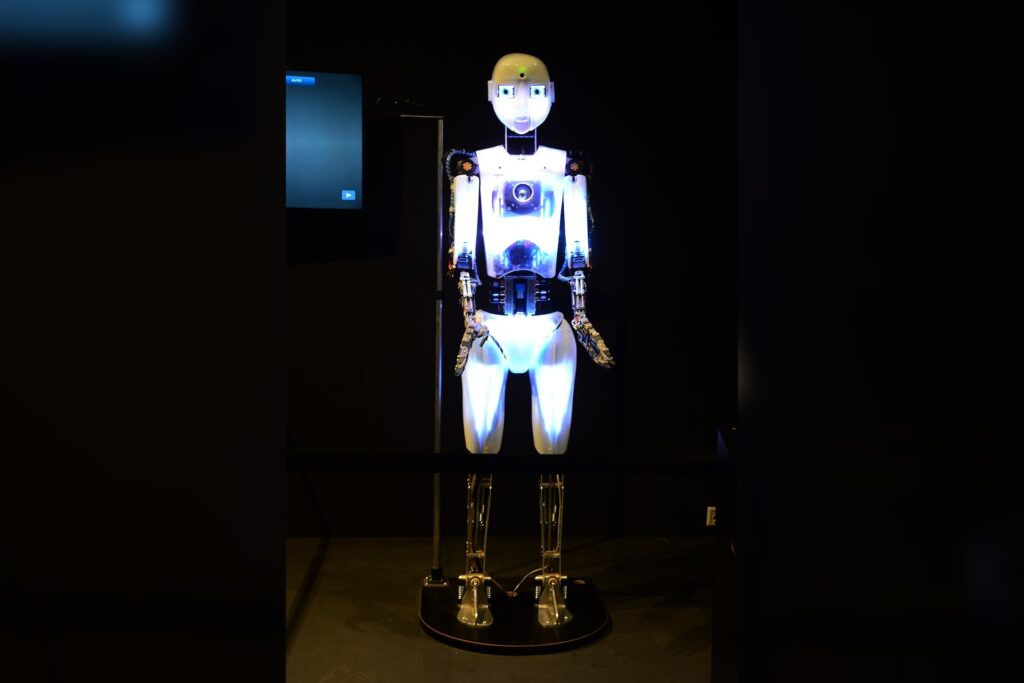
For anyone tracking where that development goes next, the answer increasingly points to robots. The frontier after generative AI is widely framed as robotics and embodied intelligence — humanoid machines moving out of demonstration halls and into real work, robot “brains” that could see breakthroughs on the scale of ChatGPT, and AI systems built to jump between different robot bodies.
From the car to the robot
Chris Chen of Faraday Future argues that “Robotics is a natural extension of the intelligent vehicle,” tying the company’s intelligent-vehicle work directly to robotics. The timelines being floated are aggressive. Spirit AI’s co-founder predicts a major breakthrough for humanoid robot brains by 2027 — a forecast echoed in coverage headlined “Humanoid Robot Brains Could Break Through By 2027.” A Chinese “robot brain” startup sees a ChatGPT-style breakthrough arriving as soon as next year.
And Google DeepMind wants to build an AI brain that can jump between robot bodies, according to Scientific American. Deployment is already underway.
Humanoid robots are moving from demonstrations to deployment, while China builds humanoid robots faster than they can master factory work — a gap between how quickly the machines are made and how quickly they learn the jobs they are meant to do.
The money is watching
Investment researchers are paying attention. Citrini Research describes a robotics tipping point in its field trip report, and a viral investment research firm warns “Scoff at your own risk,” calling AI robots a coming mega-trend. The technical community has been meeting on the same questions.
A Symposium on Embodied Perception Fusion and Multimodal Large Model innovation has concluded, according to Gasgoo. None of these forecasts is a settled outcome.
The 2027 humanoid-brain prediction, the “as soon as next year” ChatGPT-style breakthrough and Huang’s 2030 claim are all projections, and the gap between a demonstration and a deployed robot that does useful work remains the hard part. What to watch next is whether the robot-brain timelines hold, and whether the machines now being built faster than they can be trained close that gap.




