
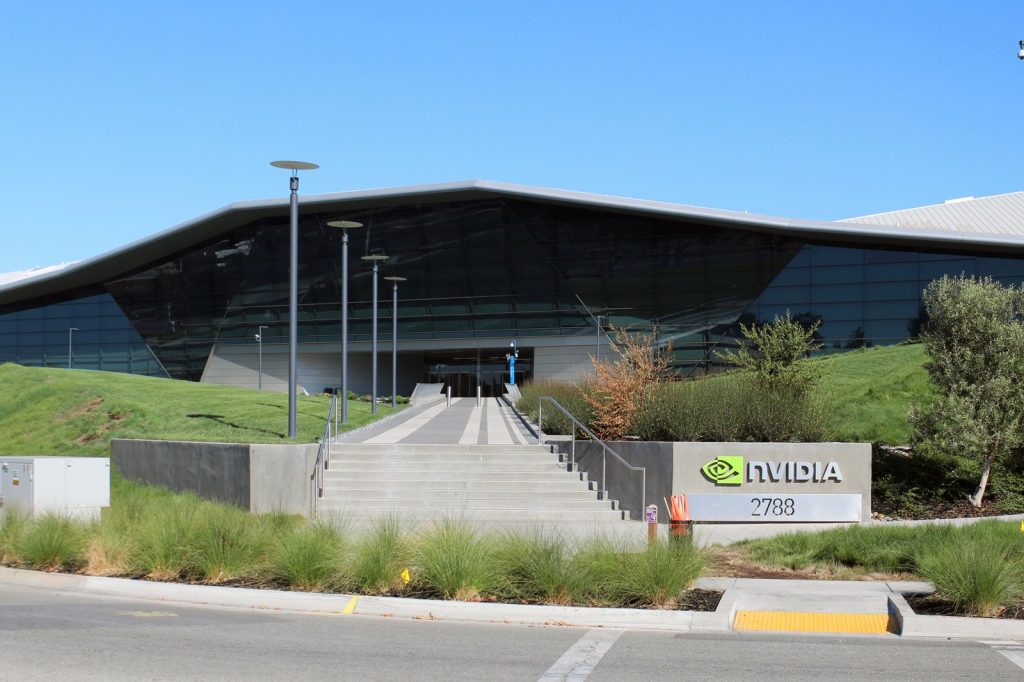
At the company’s annual GTC event, Nvidia presented a multi‑year hardware roadmap that extends its AI‑focused product line well into the future. The roadmap highlights two forthcoming processor families: the Blackwell Ultra series, slated to arrive first, and the subsequent Rubin generation of AI chips. Both are positioned as upgrades that will deliver higher throughput and improved accuracy for workloads such as large‑language‑model inference and neural‑network training.
The announcement gives enterprises that develop AI solutions a defined upgrade path. Knowing the timing and capabilities of Blackwell Ultra and Rubin enables firms to align software development and deployment strategies with the expected hardware, reducing uncertainty around future performance targets.
In addition to the chip roadmap, Nvidia released an open‑source model designed for humanoid robots. Historically, creating a robot “brain” required either building software from the ground up or purchasing proprietary solutions that carried high licensing costs. The new model is offered freely, allowing researchers, startups, and academic labs to adopt, modify, and extend a common foundation rather than reinventing core functionality.
While the open model does not instantly solve the complex challenges of perception, manipulation, and navigation in human environments, it does level the playing field. Hundreds of teams can now start from the same baseline, directing resources toward higher‑order problems such as safety, fine‑grained control, and application‑specific behavior.
Founded in 1993 by Jensen Huang, Chris Malachowsky, and Curtis Priem, Nvidia has a long history of advancing computing hardware. This GTC reveal, however, signals a shift from a pure hardware‑sales focus to the cultivation of an ecosystem. By providing a free robot‑intelligence model, Nvidia aims to attract developers who will build applications that, in turn, demand more of the company’s high‑performance chips. The feedback loop—software driving hardware demand and hardware enabling richer software—directly benefits Nvidia’s core business.
The broader technology sector should note the implications. The extended chip timeline suggests Nvidia expects sustained growth in AI workloads across cloud providers, automotive manufacturers, logistics firms, and healthcare institutions. Companies planning large‑scale AI deployments will need to factor the announced hardware schedule into their roadmaps, lest competitors gain an advantage by aligning earlier with the new processors.
For the robotics market, the open model introduces new competitive pressure. Vendors that currently sell closed, costly robot‑control stacks will need to justify their pricing against a freely available alternative. The baseline intelligence layer is becoming commoditized, pushing manufacturers to differentiate on aspects such as specialized hardware design, safety certifications, and niche application features.
Both the chip releases and the open robot model will not impact the market overnight. Manufacturing new silicon and achieving widespread adoption of software frameworks each require months to years. Nonetheless, Nvidia’s roadmap sets a clear direction: a convergence of AI and robotics into a larger, unified market. The infrastructure laid out at GTC is intended to support that vision over the next three to five years, shaping the competitive landscape for a broad range of industries.
{“@context”: “https://schema.org”, “@type”: “NewsArticle”, “headline”: “Nvidia Unveils Roadmap for Future Artificial Intelligence Technologies Advances”, “description”: “At the company’s annual GTC event, Nvidia presented a multi‑year hardware roadmap that extends its AI‑focused product line well into the future. The roadmap hig”, “datePublished”: “2026-06-21T09:30:00+00:00”, “author”: {“@type”: “Person”, “name”: “Ethan Smith”}, “publisher”: {“@type”: “Organization”, “name”: “InfoPulse Today”, “url”: “https://newsfeed.infopulsetoday.com/”}, “image”: “https://infopulsetoday.com/wp-content/uploads/sites/4/rehomed/s26/2026/06/companion_9086.jpg”}




