
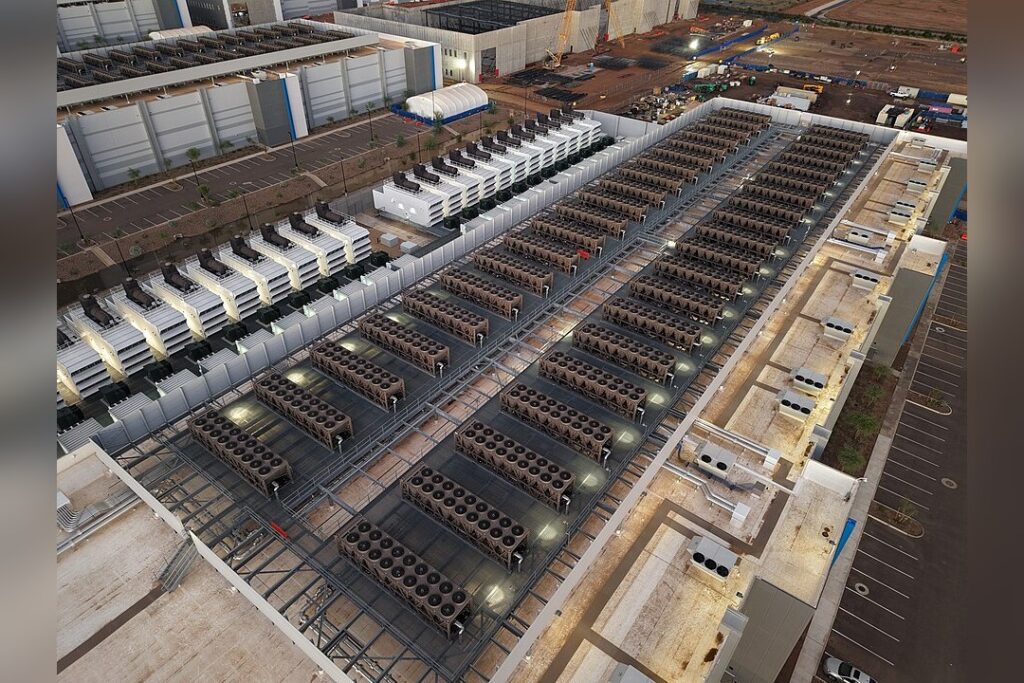
SAN FRANCISCO, July 7 — The calculus around artificial intelligence has shifted from pure software breakthroughs to the gritty reality of concrete, copper, and construction security. Sam Altman, the CEO of OpenAI, the company behind ChatGPT founded in 2015, has publicly framed the build-out of AI infrastructure as a national priority. That strategic framing now faces a distinctly terrestrial challenge: the theft of copper and equipment at the very construction sites where new data centers are rising.
Under Altman’s leadership, OpenAI has driven massive demand for the computing power that fuels its models. That demand has translated directly into a physical expansion plan.
In 2024, the company announced plans to build multiple data centers across the United States, including sites in Ohio and Texas. These facilities are not merely corporate expansions; on the geopolitical chessboard, they represent the physical backbone of American AI competitiveness. The broader stakes are clear: without the hardware to train and run increasingly powerful systems, the software advantage erodes.
A National Priority Meets a Ground-Level Problem
Altman has not directly commented on the theft issue. But the company has not been silent in its response. OpenAI has implemented security measures at its construction sites, a move that signals the problem has moved from an operational nuisance to a material risk.
The theft of copper and equipment at these sites could delay OpenAI’s expansion plans, and in the high-stakes race for AI dominance, delay carries its own strategic cost. The timing is significant.
OpenAI’s valuation reached $80 billion in 2024, a figure that reflects investor confidence in the company’s trajectory and the broader AI boom. That valuation, however, is tied to the company’s ability to scale. Construction delays, whether from supply chain snags or theft, threaten to slow the pace at which new computing capacity comes online.
For a company racing to stay ahead of competitors both domestic and abroad, every month of delay reshapes the strategic picture. What this signals is a collision between two realities.
The first is the soaring demand for AI computing power, a demand that OpenAI itself has helped create. The second is the vulnerability of large-scale infrastructure projects to theft and security breaches. The copper that powers data centers has become a target, and the equipment needed to build them is increasingly difficult to protect across sprawling construction sites.
The Broader Stakes for AI Infrastructure
Altman’s framing of AI infrastructure as a national priority is not merely rhetorical. It reflects a strategic calculation that the United States must build out its computing capacity to maintain leadership in artificial intelligence. That calculation now includes a security component that was likely underappreciated when the expansion plans were first announced.
The theft of materials is not just a cost issue; it is a timeline issue, and in the AI sector, timeline is everything. The company’s response—implementing security measures—is a necessary step, but it also raises questions about the scale of the problem.
If theft is significant enough to warrant new security protocols, it is significant enough to factor into the broader construction timeline. OpenAI has not disclosed the extent of the losses or the specific security measures now in place, but the very existence of those measures tells its own story. For now, the company continues to push forward.
The data centers in Ohio and Texas remain part of the plan. But the broader stakes are clear: the race to build AI infrastructure is not just a race of capital and technology.
It is also a race of logistics, security, and the ability to protect the physical assets that make the digital future possible. What to watch next is whether these thefts become a pattern that forces a strategic reassessment, or whether the new security measures prove sufficient to keep the expansion on track.
{“@context”: “https://schema.org”, “@type”: “NewsArticle”, “headline”: “OpenAI CEO Sam Altman Drives AI Data Center Demand Amid Security Risks”, “description”: “SAN FRANCISCO, July 7 — The calculus around artificial intelligence has shifted from pure software breakthroughs to the gritty reality of concrete, copper, and construction…”, “datePublished”: “2026-07-07T09:30:00+00:00”, “author”: {“@type”: “Person”, “name”: “Noah King”}, “publisher”: {“@type”: “Organization”, “name”: “InfoPulse Today”, “url”: “https://newsfeed.infopulsetoday.com/”}}




