
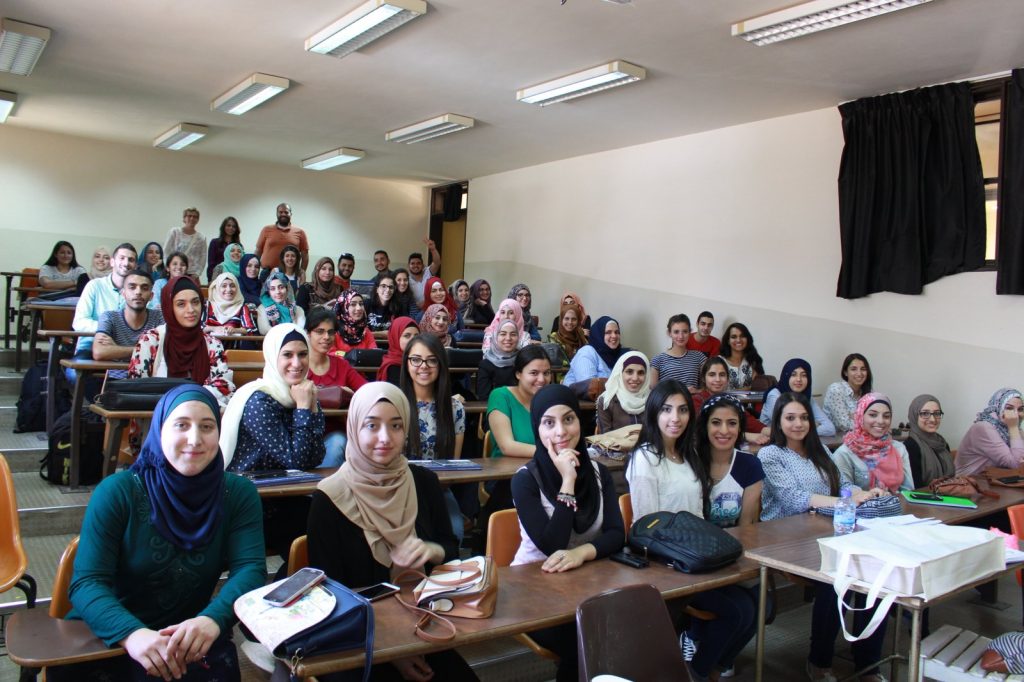
Health sciences students in Palestine are navigating artificial intelligence with uneven footing, according to a new cross-sectional study that surveyed students across multiple disciplines. The research, conducted at various Palestinian institutions, distributed questionnaires targeting three areas: knowledge of AI, attitudes toward its use in healthcare, and current use of AI-powered tools. Some students reported regular use of AI tools in their studies.
Others had limited exposure. That split matters because these students will enter a healthcare system where AI is already creeping into clinical decision-making, diagnostic imaging, and administrative workflow.
The study captures a snapshot — a single moment in time. It cannot show how views shift as AI evolves or as students move through their training. Self-reported data has limits.
Students may overstate or understate their familiarity. But the study’s value lies less in precise numbers and more in the signal it sends to educators: curriculum development needs a compass.
If half the class has never touched an AI tool and the other half uses one daily, a one-size-fits-all lecture on machine learning basics won’t land. The study did not test AI on patients. It did not change treatment recommendations.
Patients should understand this research is about student readiness, not clinical outcomes. Talk to your doctor about how AI might affect your care. But the forces behind this study are larger than one survey.
AI adoption in healthcare is accelerating globally. Palestinian health institutions face infrastructure challenges — internet reliability, equipment access, faculty training — that shape how quickly students encounter these tools.
The study’s cross-sectional design means it cannot track whether exposure increases over time or whether attitudes harden or soften. What it can do is give administrators a baseline. If students show weak knowledge of AI ethics, that becomes a curriculum priority.
If students express skepticism about AI replacing human judgment, that opens a classroom discussion worth having. The encouraging part for educators is that studies like this provide actionable data, not just academic footnotes.
The researchers used standard statistical methods to analyze responses. The source material does not detail specific results or sample sizes. That leaves gaps.
But even a rough map of student awareness beats no map at all. Where this leads is uncertain. AI tools are not static.
New applications emerge. Students who graduate in four years will face technology that does not exist today.
The study’s snapshot will age. But the habit of measuring student readiness — that can persist. Repeated surveys could track whether curricula adjustments actually move knowledge and attitudes.
For now, the study offers a starting point. Palestinian health sciences students sit at different points on the AI learning curve.
Some are ahead. Some are catching up. The study does not prescribe how to close that gap.
But it confirms the gap exists. That is the first step toward building a response — one that treats AI not as a futuristic buzzword but as a tool that future doctors, nurses, and technicians will need to handle.
{“@context”: “https://schema.org”, “@type”: “NewsArticle”, “headline”: “Palestinian health students show mixed AI knowledge, attitudes”, “description”: “Health sciences students in Palestine are navigating artificial intelligence with uneven footing, according to a new cross-sectional study that surveyed students across multiple disciplines. The…”, “datePublished”: “2026-06-26T07:46:00+00:00T09:30:00+00:00”, “author”: {“@type”: “Person”, “name”: “James Roberto”}, “publisher”: {“@type”: “Organization”, “name”: “InfoPulse Today”, “url”: “https://newsfeed.infopulsetoday.com/”}}




