
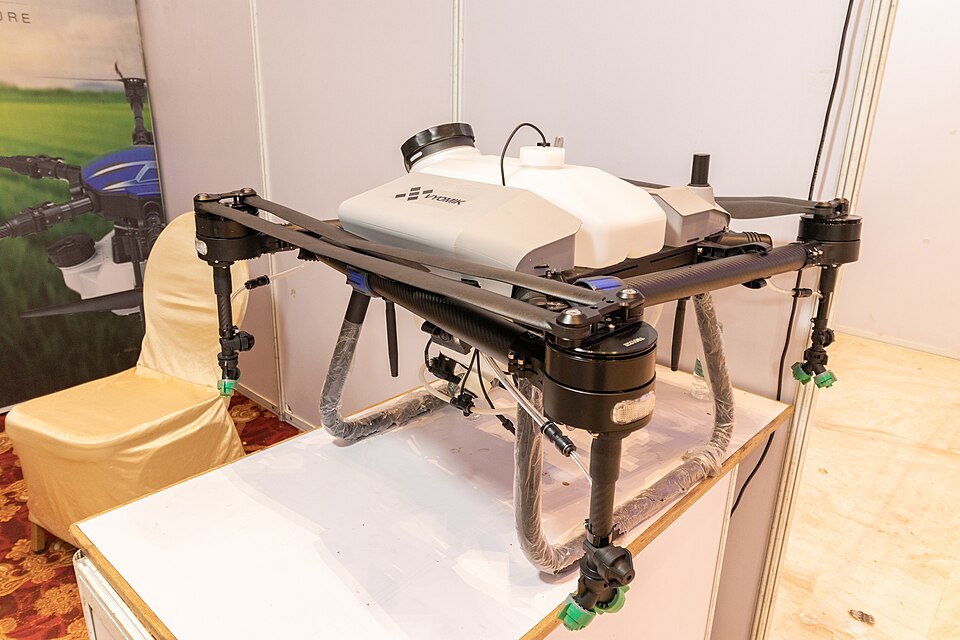
When a disaster response drone flies over a storm-wrecked forest, it faces a hard problem. The trees are snapped. Power lines are down.
Debris is scattered everywhere. A standard AI system, trained on neat, labeled photos from a lab, will likely fail.
It simply cannot recognize a fallen power line if it has only ever seen one hanging straight between poles. That gap — between clean training data and the mess of the real world — is what a team of researchers in Mountain View, California, set out to close. On June 26, they demonstrated a method that lets an AI model identify objects in chaotic, unstructured environments without needing explicit training on every possible scene.
The approach combines a powerful visual model called EVA-CLIP with a technique called ensemble prompt engineering. The core idea is not complicated.
Think of it as giving the AI a flexible vocabulary instead of a rigid one. Traditional object recognition relies on a single label: “tree.” But what if the tree is uprooted? What if it is missing its leaves?
What if it is lying sideways? The new method feeds the model multiple, slightly varied descriptions for the same category. Not just “tree.” Also “fallen tree.” Also “upright tree.” Also “tree with leaves.” Also “bare tree.” The model then uses this range of prompts to find the best visual match, even when the image is unusual.
The underlying visual model aligns images with text descriptions in a shared space. That is a known technique.
The innovation here is the ensemble prompting — a strategy that hedges the model’s bets. Instead of one rigid label, the system throws a handful of related phrases at the image and picks the one that fits. It is a small procedural change, but the consequences for robotics and autonomous systems are large.
Consider the practical stakes. Environmental monitoring after a storm.
A drone surveying a forest needs to identify downed power lines, damaged structures, and debris fields it has never been explicitly trained to recognize. The same problem applies to search and rescue in collapsed buildings, or to autonomous vehicles navigating a construction zone. The real world is not a tidy lab.
It is a messy garage with odd lighting and unexpected angles. Traditional AI systems need to study pictures of that specific garage first. This new approach tries to let the system generalize — to use what it already knows about the shapes and concepts of a “chair” or a “bottle” and spot them amid clutter.
The practical upshot for fields like environmental monitoring or disaster response could be significant. A machine that can recognize a damaged structure without having seen that specific damage before is a machine that can be deployed faster, with less training data, in situations where every minute counts.
That is the concrete value. Not a vague promise of future capability, but a real, present shift in what autonomous systems can do outside the lab. The researchers did not name themselves in the report.
They did not provide quotes. What they provided was a method and a demonstration.
The method tackles a persistent problem: making sense of the real world as it actually is. The demonstration suggests that a combination of a strong visual model and a flexible prompting strategy can get there. It is not a cure-all.
It is a step. But for a drone trying to find a downed power line in a forest it has never seen, a step can be the difference between a successful survey and a crash.
{“@context”: “https://schema.org”, “@type”: “NewsArticle”, “headline”: “Researchers develop AI model to identify disaster debris without prior training”, “description”: “When a disaster response drone flies over a storm-wrecked forest, it faces a hard problem. The trees are snapped. Power lines are down. Debris is…”, “datePublished”: “2026-06-26T08:56:00+00:00T09:30:00+00:00”, “author”: {“@type”: “Person”, “name”: “Muhammad Asim”}, “publisher”: {“@type”: “Organization”, “name”: “InfoPulse Today”, “url”: “https://newsfeed.infopulsetoday.com/”}}




