
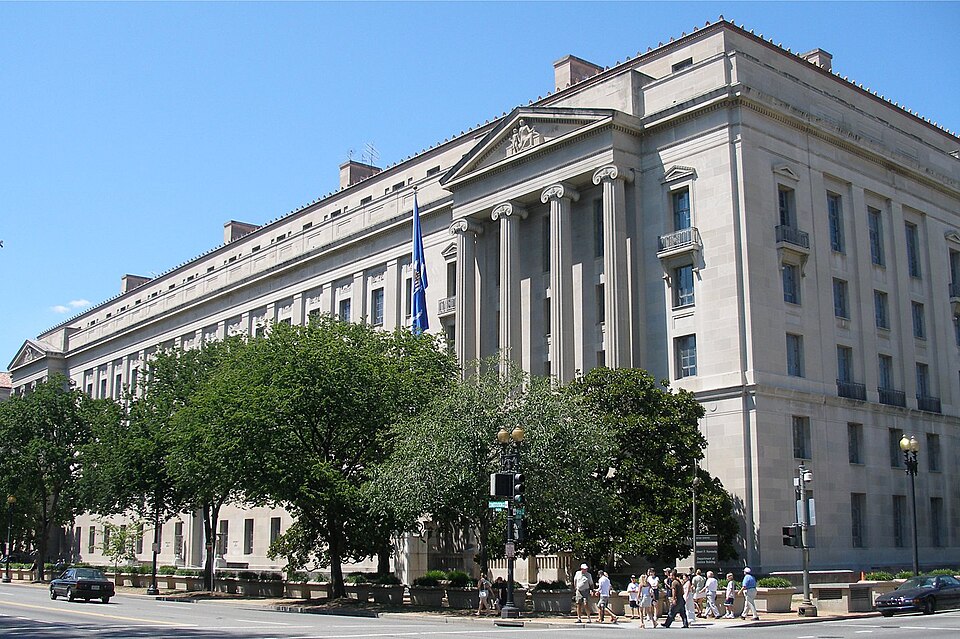
WASHINGTON — The United States Department of Justice has thrown its weight behind OpenAI’s core legal argument in its copyright battle with The New York Times, filing a formal statement of interest that training artificial-intelligence models on copyrighted material does not, standing alone, violate copyright law. The filing, submitted to a federal court, argues that the process of training large language models on copyrighted texts constitutes a transformative use that can qualify for protection under the fair-use doctrine. That doctrine, embedded in American copyright law, permits limited use of protected works without obtaining a licence under specific conditions.
Strategically, the calculus here matters enormously. The DOJ deliberately separated three distinct issues that plaintiffs frequently conflate: how training data is acquired, the actual training of the model on that data, and what the model subsequently generates as output.
The government’s endorsement extends only to the training process itself. How data is obtained, and whether particular outputs reproduce protected expression, remain live questions that courts may still examine. This is not a blanket clearance for AI companies.
It is a defence of machine learning as a technical process. The broader stakes extend well beyond this single case.
The document explicitly frames the dispute in strategic terms, warning that excessive copyright restrictions could hobble American AI development and create competitive disadvantages against rivals in China. The administration has repeatedly identified leadership in artificial intelligence as a strategic priority; this filing aligns the government’s legal posture with that industrial-policy objective. What this signals is unmistakable: Washington views AI capability as a strategic asset, not merely a commercial concern.
Limits of the Government’s Position
Critical constraints apply. A statement of interest carries no binding force on the judiciary. Courts must still evaluate fair-use claims case by case through the established four-factor test, weighing the purpose and character of the use, the nature of the copyrighted work, the amount and substantiality of the portion used, and the effect of the use upon the potential market for the original work.
The New York Times and fellow publishers maintain that AI systems trained on their journalism can reproduce or substitute for their reporting, damaging the market for their work. They cite instances where models have generated passages closely mirroring original articles.
The government’s filing does not resolve these output-specific disputes.
Implications for the Broader Litigation Landscape
The training-versus-output distinction the DOJ draws could reverberate across dozens of similar lawsuits now moving through American courts. Authors, news organisations, artists and music publishers have all brought claims challenging AI training practices. A definitive judicial ruling that model training qualifies broadly as fair use would lift a substantial legal cloud hanging over the AI industry.
A contrary ruling could compel licensing arrangements carrying enormous commercial weight. For now, the administration has placed its thumb on the scale in favour of the technology sector.
The ultimate decision, however, rests with the federal judiciary — and the fair-use questions at the heart of these disputes remain unresolved. What follows will be watched closely: how courts apply the four-factor test to training-specific claims, whether appellate courts embrace or reject the government’s analytical framework, and whether Congress eventually intervenes to redraw the statutory lines. The strategic chessboard is set; the judicial moves come next.




