
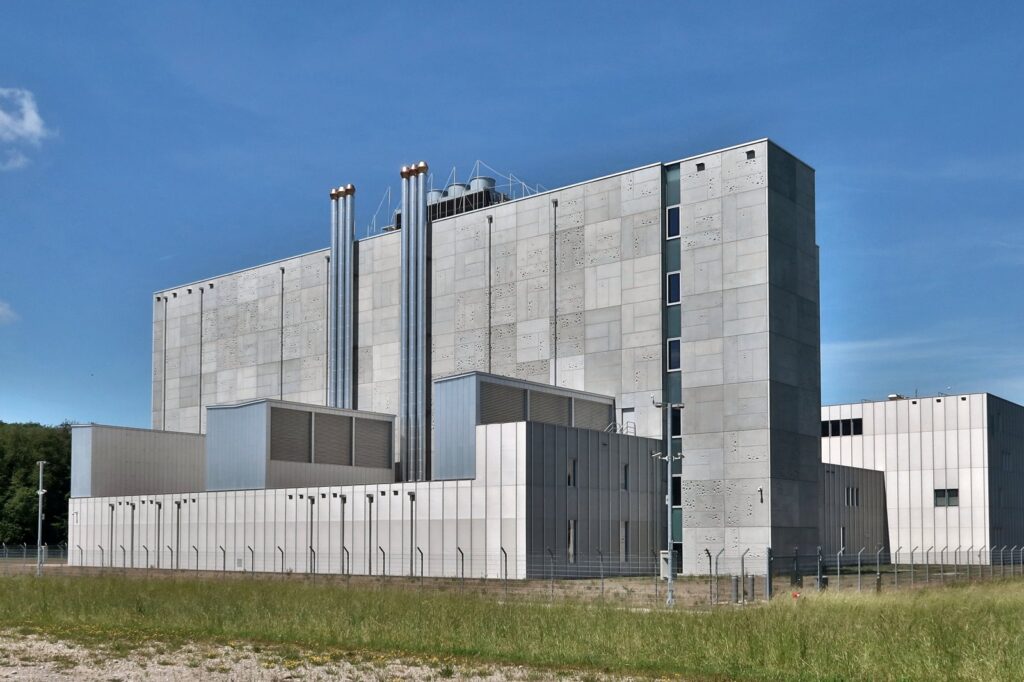
Why Data Centers Are Becoming Prime Targets in Modern Geopolitical Conflict
Ukraine’s drone strikes on Russian data centers have exposed a growing vulnerability in the physical infrastructure underpinning artificial intelligence worldwide. As AI becomes central to economic and military power, the immobility and scale of data centers make them high-value targets in modern conflict.
The Evolution of the Data Center From Utility to Strategic Asset
Data centers began as facilities for storing and managing digital information, evolving from military computing projects in the 1940s to today’s hyperscale hubs powering cloud services and AI training. According to IBM, the U.S. military’s ENIAC was an early example of such infrastructure. Over time, data centers shifted from on-premises enterprise models to cloud-based systems operated by providers like Amazon Web Services, Google Cloud, and Microsoft Azure. These facilities now house thousands of servers and span millions of square feet, with the largest occupying up to 10,000,000 sq ft. The shift reflects how digital infrastructure has moved from a background utility to a core component of national competitiveness.
Why Physical Immobility Creates a Massive Attack Surface
Modern data centers are large, immobile, and expensive to construct, making them difficult to replace if destroyed. This immobility turns their physical presence into a significant vulnerability, expanding the traditional cybersecurity concept of an “attack surface” to include the real-world infrastructure needed to power and host AI systems. As noted in cybersecurity discourse, the attack surface now encompasses not just software and networks but also the physical plants that supply electricity, cooling, and security to server halls. Because these facilities cannot be easily moved or duplicated, they present a fixed target for adversaries seeking to disrupt digital services.
The Cascading Impact of Infrastructure Strikes on Digital Services
Recent attacks have demonstrated how strikes on data centers can trigger widespread disruption. In March 2026, Iranian drones hit two Amazon Web Services facilities in the UAE and damaged another in Bahrain, causing physical damage, power disruption, and water damage from triggered fire suppression systems, according to AWS customer alerts. A follow-up strike hit an under-construction Sberbank data center. These incidents show that damaging a single facility can ripple through dependent systems, affecting everything from financial transactions to social media activity. The loss of specialized hardware like Nvidia A100 chips—used in Yandex’s supercomputers—further complicates recovery due to global supply constraints, making AI compute capacity hard to rebuild quickly.
Historical Context of Data Center Growth and Energy Demands
The scale of today’s data centers is unprecedented. In 2024, global data center electricity consumption reached 415 terawatt hours, about 1.5% of worldwide electricity use, according to the International Energy Agency. Hyperscale and colocation centers alone housed 74% of all computer servers in 2023, as estimated by Lawrence Berkeley National Laboratory in the U.S. Data Center Energy Usage Report. The largest facilities consume over 3,000 megawatts of power. The IEA projects that global data center electricity use could rise to 945 TWh by 2030, growing at around 15% annually. This surge is driven by AI training and deployment, which require intense, sustained computing power. As energy demands rise, so does the strategic importance—and vulnerability—of the facilities that meet them.
The Future of Hardening Critical AI Compute Facilities
Protecting AI infrastructure now requires rethinking security beyond firewalls and encryption. Physical hardening—such as reinforced structures, redundant power supplies, and advanced surveillance—is becoming essential for safeguarding data centers against kinetic threats. Some operators are exploring geographic dispersion, burying facilities underground, or using modular designs that allow faster replacement. However, the immobility and scale of hyperscale centers limit how much they can be dispersed or concealed. As AI competition intensifies between the United States, China, and other powers, the protection of compute infrastructure will likely become a formal part of national security strategy. The trend is clear: the battlefield is expanding to include the concrete and steel that power the digital world. Watch this space.
Infrastructure Investment and Regulatory Responses to Data Center Growth
As data center electricity demand rises, governments and utilities are responding with new infrastructure plans and regulatory frameworks. The project, the first filed under Indiana’s 2025 state law requiring large electricity users to cover 80% of reasonably assigned costs, includes two battery energy storage systems and a solar facility with a total infrastructure investment of $1.3 billion. AES Indiana estimates Google will pay $32.3 million for direct connection facilities, while $73.8 million in network upgrades will be included in AES’s transmission rate base and recovered in future retail rates.
The approval came after testimony from multiple stakeholders, including the Indiana Office of Utility Consumer Counselor and the Citizens Action Coalition. Brian A. Wright of the consumer counselor’s office testified that power line transmission upgrades would not be necessary without the data center’s energy needs, though the office did not oppose the plan. Ben Inskeep, program director at Citizens Action Coalition, highlighted concerns about a $74 million set of transmission upgrades specifically tied to the Google data center, arguing that the data center—not the customer—should bear the cost. Despite objections, regulators found the agreement satisfied and exceeded statutory requirements, noting it would serve large electricity customers while protecting existing AES customers.
Sources
- Ukraine’s Attacks on Russian Data Centers Lay Bare a Global Risk to AI | Council on Foreign Relations
- Data center
- Indiana approves AES plan to power Google data center in Monrovia
Photo: Kecko from Eastern Switzerland (CC BY 2.0)




