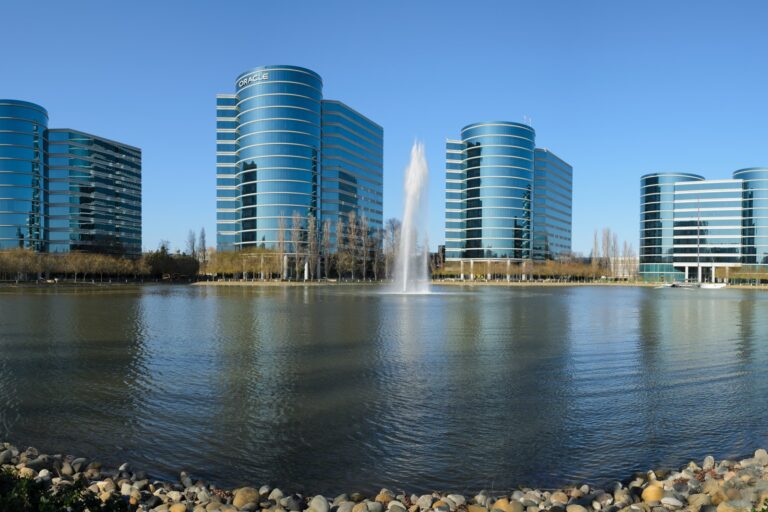
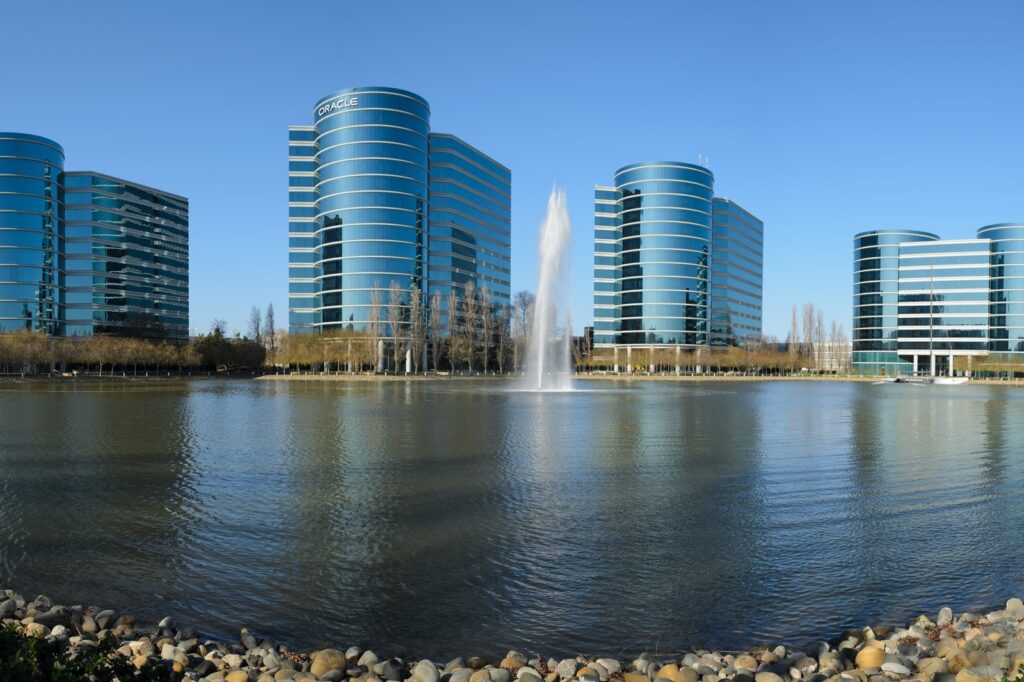
AUSTIN, November 3, 2026 — Oracle priced $9.9 billion of common stock and $10 billion of senior notes on November 2, a $20 billion raise executed in days rather than the weeks such a package usually takes. The speed is the signal: the AI infrastructure race has moved from planning to sprinting, and Oracle just showed how urgently it needs the cash to keep building.
What Oracle Actually Sold
The equity leg was 86,206,897 shares at $116.00 each, netting roughly $9.9 billion after underwriting discounts and estimated expenses. The notes came in five tranches: $2 billion of 7.000% notes due 2029, $1.75 billion of 7.450% notes due 2031, $2.25 billion of 7.850% notes due 2033, $2.5 billion of 8.000% notes due 2037 and $1.5 billion of 8.650% notes due 2046. Net proceeds from the debt were about $10 billion.
The two offerings are not contingent on each other and are expected to close November 4. Oracle said proceeds will go to general corporate purposes, which may include capital expenditures, repayment of indebtedness, future investments or acquisitions, and dividends or buybacks. BofA Securities is sole global coordinator, with Wells Fargo, Citigroup, BNP Paribas, Deutsche Bank, J.P. Morgan, PNC, Goldman Sachs, HSBC and SMBC Nikko among the joint book-running managers.
The Investor Day Numbers Behind the Dash
Four days before the pricing, Oracle held its Investor Day on October 28 and laid out targets that explain the hurry. Management guided to at least $225 billion in revenue in fiscal 2030, implying annual growth above 35% from fiscal 2026, and reaffirmed at least $90 billion for fiscal 2027. Free cash flow is projected to turn positive in the second half of fiscal 2028 and reach at least $30 billion in fiscal 2029, with capital spending peaking across fiscal 2027 and fiscal 2028 before declining.

Here is the part that reframes the raise: Oracle’s own funding plan limits additional capital-market funding through fiscal 2030 to $20 billion, excluding refinancing, split as $10 billion of equity and $10 billion of gross debt. In other words, the $20 billion priced on November 2 is close to the entire external funding envelope the company has budgeted for the next four years. Oracle also targets net debt to adjusted EBITDA below 3.5 times in fiscal 2029.
That structure tells you what the sprint is really about. Oracle is not drip-feeding capital markets quarter by quarter. It is pulling its budgeted raise forward in one move, which shortens the window in which investors can judge whether AI demand converts into revenue and cash. The milestones are now dated: spending peaks through fiscal 2028, free cash flow turns in the second half of fiscal 2028, and the $30 billion cash target lands in fiscal 2029.
What the Market Did With the News
It sold. Oracle stock fell 2.92% on November 2, and shares had already returned -4.9% over the past month against -0.8% for the S&P 500, according to Zacks. The stock has traded like a tug-of-war between AI enthusiasm and balance sheet risk, swinging from about $131 to an intraday high near $148 before fading back under $140 and down toward $130.
The leverage picture explains the nerves. Oracle carries long-term debt near $96.3 billion and total liabilities around $155.8 billion against equity of about $24.2 billion, a total debt to equity ratio of 2.52 and a current ratio of 1.2. The company still prints roughly $67.4 billion in annual revenue with gross margins near 96%, but the cushion is thin relative to the buildout.
Truist added fuel, projecting that Microsoft’s big AI and cloud rivals will run negative free cash flow under heavy infrastructure spending, putting them on weaker footing than Microsoft in this cycle. Larry Ellison’s net worth fell $168.9 billion as the AI data center spending and rising debt spooked traders. And Oracle Health disclosed a major data breach affecting multiple U.S. hospitals and health systems, exposing sensitive financial and medical records; law firm Ademi LLP is probing potential data privacy claims tied to it.
The Trend Underneath: Debt Is the New Compute
Watch this space, because Oracle is not alone. Meta Platforms is reportedly eyeing at least $20 billion from a potential debt offering in multiple currencies the same week. Two hyperscale-adjacent giants hunting for the same size of check in the same seven days is the shift: AI capacity is now financed like infrastructure, with bond ladders and equity dilution rather than operating cash alone.
The coupon curve is the tell on cost. Oracle is paying 7.000% at the short end and 8.650% out to 2046, a maturity ladder that stretches two decades. For an ordinary investor, that is the number that matters: the AI buildout is being funded with long-dated obligations at yields that would have looked expensive for a blue-chip software issuer not long ago. Every data center Oracle lights up now carries a fixed cost attached to it through 2046.
What’s changing is the burden of proof. Oracle has given the market a schedule, and the market has responded by marking the stock down and demanding the cash flow arrive on time. The next hard date is November 4, when both offerings are expected to close.
Sources
- Oracle Corporation
- Here is What to Know Beyond Why Oracle Corporation (ORCL) is a Trending Stock
- Oracle Stock Slides As AI Spending And Data Breach Rattle Traders
- Oracle Announces Pricing of $20 Billion of Common Stock and Senior Notes
- Oracle stock faces AI funding test after FY30 plan
- Oracle raises $20 billion for AI growth as Meta weighs new debt- Moneycontrol.com
Photo: King of Hearts (CC BY-SA 3.0)