
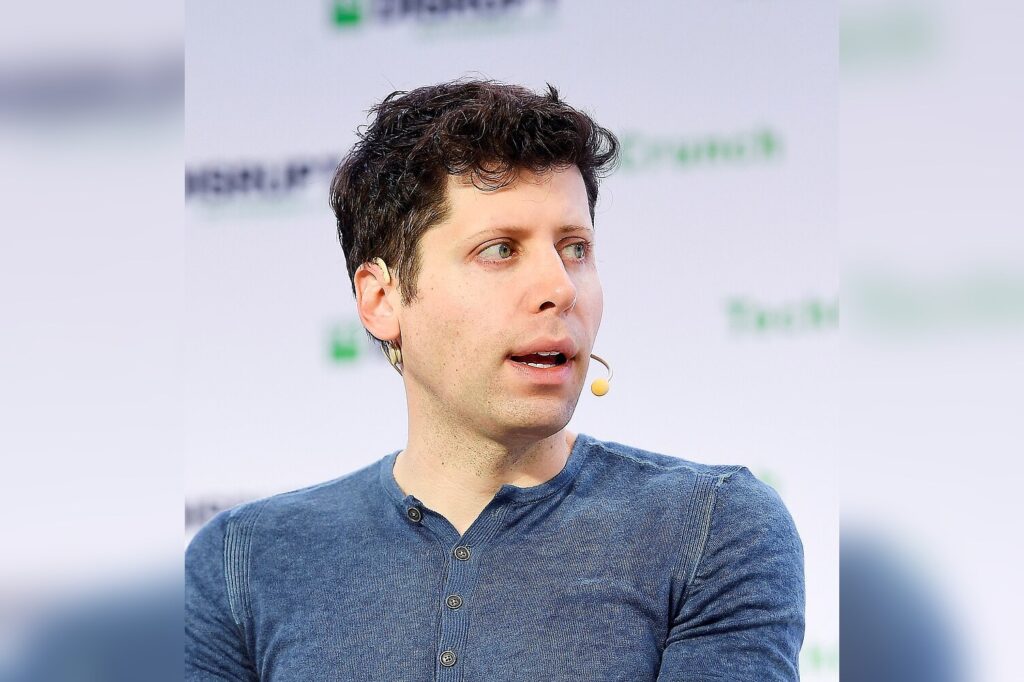
Sam Altman told world leaders something they probably didn’t want to hear: the companies building artificial intelligence should not be the ones deciding how it gets used. The OpenAI chief executive made that explicit at the G7 summit. “Do not cede your responsibilities to AI labs like mine,” he said.
The remark lands at a moment when governments are scrambling. AI systems are already reshaping work, information, and daily life.
Altman said the debate over whether AI is useful is finished. More powerful systems are coming. They will hit the global economy and scientific discovery in ways still hard to measure.
For ordinary people, the consequences are immediate and personal. AI will touch jobs, schools, healthcare, and the news they read.
The question is who writes the rules. Altman drew a line: developers build the tech, but citizens and their democratic institutions set the limits. That distinction matters because the companies racing ahead have their own incentives.
Profit, speed, and market dominance do not align neatly with public safety or community well-being. The G7 stage gave Altman a platform to push responsibility back onto governments. He was explicit that AI labs like his should not be the arbiters of what is acceptable.
That is a striking position from the head of the company behind ChatGPT, the product that kicked off the current AI boom. It suggests even the people inside the industry see a gap between what they can build and what society can absorb.
What this means for communities is still unfolding. Altman predicted a rise in AI development over the coming years. That is not a forecast anyone disputes.
The technology will become more pervasive. The question is whether democratic institutions can keep up.
They are slow by design. AI moves at machine speed. The mismatch is already visible in debates over copyright, disinformation, and job displacement.
The G7 summit did not produce a binding framework. No one expected one. But Altman’s comments set a marker.
He told governments they own the governance problem. That is a useful prod.
It is also a convenient one for a company that faces growing scrutiny over its products’ effects. OpenAI has been sued over data use. Regulators in Europe and the United States are circling.
By telling leaders to take charge, Altman aligns his company with democratic accountability — even as his lab pushes the technology forward at breakneck pace. The consequences of that stance will play out in the next few years.
Governments will need to decide how much they trust their own capacity to regulate. They will need to fund expertise, write laws, and enforce them. None of that is easy.
AI companies have resources and talent that dwarf most regulatory agencies. The power imbalance is real. Altman’s message was a warning dressed as an invitation.
He said AI will reshape the global economy. He said it will reshape scientific discovery.
He said citizens, not companies, should decide the rules. Whether governments are ready to take that responsibility is an open question. The clock is running.
{“@context”: “https://schema.org”, “@type”: “NewsArticle”, “headline”: “Altman tells G7 nations not to cede AI oversight to companies like OpenAI”, “description”: “Sam Altman told world leaders something they probably didn’t want to hear: the companies building artificial intelligence should not be the ones deciding how it…”, “datePublished”: “2026-06-20T09:48:00+00:00T09:30:00+00:00”, “author”: {“@type”: “Person”, “name”: “Ariel Antonio”}, “publisher”: {“@type”: “Organization”, “name”: “InfoPulse Today”, “url”: “https://newsfeed.infopulsetoday.com/”}}




