
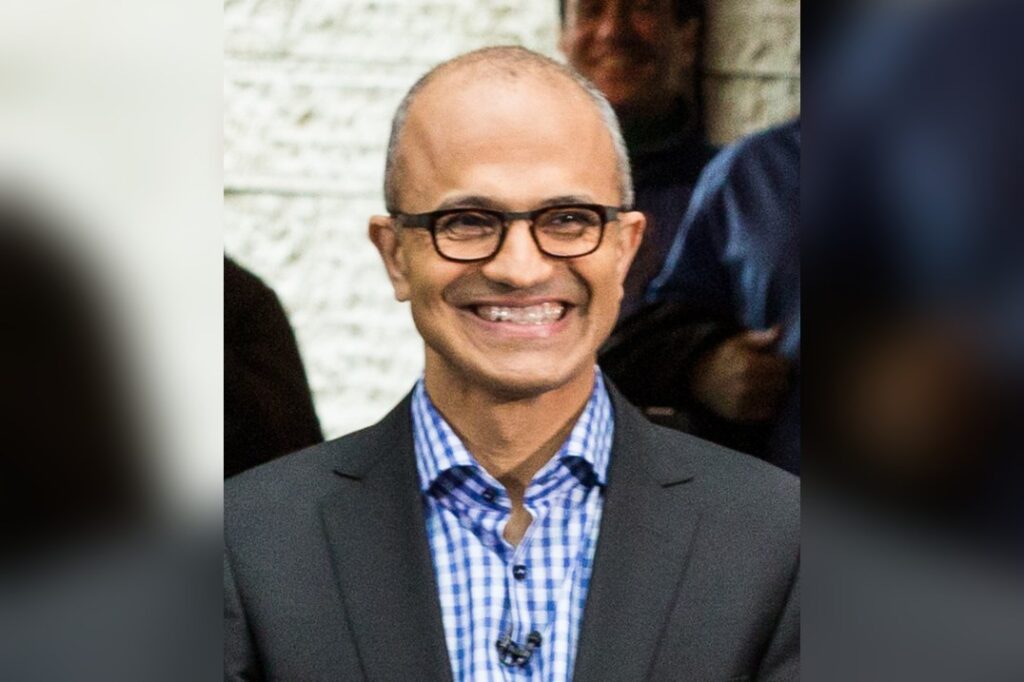
Satya Nadella is betting the future of artificial intelligence on a simple idea: the public will not tolerate a technology that belongs to a few. The Microsoft CEO told The Wall Street Journal this week that the AI industry needs to earn “social permission.” That is not a phrase executives usually reach for. It signals a real worry about backlash.
If people come to see AI as a tool that only enriches a tiny number of companies while displacing their jobs and eroding their privacy, they will reject it. That rejection could take the form of regulation, litigation, or simple refusal to adopt the technology.
Nadella did not name names. But the target of his criticism is clear. The AI boom today is dominated by a small group of frontier model developers.
They command the massive computing resources, the rare talent, and the data pipelines needed to build the most powerful systems. They also capture most of the economic value.
Nadella argues that model is unsustainable. It concentrates risk as much as reward. The stakes are concrete.
AI is not a niche product. It is reshaping economies, workplaces, and societies. If a handful of companies control how that technology is learned, deployed, and distributed, they also control the terms on which entire industries adapt.
That is a power no private corporation should hold unchecked, Nadella implied. His alternative vision centers on lower-cost models, greater user control, and broader access.
In short, democratization rather than domination. This is not a theoretical debate for Microsoft. The company has invested billions in OpenAI, one of the dominant players.
But Nadella is now signaling that the next phase of the AI race must look different. He is positioning Microsoft as the advocate for a more open, distributed model.
That is a strategic bet. It is also a recognition that the current trajectory generates too much friction. Consider what is at risk if the concentration continues.
Job displacement accelerates without a broad base of companies and workers able to adapt. Safety concerns mount when a few firms set the standards behind closed doors. Public trust erodes when the benefits of a transformative technology flow upward, not outward.
Nadella warned that the public will not accept that future. He is right.
The technical reality is that AI development requires enormous resources. That naturally favors large players. But Nadella argues that the industry must find a way to spread access and control.
Otherwise, it will lose the social license to operate at scale. That is a sharp warning from the CEO of one of the world’s most valuable companies.
His remarks place him at the center of a growing debate. Regulators in Europe and the United States are already scrutinizing AI concentration. Labor unions are demanding protections.
Civil society groups are raising alarms about bias and surveillance. Nadella is effectively telling his peers that the industry must police itself before others do it for them. The challenge is immense.
The AI industry is characterized by a small number of large companies driving innovation. They have the capital, the data, and the talent.
Shifting toward a more democratic model means sharing power. That is not something corporations do willingly. But Nadella is betting that the alternative is worse.
A future in which only a few companies control AI is a future in which the technology never reaches its potential. It is also a future that invites a backlash no one can control.
His vision is not altruism. It is self-interest. Microsoft wants to shape the rules of the game.
But the warning is real. The public will not accept a closed AI system. The industry must earn its permission to operate.
That is the core of Nadella’s message. And it is a message the rest of the tech world should take seriously.
{“@context”: “https://schema.org”, “@type”: “NewsArticle”, “headline”: “Nadella: AI industry must earn public’s ‘social permission’ to succeed”, “description”: “Satya Nadella is betting the future of artificial intelligence on a simple idea: the public will not tolerate a technology that belongs to a few….”, “datePublished”: “2026-06-23T05:15:20+00:00T09:30:00+00:00”, “author”: {“@type”: “Person”, “name”: “Sebastian Smith”}, “publisher”: {“@type”: “Organization”, “name”: “InfoPulse Today”, “url”: “https://newsfeed.2bme.xyz/”}}




