
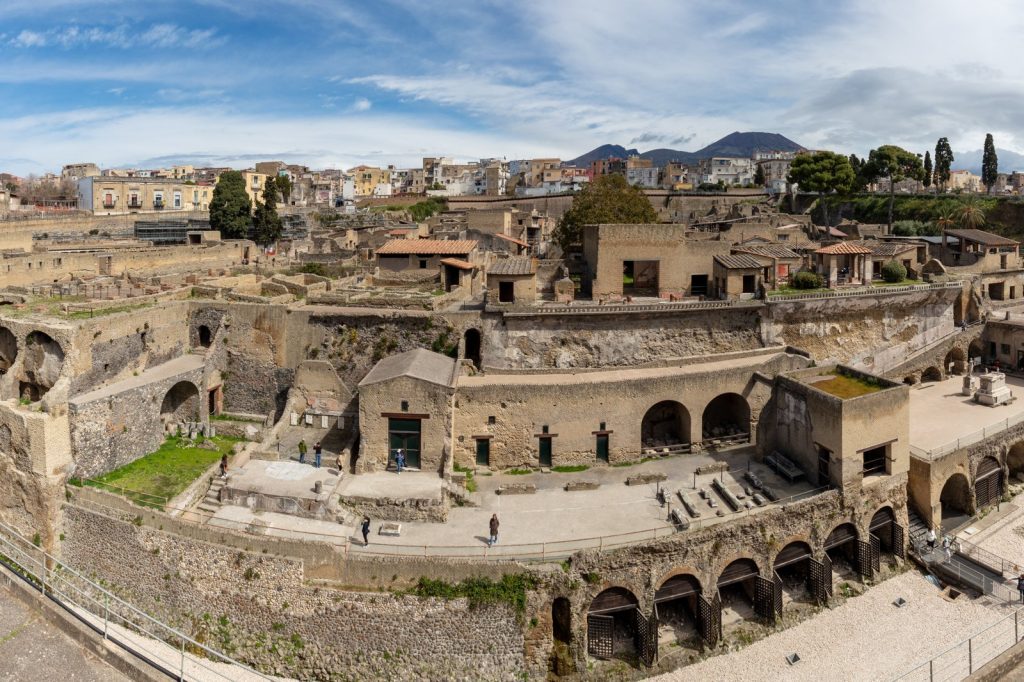
A global competition to read ancient scrolls has delivered its first real payoff — and the people running it say the method worked faster than anyone expected. The Vesuvius Challenge, launched by the University of Kentucky in 2023, offered prize money to researchers who could pair machine learning with X-ray technology to decipher carbonized papyrus from Herculaneum. The scrolls came from the Villa of the Papyri, a Greco-Roman library buried when Mount Vesuvius erupted in 79 CE.
For centuries, scholars could not unroll them without destroying the text. That changed when the challenge structure kicked in.
Organizers say the prize-driven model accelerated progress in ways traditional academic funding rarely does. Hundreds of thousands of dollars in awards have gone to scientists and researchers who delivered results. The texts emerging so far are fragmentary.
But they confirm the library held works preserved from the eruption. “This is not a government program,” one organizer noted.
“It is a prize-driven competition.” The University of Kentucky has served as the institutional anchor. But the real work has been distributed across a global network of researchers competing for the next breakthrough. That distributed model, organizers say, is what made the difference.
Scholars who have studied the scrolls for years are reacting with a mix of excitement and caution. The texts recovered so far represent a fraction of what the library likely held. The Villa of the Papyri sat just 11 miles from the base of Mount Vesuvius.
The eruption that destroyed Pompeii also preserved this collection by carbonizing it — turning the scrolls into brittle, blackened cylinders that resisted every attempt at physical unrolling. Machine learning changed the math.
The technology can read the carbon-based ink without touching the scroll. X-ray scans capture the internal structure. Algorithms trained on the data can distinguish the ink from the carbonized papyrus.
Words and passages have come to light. What this signals is a decisive shift in how the broader stakes of classical archaeology are understood.
The question now is how much more the library holds — and how fast the competition can extract it. Officials at the University of Kentucky have not released a timeline for further discoveries. The prize money has attracted researchers from multiple countries, and the pace of submissions has been steady.
The challenge has not announced a cap on future awards. For now, the fragments are enough to confirm the library’s scope. The Villa of the Papyri was a Greco-Roman residence that held a working collection of texts.
The eruption froze that library in time. The Vesuvius Challenge has found a way to read it.
Organizers say the model could apply to other damaged manuscripts from the ancient world. The same technology that reads carbonized Herculaneum scrolls could work on charred texts from other sites. The key, they argue, is the competition structure — not a single lab, but a field of researchers racing each other for results.
The recovered passages remain fragmentary. That is the nature of the material.
But the fragments are readable. That alone is a breakthrough after centuries of dead ends.
{“@context”: “https://schema.org”, “@type”: “NewsArticle”, “headline”: “Global Competition Uses AI to Decipher Buried Herculaneum Scrolls Faster Than Expected”, “description”: “A global competition to read ancient scrolls has delivered its first real payoff — and the people running it say the method worked faster than…”, “datePublished”: “2026-06-30T12:22:00+00:00T09:30:00+00:00”, “author”: {“@type”: “Person”, “name”: “Dmitry Volkov”}, “publisher”: {“@type”: “Organization”, “name”: “InfoPulse Today”, “url”: “https://newsfeed.infopulsetoday.com/”}}




