
A Calculated Refusal
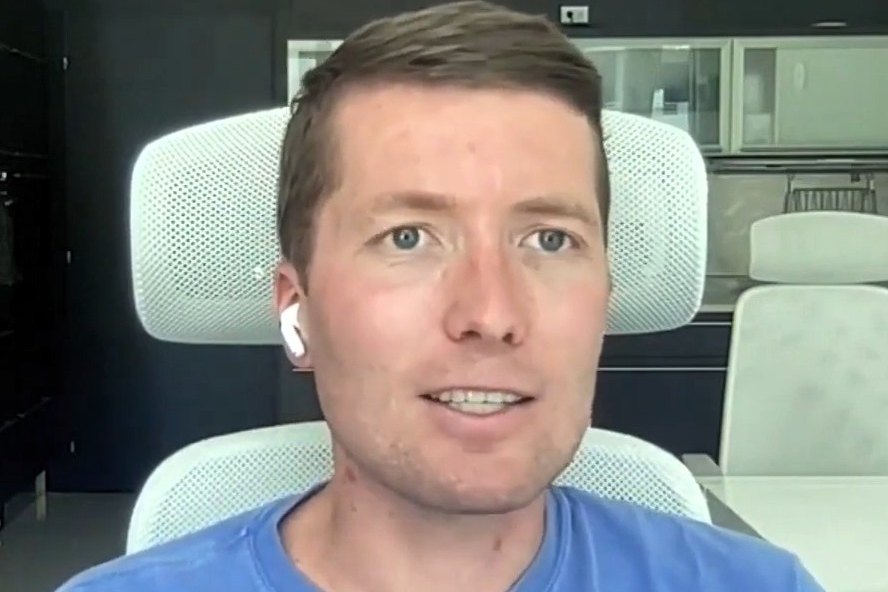
The official explanation from Hugging Face was straightforward: the company did not want a single dominant investor in a position to sway its decisions. The unspoken reasoning, according to co-founder and CEO Clément Delangue, is that the firm simply did not need the money. Delangue, who built Hugging Face in New York City alongside fellow French entrepreneurs Julien Chaumond and Thomas Wolf, described the company’s approach as taking “a bit of an unconventional approach” in an interview with Observer. Indeed, while many AI developers torch billions of dollars chasing the next generation of large language models, Hugging Face has not raised a new round of capital in nearly three years. Instead, the company is funding its growth through revenue.
Hugging Face was last valued at $4.5 billion in its Series D round in 2023, a $235 million raise led by Salesforce. Google, Amazon, and Nvidia itself were among the backers in that round — investors that Delangue said he was content to keep at arm’s length. The decision to reject Nvidia’s half-billion-dollar check reflects a particular kind of confidence. When asked whether the current AI landscape represents a bubble, Delangue declined to give a simple yes-or-no answer. If there is a bubble, he argued, it is concentrated on large language models — the corner of the industry that has absorbed, by his estimate, roughly 95 percent of investment dollars, value, and attention. What he sees as under-loved? Biology and chemistry.
The Hugging Face Model
The company now at the center of this debate began humbly. In 2016, Hugging Face launched as a chatbot app for teenagers, named after the smiling-face emoji. When its founders released the underlying model as open-source software, the startup pivoted dramatically. It became a platform where developers share machine-learning models, datasets, and code. Today, that repository functions as a central clearinghouse for artificial-intelligence research, hosting work from thousands of organizations and individuals worldwide.
In plain terms, Hugging Face provides tools and a cloud-based hub for building and distributing machine-learning applications. Its most famous product, the Transformers library, lets programmers use pre-trained language models with just a few lines of code. Researchers and startups alike rely on the platform to store, test, and deploy AI systems without having to build everything from scratch. The company gained prominence during the explosion of large language models. In 2021, Hugging Face launched the BigScience Research Workshop, a global collaboration that produced BLOOM — an open multilingual model of substantial scale. Partnerships followed: Amazon Web Services began offering Hugging Face products to its customers in 2023, and the next generation of BLOOM was designed to run on AWS’s custom chips. More recently, Hugging Face teamed with Meta and UNESCO to build an online translator covering hundreds of languages, including many that receive little commercial attention.
Broader Implications for AI’s Future
This history matters now because Hugging Face sits at the center of a fundamental debate over how artificial intelligence should be developed and shared. While companies like OpenAI and Google pour vast sums into proprietary frontier models, Hugging Face champions open-source collaboration. Its decision to refuse a large investment from Nvidia signals confidence in that model — and independence from any single dominant backer.
For readers, the company’s trajectory reflects a broader choice: whether the future of AI will be controlled by a few giant players or remain accessible to many. Hugging Face has not raised capital in nearly three years, funding its growth through revenue, and has demonstrated the ability to say no to the most valuable chipmaker on earth. That stance stands in stark contrast to the rest of the AI industry, where billions are torched in pursuit of the next breakthrough. Delangue’s unconventional approach, rooted in the company’s origins as an open-source chatbot and nurtured through collaborations at global scale, suggests that there remains room for a different kind of AI company — one that values independence and breadth of application as much as raw frontier performance.
{“@context”: “https://schema.org”, “@type”: “NewsArticle”, “headline”: “Hugging Face Rejects Funding to Maintain Independent AI Direction”, “description”: “A Calculated Refusal The official explanation from Hugging Face was straightforward: the company did not want a single dominant investor in a position to sway…”, “datePublished”: “2026-07-01T09:30:00+00:00”, “author”: {“@type”: “Person”, “name”: “Dmitry Volkov”}, “publisher”: {“@type”: “Organization”, “name”: “InfoPulse Today”, “url”: “https://newsfeed.infopulsetoday.com/”}}




