
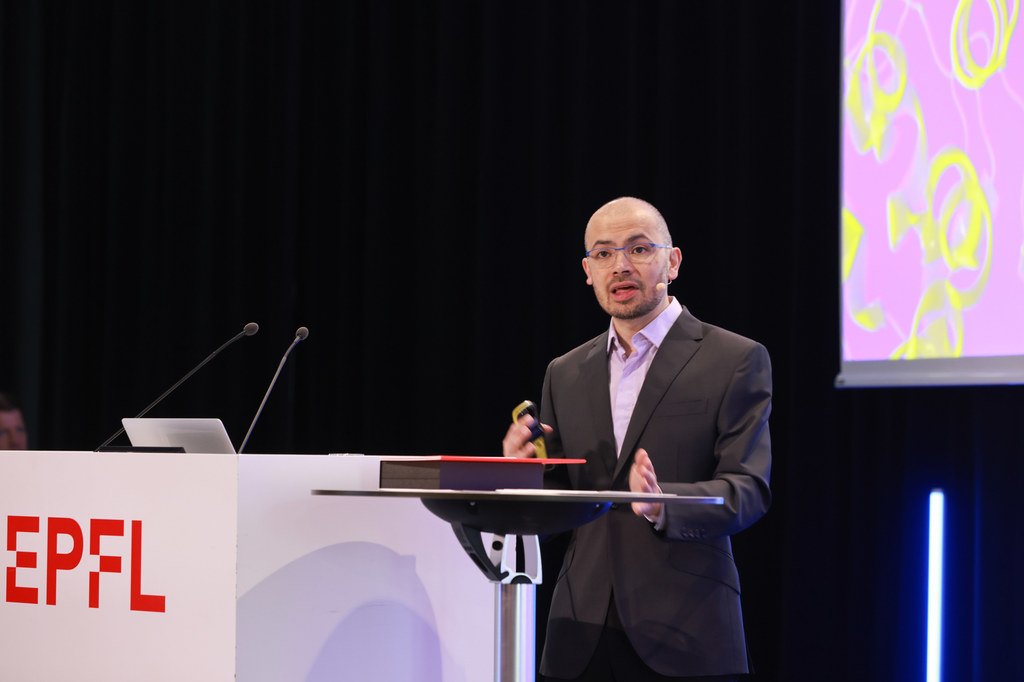
LONDON, July 14 — Demis Hassabis, the CEO of Google DeepMind, has overseen a trajectory in artificial intelligence that now places his company and its technologies at the centre of both scientific breakthroughs and strategic competition between major powers. According to the record, Hassabis co-founded DeepMind on September 23, 2010, with Shane Legg and Mustafa Suleyman, and the firm was acquired by Google on January 26, 2014, for $500 million. The official biography shows Hassabis was born on July 27, 1976, in London, England.
He earned a PhD in cognitive neuroscience from University College London in 2009. His academic grounding in how the human brain works has informed the architecture of the AI systems his company builds.
The strategic context here is that DeepMind, now employing approximately 2,500 people as of 2024 with offices in London, Mountain View, and Paris, operates in a domain where the United States, China, and European powers are all investing heavily to secure technological advantage. Under Hassabis’s leadership, DeepMind achieved a landmark moment on March 15, 2016, when its AlphaGo system defeated world champion Lee Sedol in the board game Go by a score of 4-1.
That victory was widely seen as a demonstration that AI could master complex, intuitive tasks once thought to be uniquely human. It also signalled to defence and intelligence communities worldwide that the underlying methods could be adapted for strategic planning and pattern recognition.
The AlphaFold Breakthrough
In 2020, DeepMind’s AlphaFold system solved the protein folding problem, predicting structures for 350,000 proteins. The results were published in Nature on November 30, 2020. This development has direct implications for drug discovery, vaccine development, and understanding diseases — areas that governments treat as matters of national security and public health infrastructure.
The record shows that this work placed DeepMind in a position where its technology could influence not just commercial markets but also state-level biomedical preparedness. Hassabis was appointed CEO of Google DeepMind following a merger with Google’s Brain team on April 20, 2023.
That consolidation brought together two of the most significant AI research groups under one leadership structure. The move was interpreted by analysts as an effort by Google to streamline its AI efforts amid intensifying competition from Microsoft-backed OpenAI and from Chinese firms such as Baidu and Tencent.
Recognition and Wealth
Hassabis was knighted by King Charles III on March 29, 2024, for services to AI. The honour reflects the British government’s view of AI as a sector of strategic national importance. According to Forbes, his net worth was estimated at $1.5 billion as of 2024.
The concentration of AI talent and resources under Hassabis raises questions about the balance of power in the technology sector. With offices in three countries and a workforce of roughly 2,500, DeepMind operates across jurisdictions that have differing regulatory approaches to AI.
The European Union has moved toward strict regulation, while the United States under President Donald Trump’s administration has favoured a lighter-touch approach to encourage innovation. What to watch next is how DeepMind’s research agenda evolves under the merged structure with Google Brain, and whether the company’s breakthroughs in areas like protein folding translate into commercially viable products that reinforce the strategic position of its Western backers.
The record shows that Hassabis has built an organisation capable of producing fundamental science; the question now is how that science gets deployed in a world of competing national interests.
Sources
{“@context”: “https://schema.org”, “@type”: “NewsArticle”, “headline”: “Demis Hassabis: DeepMind Co-Founder Drives AI Industry Growth”, “description”: “LONDON, July 14 — Demis Hassabis, the CEO of Google DeepMind, has overseen a trajectory in artificial intelligence that now places his company and its…”, “datePublished”: “2026-07-14T09:30:00+00:00”, “author”: {“@type”: “Person”, “name”: “Dmitry Volkov”}, “publisher”: {“@type”: “Organization”, “name”: “InfoPulse Today”, “url”: “https://newsfeed.infopulsetoday.com/”}, “citation”: [{“@type”: “CreativeWork”, “url”: “https://en.wikipedia.org/wiki/Demis_Hassabis”}]}




