
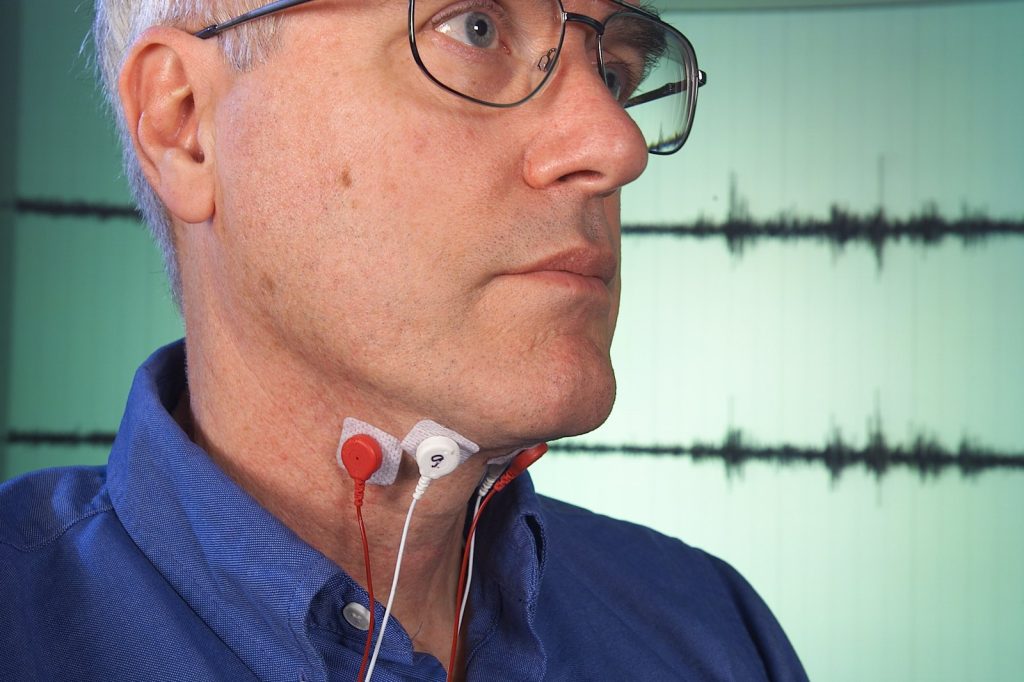
WASHINGTON, July 18 — A five-year research project funded by the Defense Advanced Research Projects Agency in 1971 set a goal of building a speech recognition system with a 1,000-word vocabulary. The DARPA Speech Understanding Research program marked a turning point in a field that had already seen decades of false starts and technical breakthroughs. Speech recognition, formally known as automatic speech recognition (ASR) or speech-to-text (STT), is a sub-field of computational linguistics that translates spoken language into text or other interpretable forms.
The technology has applications including voice user interfaces for calling, call routing, home automation, and aircraft control through direct voice input, as well as productivity tools such as searching audio recordings, creating transcripts, and dictation. The technology can analyze speaker characteristics, including identifying native language through pronunciation assessment.
Voice recognition, or speaker identification, is a separate capability that identifies the speaker rather than the content and is used for authentication and security. Privacy implications arise because these systems process and store audio, enabling analysis of speaker traits and potential misuse.
From Audrey to HMMs: A Timeline of Breakthroughs
The record shows a long arc of development. In 1952, Bell Labs built Audrey, a system capable of single-speaker digit recognition. IBM followed a decade later, in 1962, with its 16-word Shoebox demonstrator.
In 1966, Fumitada Itakura proposed linear predictive coding, a technique that would become fundamental to speech modeling. Progress was not linear.
In 1969, Bell Labs defunded its speech recognition research after a critical letter. Yet the late 1960s also saw Raj Reddy pioneer continuous speech recognition at Stanford. The DARPA funding in 1971 provided fresh momentum.
During the 1970s, Leonard Baum developed Markov chains, mathematical models later adapted by James and Janet Baker at Carnegie Mellon University for hidden Markov models (HMMs) in speech recognition. By the 1980s, HMMs enabled researchers to combine acoustics, language, and syntax into integrated systems.
Advances included larger vocabulary sizes, greater speaker independence, and faster processing. The field received another major acceleration after 2010, with breakthroughs in deep learning and big data.
Adoption and Privacy Implications
Speech recognition systems today are widely adopted in consumer devices and enterprise environments. But the collection of voice data raises privacy concerns regarding speaker identification and behavioral profiling. The same systems that transcribe speech can also be used to build detailed profiles of individual speakers — a tension that regulators are only beginning to address.
As deployment continues to expand, the balance between convenience and privacy remains an open question. The timeline from Audrey to HMMs to modern deep learning systems shows a field that has steadily delivered on its promises, even as it generates new risks.
Sources
{“@context”: “https://schema.org”, “@type”: “NewsArticle”, “headline”: “How AI Voice Recording and Speech Recognition Raise Privacy Concerns”, “description”: “WASHINGTON, July 18 — A five-year research project funded by the Defense Advanced Research Projects Agency in 1971 set a goal of building a speech…”, “datePublished”: “2026-07-18T09:30:00+00:00”, “author”: {“@type”: “Person”, “name”: “Ariel Antonio”}, “publisher”: {“@type”: “Organization”, “name”: “InfoPulse Today”, “url”: “https://newsfeed.infopulsetoday.com/”}, “citation”: [{“@type”: “CreativeWork”, “url”: “https://en.wikipedia.org/wiki/Speech_recognition”}]}




