
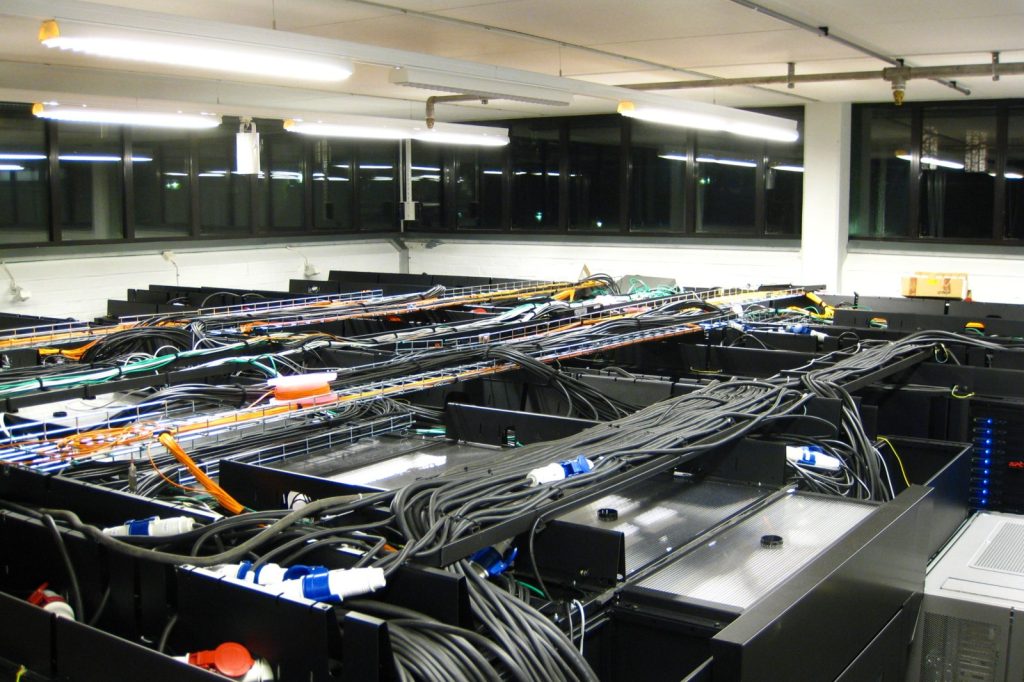
SAN FRANCISCO, July 26 — On a dry stretch of the Colorado River basin, the calculus of the digital age is playing out in gallons. The concrete halls of a California data center, built to power the country’s exploding appetite for artificial intelligence, now sit at the center of a water fight that pits the cloud against a dwindling river.
The scene is one that water managers across the West know well: a facility that once swore off river water has reversed course, quietly requesting access to the Colorado River’s flow. The shift lays bare the raw tension between the relentless build-out of AI infrastructure and the parched reality of a region that has been overdrawn for decades.
The Cooling Challenge
Inside these data centers, the work is ferocious. Rack after rack of servers churns through computations that train and run AI models, and the heat they throw off is immense. That heat does not simply vanish.
It has to be moved, pumped, and bled away, and for the vast majority of large facilities, that means water. Most hyperscale data centers rely on evaporative cooling towers.
They pull water from municipal supplies or nearby rivers to carry off thermal loads. The industry measures this thirst through a metric called Water Usage Effectiveness — litres of water consumed per kilowatt-hour of IT energy. Typical hyperscale centers report WUE values between 0.5 and 1.5 litres per kilowatt-hour.
To understand what that means at scale: a single 330-megawatt facility humming at full capacity for a year would consume between 1.4 and 4.3 billion litres of water — roughly 370 million to 1.14 billion gallons — if it relied exclusively on evaporative cooling. That is enough to fill thousands of Olympic swimming pools, every year, for one building.
Newer designs offer an off-ramp. Chilled-water loops and liquid immersion technologies can slash water consumption by 70 percent, but they come with higher upfront costs and different energy demands. The choice of cooling system is, in effect, a choice about what resource to burn — water or electricity — and in the arid Southwest, that choice is increasingly political.
A Pledge Reversed
The California facility now seeking Colorado River water had previously pledged to take none. The reversal from a no-river-water promise to an active request for that same supply underscores how quickly the ground has shifted. The 260 million gallons per year the facility is requesting suggests it will not run at full bore around the clock, or that it will use a hybrid cooling system that blends evaporative towers with more efficient methods.
Either way, the request marks a notable retreat from a public commitment. The biggest names in the industry have made grand commitments.
Google, Microsoft, and Amazon have all pledged to become “water positive” by 2030 — meaning they aim to recapture and return more water to the environment than their operations consume. Those pledges are ambitious, but they are being tested in real time by the immense water demands of today’s AI workloads. The California case is not an outlier.
It is a signal. As data center construction surges across the Sun Belt — drawn by cheap land, tax incentives, and available power — the competition for water is tightening.
Municipal suppliers in drought-prone states are being asked to serve facilities that can each consume as much water as a small city, all while residential and agricultural users face cutbacks. By nightfall on the Colorado, the river keeps running, but the allocations are spoken for. The data center’s request enters an already strained system, and the outcome will be watched closely by every player in the AI arms race.
The tension between scaling infrastructure and regional water scarcity is not going away. It is just getting started.




