
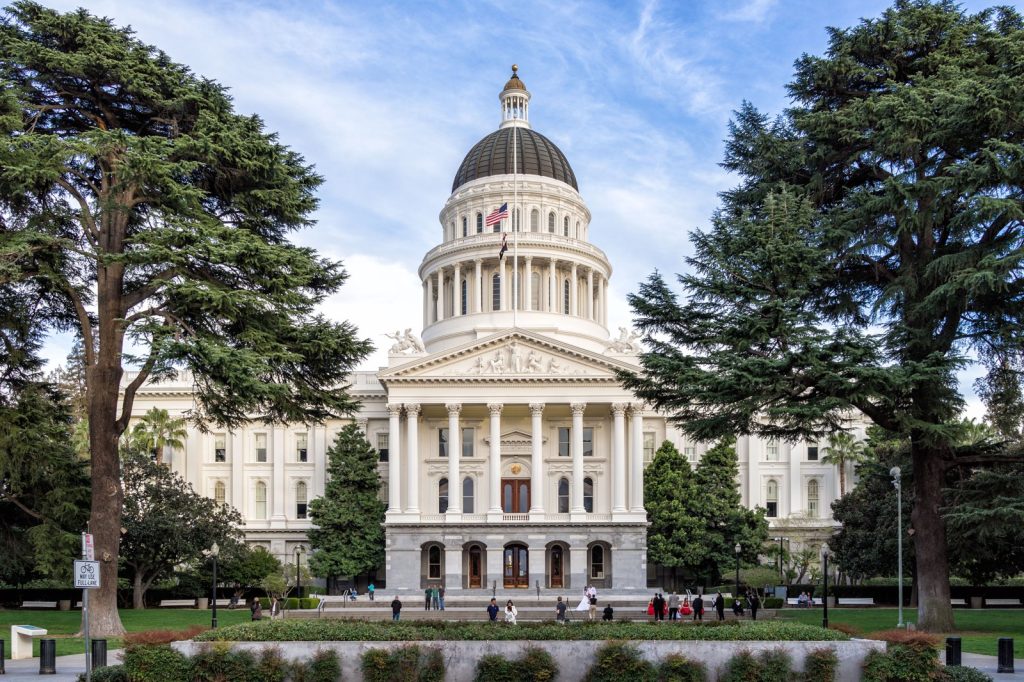
SACRAMENTO, July 26 — A data centre’s water right application has become the latest test of the California Environmental Quality Act, the state’s sprawling regulatory machine that demands a full Environmental Impact Report before any major water diversion gets the green light. Under the hood, CEQA requires analysis of water supply, environmental impacts, and alternatives — a process that typically runs 12 to 18 months from start to finish. The applicant must first file a Notice of Preparation, triggering a public scoping period.
That leads to a draft EIR thrown open for public comment, then a final version, and finally a hearing before the State Water Resources Control Board. The Bureau of Reclamation, which manages releases from the Colorado River, also has to concur if the water is being pulled from the river’s California mainstem.
As ever with California water law, the detail that matters is in which basin the diversion sits.
The CEQA Machinery
CEQA’s procedural churn is designed to surface every consequence — and every alternative — before a single permit is issued. For this data centre, the SWRCB’s staff will scrutinise the EIR’s water-supply analysis, the modelled environmental effects, and the range of alternatives the applicant considered. The technical reality is that the board has broad discretion to impose conditions on the water right, including mandatory water neutrality, which would require the facility to offset every drop it consumes through conservation or recycled water.
The source material lists several potential mitigation measures the applicant might need to adopt: purchasing water rights from agricultural users, funding water efficiency projects, or offsetting consumption through recycled-water schemes. None of these are new ideas in California water policy, but their application to a data centre — a notoriously thirsty technology asset — adds a fresh layer of political and environmental scrutiny.
The SWRCB can write any or all of these into a final permit as binding conditions.
Mitigation Under the Hood
Purchasing water rights from farmers is the most straightforward option, though it invites political blowback from agricultural communities already squeezed by drought allocations. Funding water efficiency projects — upgrading irrigation canals, lining ditches — creates an offset ledger that the data centre can draw against. Recycled water, meanwhile, requires infrastructure that may not exist at the site; the applicant would likely have to negotiate with a local water district to build out a purple-pipe network.
The SWRCB’s discretion to mandate water neutrality is a powerful lever. In practice, that means the data centre’s net water consumption — after all off-sets are counted — must be zero.
That is a high bar for a facility that relies on evaporative cooling, a common approach in data centres that pulls tens of millions of gallons per year from local supplies. The board could also require the applicant to demonstrate that the project will not impair existing senior water rights or harm endangered species in the Colorado River system.
The Clock and the Lawyers
At the time the source material was prepared, the SWRCB expected a final decision by December 2025. That deadline has now passed, and any decision that has been issued — or any delay — would be subject to legal challenge. Litigation from environmental groups is a near-certainty when a major new water right is granted under CEQA, and the source notes such lawsuits could extend the timeline by years.
California courts routinely order supplemental EIRs when they find the analysis insufficient, sending the process back to the scoping phase and adding another 12 to 18 months. The Bureau of Reclamation’s concurrence is a separate choke point.
If the water is diverted from the Colorado River’s California mainstem — the stretch that feeds the Imperial Valley and the Metropolitan Water District — the federal agency must sign off on the diversion’s consistency with the Law of the River, the intricate web of treaties, compacts, and court decisions that governs the basin. That concurrence is not guaranteed, especially during a period of prolonged drought and declining reservoir levels at Lake Mead and Lake Powell.
For now, the data centre’s water right application sits inside the CEQA machine, a process that rewards patience and punishes haste. The applicant has filed its Notice of Preparation, the draft EIR is likely circulating, and the clock on the 12-to-18-month typical timeframe is ticking — assuming no lawsuits reset it.
The outcome will set a precedent for every technology company with a server farm eyeing the same limited resource.
Sources
{“@context”: “https://schema.org”, “@type”: “NewsArticle”, “headline”: “Regulatory Timeline Set for AI Centre’s Environmental Review”, “description”: “SACRAMENTO, July 26 — A data centre’s water right application has become the latest test of the California Environmental Quality Act, the state’s sprawling regulatory…”, “datePublished”: “2026-07-26T09:30:00+00:00”, “author”: {“@type”: “Person”, “name”: “Sebastian Smith”}, “publisher”: {“@type”: “Organization”, “name”: “InfoPulse Today”, “url”: “https://newsfeed.infopulsetoday.com/”}, “citation”: [{“@type”: “CreativeWork”, “url”: “https://en.wikipedia.org/wiki/California_Environmental_Quality_Act”}]}




