
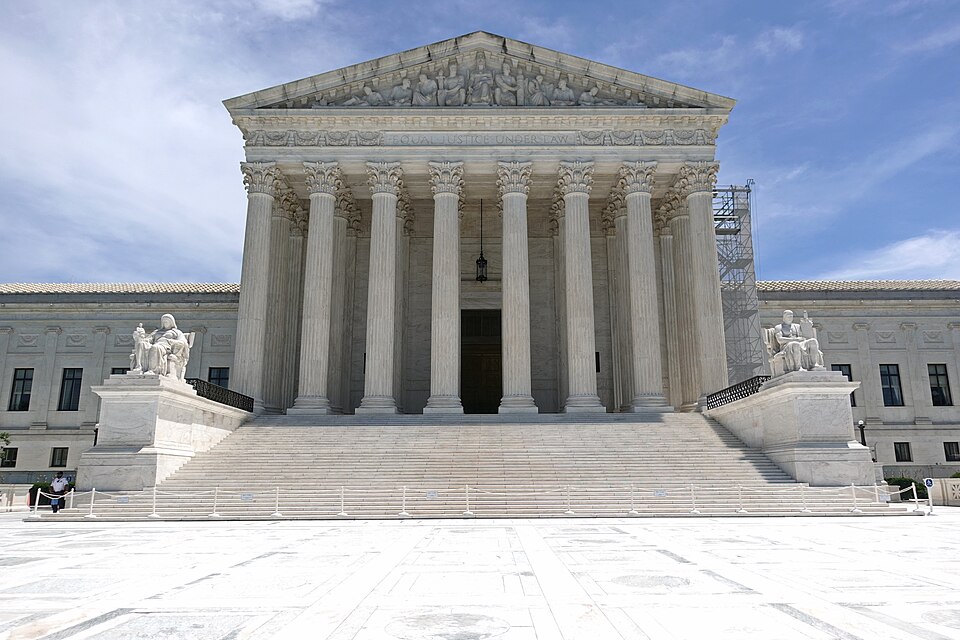
WASHINGTON, July 14 — The constitutional architecture protecting private property from government seizure is drawing renewed scrutiny, as legal scholars and policymakers examine the limits of state power over wealth. At the centre of this debate is the Fifth Amendment’s Takings Clause, a provision that has shaped American property law since its ratification, but whose precise boundaries remain contested terrain. The mechanics here are deceptively simple.
The Fifth Amendment, ratified on December 15, 1791, declares that private property shall not “be taken for public use, without just compensation.” The catch, as property owners have discovered across centuries of litigation, is that both “public use” and “just compensation” are terms the courts have stretched considerably. On closer reading, the clause does not forbid the government from taking property — it merely requires payment when it does.
The Supreme Court’s 2005 decision in Kelo v. City of New London (545 U.S. 469) made that elasticity plain. The Court ruled that economic development qualifies as a “public use,” allowing the government to seize private property and transfer it to another private party for redevelopment, so long as just compensation is paid.
The decision ignited a political firestorm, prompting many states to tighten their own eminent domain laws, but the federal constitutional standard remains intact. Follow the money: the ruling opened the door for municipalities to condemn underperforming parcels and hand them to developers promising higher tax revenue — a practice critics call a transfer from one private pocket to another, with the government as broker.
More recently, the Court has shown signs of pulling back. In 2022, the case Tyler v. Hennepin County (598 U.S. 631) limited the government’s ability to keep surplus proceeds from seized property.
When a county sold a taxpayer’s home for more than the delinquent taxes owed and kept the difference, the Court said no — the government cannot pocket the excess. That ruling drew a sharper line around the “just compensation” requirement, signalling that the Takings Clause imposes real limits on what states can do with property once they take it.
The wartime exception and the domestic question
The most dramatic form of wealth seizure — outright confiscation without compensation — has a narrow legal pedigree in American history. The 1917 Trading with the Enemy Act allowed the government to seize assets belonging to enemy nations and their citizens during wartime. The Supreme Court upheld that law in the 1918 case Stoehr v.
Wallace (255 U.S. 239), but the decision was explicitly tied to the exigencies of armed conflict. The Court did not create a peacetime license for confiscation.
That distinction matters now because no current law specifically authorises the seizure of domestic industry wealth for redistribution. Legal scholars at the Heritage Foundation, in a report published on October 10, 2024, argued that any attempt to seize wealth without compensation would likely be found unconstitutional under the Takings Clause.
Their analysis rests on the straightforward textual argument that the Fifth Amendment does not contain a wartime exception for domestic property — and that the Trading with the Enemy Act precedent cannot be stretched to cover peacetime redistribution within the United States. The constitutional hurdles do not end with the Takings Clause.
Any legislation attempting to seize domestic assets would also face challenges under the Due Process Clause of the Fourteenth Amendment, ratified on July 9, 1868. That clause prohibits the government from depriving “any person of life, liberty, or property, without due process of law” — a double layer of protection that would require both procedural fairness and substantive justification for any taking.
What to watch next
The legal landscape suggests that any push for wealth seizure legislation would trigger an immediate constitutional confrontation. The Heritage Foundation’s analysis, while coming from a conservative legal advocacy organisation with a clear property-rights agenda, rests on well-established precedent: the Takings Clause has been interpreted to require compensation for both direct confiscation and regulatory takings that go too far. The Supreme Court’s recent trajectory in Tyler indicates a willingness to enforce those limits even against state governments.
The political calculus is equally fraught. With no existing statutory framework for domestic wealth seizure, any legislative effort would have to start from scratch — and would immediately face the question of whether redistribution qualifies as a “public use” under Kelo’s expansive reading.
Even if it did, the compensation requirement would remain. The catch for proponents of such policies is that paying just compensation defeats the redistributive purpose, while refusing to pay runs straight into the Fifth Amendment.




