
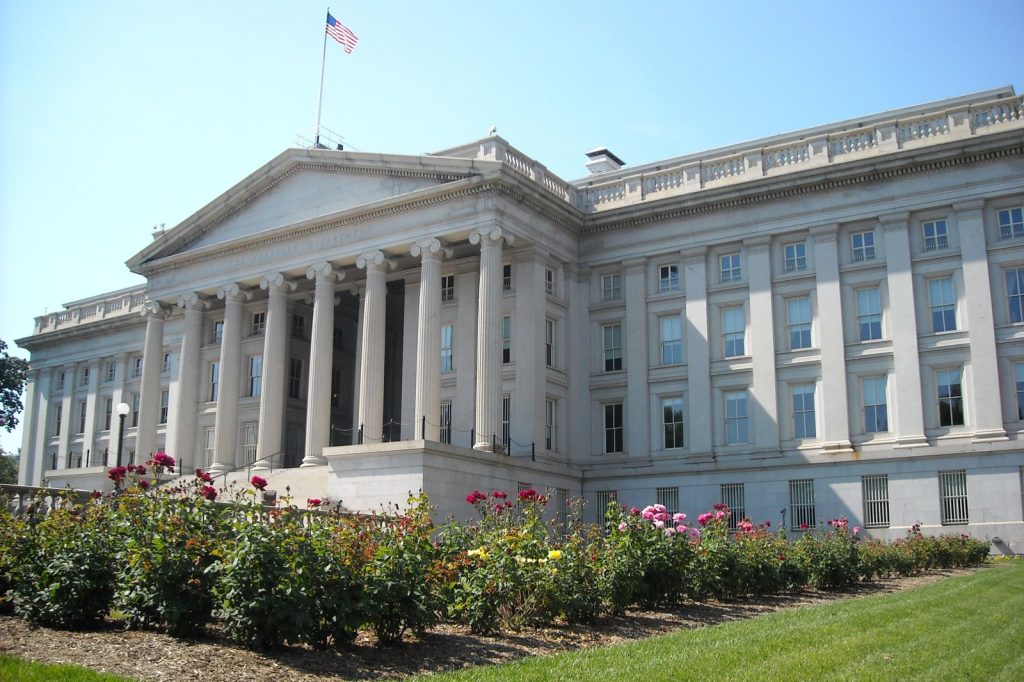
WASHINGTON, July 6 — The Treasury Department has issued a stark warning: a sudden crash of the artificial intelligence stock bubble could ripple through the entire U.S. economy, hitting everything from household wealth to pension funds.
In a new report, Treasury analysts lay out a scenario where a sharp drop in AI stock prices triggers a credit crunch. Banks and institutional investors, facing heavy losses, would pull back on lending. Think of it like a domino effect — one sector’s trouble becomes everyone’s problem.
Here’s what it means in plain terms. The report estimates that a 30% decline in AI-related stocks could wipe out $2 trillion in household wealth, based on current market capitalizations. That’s not just paper losses for Wall Street traders. When families feel poorer, they spend less. Businesses, seeing uncertainty, pull back on investment. The practical upshot is slower growth, or worse.
The Treasury’s analysis uses stress-test scenarios similar to those developed after the 2008 financial crisis, which was triggered by the collapse of the housing bubble. The parallel is deliberate. Back then, a single overheated market — subprime mortgages — infected the entire banking system. The report suggests AI stocks could play a similar role today.
Many pension funds and endowments have increased their exposure to AI investments, the report notes. That means a crash wouldn’t just hit day traders. Retirement savings for millions of ordinary Americans could take a hit. The report doesn’t name specific funds, but the warning is clear: what seems like a tech-sector problem could end up at your kitchen table.
The International Monetary Fund has separately warned that AI-related financial instability could spill over to emerging markets. Those economies are already under pressure from high U.S. interest rates and a strong dollar. An AI crash in America, the IMF argues, could trigger capital flight and currency crises abroad.
The report comes as AI stocks have driven much of the market’s gains over the past two years. Companies like Nvidia and Microsoft have seen their valuations soar on hopes that AI will transform the economy. But the Treasury is now asking what happens if those hopes deflate too quickly.
For ordinary readers, the takeaway is this: the AI boom isn’t just a tech story. It’s a financial stability story. If the bubble bursts, the pain won’t stay in Silicon Valley. It could spread to Main Street, to pension funds, and to emerging economies halfway around the world.
What to watch next: whether regulators begin tightening rules on AI-related lending and margin requirements. The Treasury report is a warning shot. Whether anyone acts on it remains the open question.
{“@context”: “https://schema.org”, “@type”: “NewsArticle”, “headline”: “AI Bubble Burst Could Trigger Broader Financial Crisis”, “description”: “WASHINGTON, July 6 — The Treasury Department has issued a stark warning: a sudden crash of the artificial intelligence stock bubble could ripple through the…”, “datePublished”: “2026-07-06T09:30:00+00:00”, “author”: {“@type”: “Person”, “name”: “Erika Johnson”}, “publisher”: {“@type”: “Organization”, “name”: “InfoPulse Today”, “url”: “https://newsfeed.infopulsetoday.com/”}}




