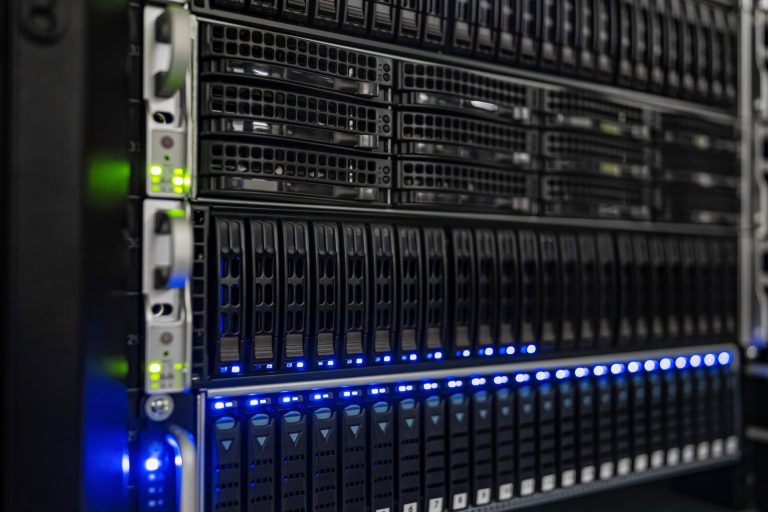
PARIS — Against this backdrop of frantic investment and geopolitical jostling, the artificial intelligence race has entered a new phase defined not by code alone, but by the sheer physical heft of computing power. The so-called ‘compute arms race’ is reshaping the landscape of the industry, as companies pour billions into vast clusters of specialized hardware, each unit costing tens of thousands of dollars. The stakes are immense, and the history of this contest is written in the rapid succession of model releases that have defined the past decade.
OpenAI, founded in December 2015 as a nonprofit by Sam Altman, Elon Musk, Greg Brockman, Ilya Sutskever, John Schulman, and others, set the pace early. After transitioning to a ‘capped-profit’ model in 2019, the organization released GPT-1 in June 2018, followed by GPT-2 in February 2019 — a model initially withheld due to safety concerns.
GPT-3 arrived in June 2020, but it was the launch of ChatGPT on November 30, 2022, that truly captured the public imagination, reaching 100 million users in two months. GPT-4 followed on March 14, 2023, and DALL-E 3 in October 2023. Microsoft’s investments in OpenAI — $1 billion in 2019 and a further $10 billion in 2023 — underscore the financial firepower behind this push.
In the corridors of Silicon Valley and the tech ministries of Europe, the question of who can secure enough of the essential NVIDIA H100 GPUs, each costing $30,000, has become as strategic as the algorithms themselves.
Competitors on the March
OpenAI is far from alone in this arena. Google DeepMind, formed by the merger of DeepMind — founded in 2010 and acquired by Google in 2014 — with Google Brain, founded in 2011, in April 2023, has a formidable lineage. Its key releases include BERT in 2018, T5 in 2019, PaLM in April 2022, and Gemini in December 2023.
Meta, meanwhile, has taken a different approach, releasing LLaMA in February 2023 as open-source software, followed by LLaMA 2 in July 2023 — free for commercial use — and LLaMA 3 in April 2024. Another significant player is Anthropic, founded in 2021 by former OpenAI researchers Dario Amodei and Daniela Amodei.
The company has released a series of Claude models: Claude in March 2023, Claude 2 in July 2023, and Claude 3 in March 2024. By 2024, Anthropic had raised $7.3 billion, including $4 billion from Amazon in September 2023 and $2 billion from Google in October 2023.
A European Perspective
From a European vantage point, the rise of Mistral AI, a French company founded in 2023, offers a glimpse of what is at stake for the continent. Mistral released Mistral 7B in September 2023 and Mixtral 8x7B in December 2023, proving that European labs can compete in the foundational model space. Yet the wider picture remains dominated by the enormous capital requirements for training these systems.
The computing clusters required are not merely large; they represent a concentration of resources that was unimaginable a decade ago. Each NVIDIA H100 GPU, a chip essential for training and running the largest models, carries a price tag of $30,000.
The clusters that companies are building contain thousands, sometimes tens of thousands, of these units, representing investments of billions of dollars. This is the hardware that powers the race, and its scarcity has become a central strategic concern.
What to Watch Next
As the industry moves toward 2026 and beyond, the competition is likely to intensify. The question of which company — or which nation — can secure the most computing power, attract the best research talent, and produce the most capable models remains open. The releases from OpenAI, Google DeepMind, Meta, Anthropic, and Mistral AI have each pushed the boundaries of what is possible, but the compute arms race shows no signs of slowing.
For observers in Europe, the challenge is clear: how to participate in this global contest without being left behind by the sheer scale of American investment. The corridors of power in Brussels and Paris are watching closely, as the future of an entire industry — and the economic and strategic advantages it promises — hangs in the balance.
Sources
- The Big Tech AI Race in 2026: OpenAI, Google, Anthropic, and …
- AI Race 2026: OpenAI, Google, Meta and Anthropic Battle for …