
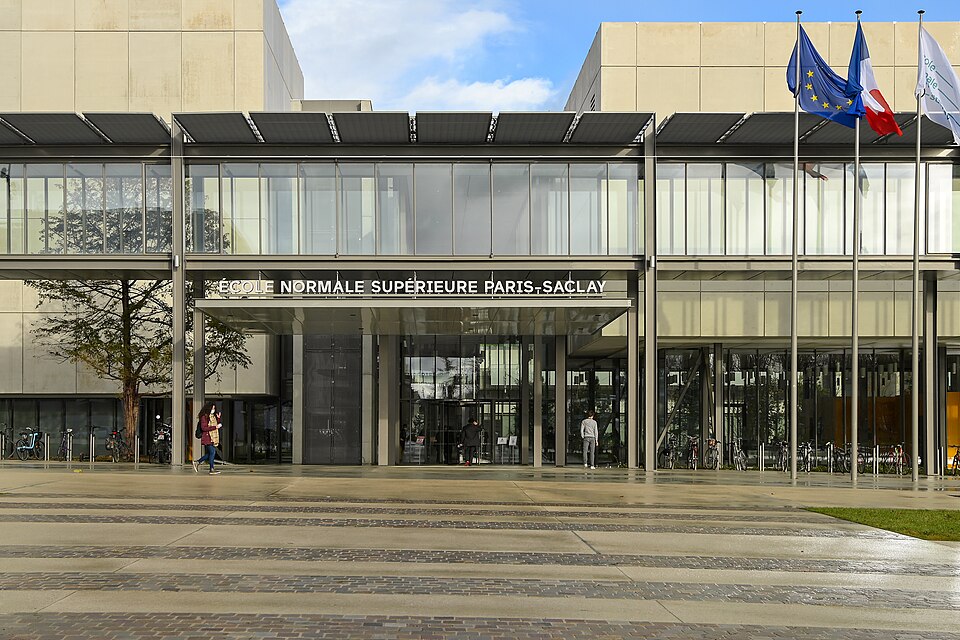
PARIS, September 15 — Air Liquide, the École normale supérieure (ENS-PSL) and the ENS Foundation have announced the creation of a research chair titled “Artificial intelligence for chemistry and through chemistry.” It is the first research chair launched under normalesup.ai, the ENS’s new interdisciplinary initiative for research, training and innovation in AI. The shift is a telling one.
The ENS launched normalesup.ai in January 2026, pulling together researchers from across the School and leaning on its depth in mathematics, computer science, physics, chemistry, biology, cognitive sciences, and the humanities and social sciences. Now a French industrial heavyweight is putting its weight behind the first chair to come out of that push.
Where AI meets the beaker
The chair is built to foster new approaches at the intersection of AI, chemistry and materials science, supporting scientific discoveries and addressing major industrial, technological, energy and environmental challenges. Its researchers will develop new AI models by combining recent advances in machine learning with fundamental chemical knowledge. Three strands stand out: reducing data requirements, developing models grounded in physico-chemical laws, and encouraging the discovery of new molecules and materials.
Beyond the science, the chair is designed to help bring forward a new generation of talent — students, doctoral candidates and early-career researchers working at the crossroads of AI and chemistry. For Air Liquide, a world leader in gases, technologies and services for industry and healthcare, AI is a key driver of transformation across its entire value chain, from production to services for customers and patients, as well as innovation, where it significantly speeds up processes and the time-to-market for new technologies.
Armelle Levieux, a member of Air Liquide’s Executive Committee who notably supervises Innovation & Technology activities, said: “Artificial intelligence is profoundly shifting scientific and industrial innovation processes. Through this chair, Air Liquide strengthens its collaboration with one of the world’s most renowned academic institutions in the field of AI and enriches its own innovation approach regarding AI applications. The Group is thus accelerating the development of high-impact technologies for industry, electronics, and healthcare.”
A first for normalesup.ai
Frédéric Worms, Director of the École normale supérieure, framed the chair as the flagship of the wider initiative. “This chair is the first of its kind at Normalesup.ai and embodies the very heart of this project, dedicated to addressing the challenge of artificial intelligence across all disciplines and in their dialogue with one another — a dialogue that is crucial at the ENS — by developing world-class fundamental research capable of tackling major scientific challenges, ones that social, economic, and industrial stakeholders are fully aware of,” he said.
“By helping to strengthen the link between artificial intelligence and chemistry at the ENS, Air Liquide’s support also helps generate new knowledge, train the talents of tomorrow, and bolster independent French research and its international standing.” The partners bring very different profiles to the table. Air Liquide was founded in 1902 and describes oxygen, nitrogen, hydrogen and many other essential small molecules as the invisible pillars of our world and our lives, at the core of the Group’s activities since its creation.
The Group serves 4.3 million customers and patients across 59 countries with approximately 65,000 employees, and reported revenues close to 27 billion euros in 2025. It is listed on the Euronext Paris stock exchange (compartment A) and belongs to the CAC 40, CAC 40 ESG, EURO STOXX 50, FTSE4Good, and Dow Jones Best-in-Class Europe Index indexes. ENS-PSL combines the strengths of a grande école, a university and a research institution, providing research-based education and training; it was established in 1986.
Watch this space. The trend underneath is bigger than one chair — AI is moving out of the software lab and into the physical sciences, where the next wave of molecules, materials and industrial processes will be found.




