
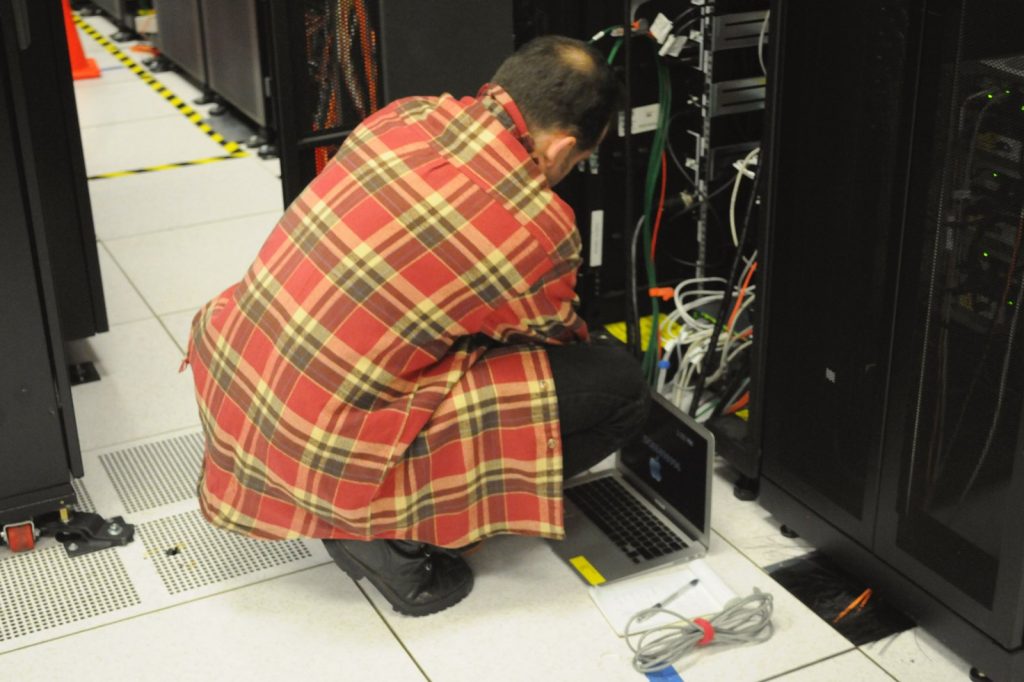
The race to build ever-larger clusters of graphics-processing units for artificial intelligence training is colliding with an old-fashioned problem: copper theft from construction sites. For an industry accustomed to tracking progress in flops and parameters, a stolen spool of grounding wire can halt months of planning. The delay isn’t a minor inconvenience; it resets the clock on a training run that was scheduled to start on a specific date, and the cost compounds as the next generation of chips arrives.
Copper Thieves Disrupt the AI Supply Chain
The infrastructure required for modern AI training is enormous, and it depends on massive amounts of copper for grounding, power distribution, and network cabling. Data-center operators need secure facilities to house the thousands of processors required for large-scale models.
Copper prices have made that wiring a lucrative target for thieves. A single theft can knock out electrical systems, delay certification, and push back the timeline for getting a new cluster online, which is already measured in months rather than weeks. Andrew Ng, the co-founder of Google Brain and a Stanford professor, first laid out this problem in a 2024 interview. As of mid-2026, the issue has not gone away.
Ng, a prominent AI researcher and entrepreneur, has spoken publicly about the need for secure data centers. For an industry racing to scale, a copper-theft incident adds a multi-million-dollar schedule slip to a project that may have been planned around a specific hardware delivery date.
Every month of delay means training on older hardware, because the next generation of chips is always imminent.
Andrew Ng: A Voice Linking Research and Physical Realities
Ng’s perspective carries weight because he bridges the gap between theoretical research and industrial application. Born in 1976 in the United Kingdom, he earned his PhD in computer science from the University of California, Berkeley in 2002.
His early work included creating an indexed web-search engine for research papers while at the Massachusetts Institute of Technology. He spent years in leadership roles across academia and the private sector, serving as a professor and director at Stanford University. In 2011, he co-founded Google Brain.
From 2014 to 2017, he served as chief scientist at Baidu. To expand access to technical knowledge, he co-founded Coursera and DeepLearning.AI, and he also manages the AI Fund to support new startups.
The number that matters in Ng’s world right now, however, isn’t the 200-plus research papers he has authored or the millions of students who have taken his Coursera courses. It is the copper wire that thieves keep stealing from data-center construction sites. His work on deep learning has been foundational to the modern AI field, and he continues to advise companies on AI strategy.
He sits on the board of directors for Amazon, and his warnings about physical infrastructure shape how the industry plans its growth. He has been recognized by Time and Fast Company for his influence.
Security Measures and the Cost of Protection
Investors focused on the cost of compute often overlook the cost of securing the physical plant that houses that compute. Ng has highlighted that the AI supply chain runs through construction sites and electrical rooms, not just through server racks and cloud APIs.
A copper-theft incident does not merely add a line item to a budget; it resets the clock on a project already constrained by delivery schedules for specialized hardware. What to watch next is whether data-center operators begin treating copper wiring as a high-value asset, with the same security protocols they apply to the servers themselves. Ng’s warning from 2024 remains relevant in mid-2026, and the industry is still figuring out how to respond.
As the demand for AI training capacity accelerates, the vulnerability of the physical infrastructure becomes an increasingly critical factor in the timeline for bringing new models online.




