
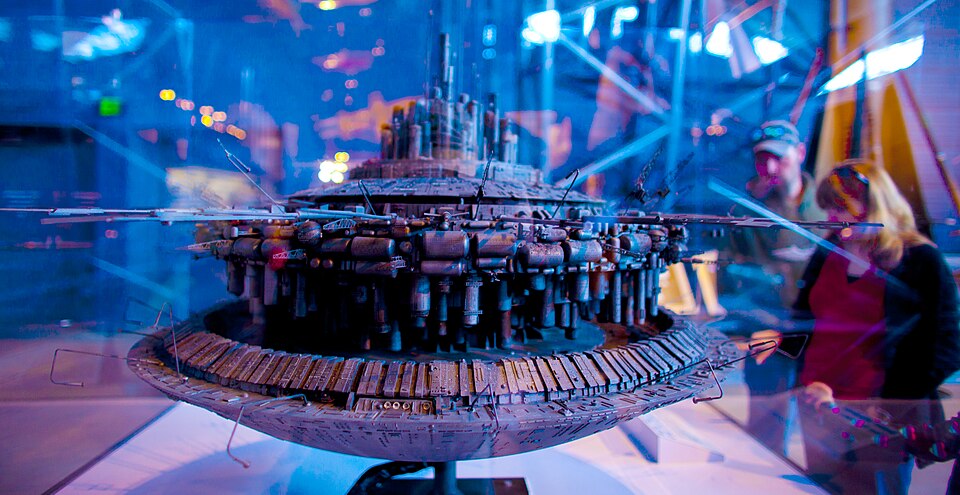
Rome, October 13 — Italy is evaluating the feasibility of constructing an artificial gravity research platform in low Earth orbit, aiming to create a rotating spacecraft or module that generates centrifugal force to mimic gravitational conditions for future long-duration space missions. The initiative, under discussion by the Italian Space Agency (ASI) in collaboration with European partners, builds upon decades of research from NASA’s Johnson Space Center, ESA’s Microgravity Science Glovebox experiments, and the International Space Station (ISS).
The proposed platform would likely be a free-flyer or attached module capable of variable rotation speeds to simulate lunar (0.16g), Martian (0.38g), or Earth-like (1g) gravity environments. Key technical hurdles include structural dynamics, vibration control, astronaut adaptation to Coriolis effects, and power and docking system integration.
Italy’s annual space expenditure was approximately €1.4 billion (about US$1.5 billion) in 2023, with roughly 20% allocated to human spaceflight and exploration initiatives. The initiative aligns with ESA’s Voyage 2050 long-term plan, which includes artificial gravity as a potential enabling technology for crewed missions to Mars by the 2040s. No final decision has been made, and the concept remains in the preliminary study phase, with feasibility assessments expected to inform future ESA ministerial council funding requests.
As we move forward, what is at stake is more than just a scientific breakthrough. The successful implementation of this project could revolutionize our understanding of gravitational forces and their impact on biological and physical systems.
It could pave the way for longer, more sustainable space missions, and ultimately, enable us to venture further into the cosmos. In the wider picture, the development of artificial gravity research platforms could have significant implications for the future of human space exploration. It could bring us one step closer to realizing the dream of setting foot on Mars and opening up a new frontier for human civilization.
The initiative is a testament to Italy’s commitment to advancing space technology and pushing the boundaries of human exploration. As we look to the future, it is clear that this is not just a technological endeavor, but a bold step towards understanding our place in the universe.




